Table of Contents
A major overhaul of United States dietary guidelines under Health and Human Services Secretary Robert F Kennedy Jr has triggered debate in New Zealand about whether the country is positioned to capitalise on a potentially significant export opportunity.
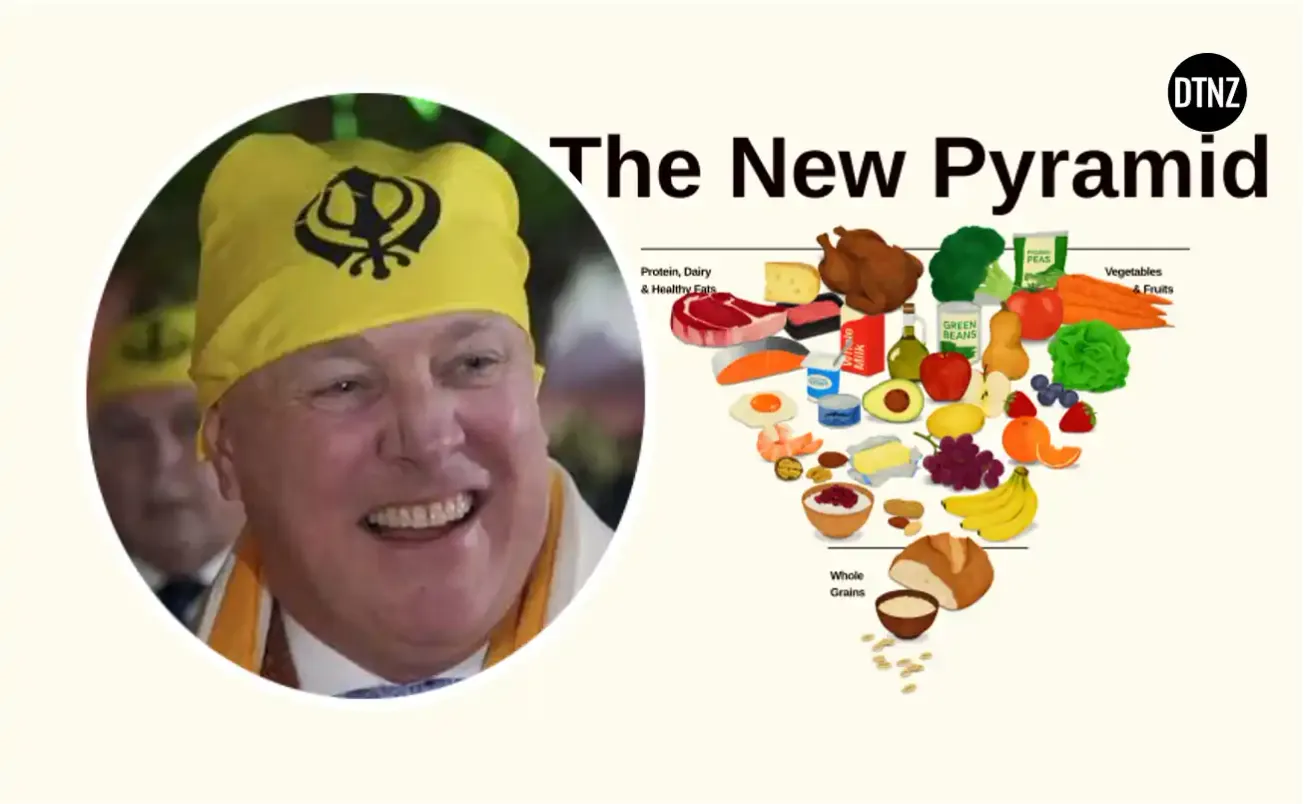
The new guidelines, released on January 7, 2026, mark a sharp departure from decades of federal nutrition advice by flipping the traditional food pyramid to prioritise protein, including red meat, full-fat dairy products, healthy fats, and vegetables, while explicitly discouraging highly processed foods, added sugars, and refined grains.
The policy shift is being described by some commentators as a once-in-a-generation change in US nutrition policy, with the potential to lift demand for beef, lamb, milk, cheese and other whole foods – particularly if the new framework is adopted across federal programmes such as school lunches and institutional catering. Items such as steak, mince, whole milk and cheese now feature prominently in the revised guidance, alongside messaging that encourages Americans to eat more ‘real food’ and less industrially processed fare.
New Zealand is one of the world’s leading exporters of dairy and red meat, and the United States is already a key market, with exports last year approaching NZ$6 billion – around half of that coming from meat.
Advocates argue that New Zealand’s grass-fed, pasture-raised production systems align closely with the guidelines’ emphasis on whole, nutrient-dense foods, and that the country’s verifiable GE-free status further differentiates its products from competitors such as Australia, Canada and Brazil.
The development has also reignited criticism of the government’s trade priorities, particularly its focus on expanding exports to India through a proposed free-trade agreement. New Zealand exported just over NZ$500 million worth of goods to India last year, with projections suggesting this could rise to NZ$1.6 billion over 15 years. Critics argue that, by contrast, rising US demand driven by the new dietary guidelines could deliver comparable gains in meat exports within a much shorter timeframe, if New Zealand moves quickly to position itself.
The debate has become increasingly political and personal, with concerns raised about domestic policy settings that could affect New Zealand’s ‘premium’ food branding, including proposed genetic engineering reforms and environmental initiatives targeting agricultural emissions. One critic went so far as to label PM Christopher Luxon a “a globalist Paris accord loving cuck”. Supporters of the US-focused opportunity argue that maintaining New Zealand’s natural, grass-fed image will be critical if exporters are to benefit fully from the shift in American dietary policy.
This article was originally published by the Daily Telegraph New Zealand.