Table of Contents
Bryce Edwards
Democracy Project
Dr Bryce Edwards is Political Analyst in Residence at Victoria University of Wellington. He is the director of the Democracy Project.
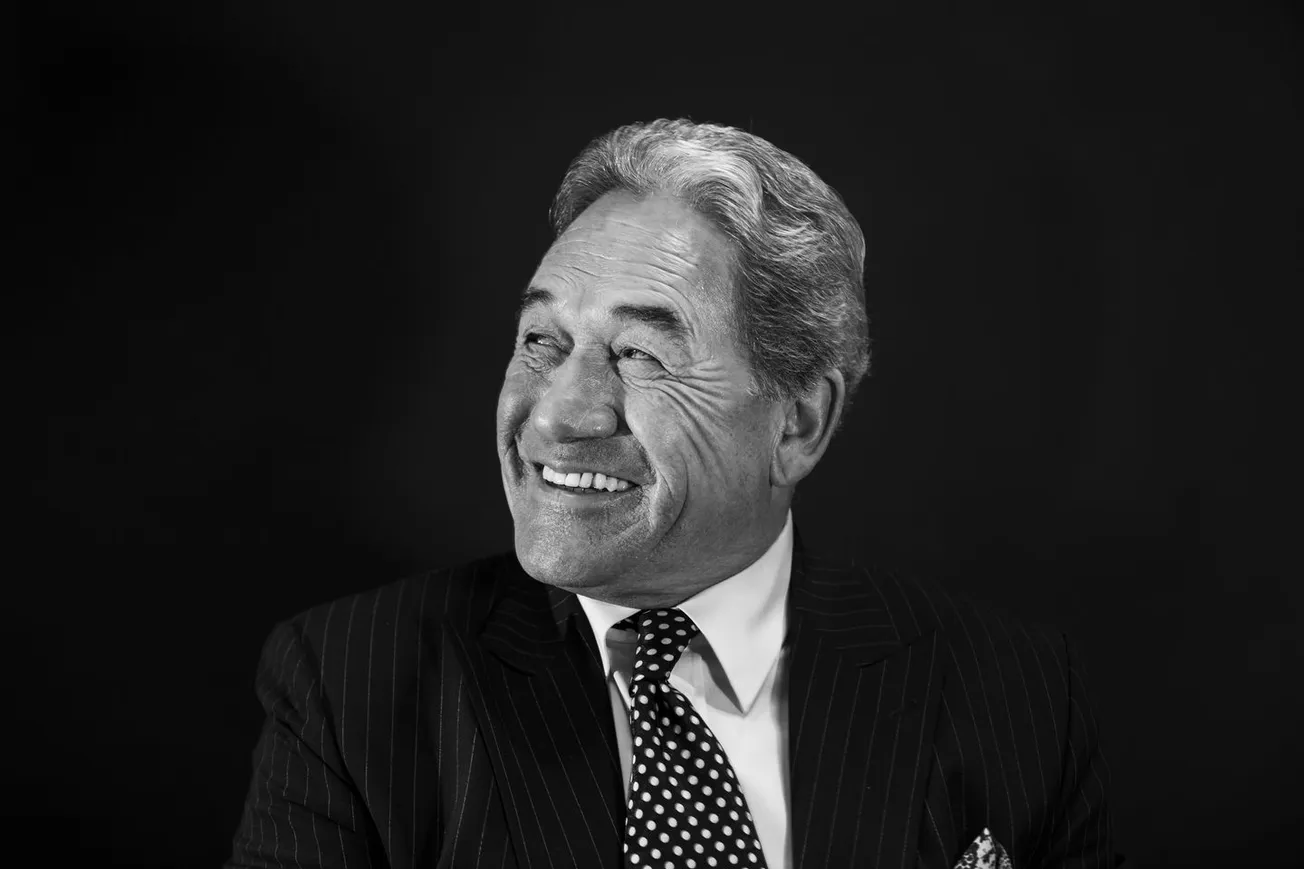
Much of the media commentary has been highly negative about NZ First’s targeting of woke issues in the weekend, suggesting this focus will fail to fire. Peters has been characterised as a dinosaur, out of touch with mainstream feeling.
Some accounts have been outright hostile, and have painted his politics as deplorable, in a similar way that Hillary Clinton infamously described Americans who voted for Trump as “deplorables”. The best example of this is today’s column by Virginia Fallon in which Peters is characterised as “a breath of old stale air to occasionally remind us how far we’ve come and how easily we could revert to what we used to be. A cautionary tale, if you will” – see: Who’s afraid of the ‘A’ word?.
Fallon suggests Peters and his anti-woke politics are simply an embarrassing anachronism: “most families have a Winston of their own: an older relative who stubbornly refuses to adapt so spends their latter years stumbling about in a world they no longer understand. But a bit like the family dog who goes senile and lunges incontinently at the children, we keep them about because despite their increasingly unacceptable behaviour, we know they can’t help it. They’re scared and confused, but eventually we’ll be able to consign them to history”.
The main target for her column, however, is Peters’ opposition to renaming the country “Aotearoa”. And Fallon argues that this “is like a Rorschach test for racists”.
Some commentators have also suggested that Peters’ battle against woke politics is unlikely to yield any supporters, given that other parties are already filling that gap in the market. Tuesday’s Stuff editorial said:
“There is already a crowded political market for anti-‘woke’ sentiment, especially when it comes to whipped-up fears of ‘Maorification’ in New Zealand. Act and National have been beating that particular drum for months and while it could be argued that Peters helped to perfect the politics of racial fear in New Zealand in the 1990s when it was about Chinese immigrants, he does not have the field to himself”
– see: Was NZ First built to last?.
Other commentators have also advised the party not to go down the anti-woke path. Former NZ First researcher Josh Van Veen has argued: “Peters will need to rise above the culture war if he is to win back those voters” he lost to the Labour Party at recent elections – see: NZ First Unbowed. He argues “whether NZ First is successful will depend on whether it can rise above cultural divisions and offer a positive, unifying vision of what it means to be a New Zealander in the 21st century.”
In this column, Van Veen also reports on Peters’ speech, and explains Peters’ approach to race relations. He says Peters’ opposition to affirmative action, as expressed in his recent speech, is about preferring “fairness and equality of opportunity”.
Van Veen explains:
“As a Maori, it is clear that Peters has no time for ‘Critical Race Theory’ or the demonisation of Pakeha. Anyone who knows him can attest that Peters sincerely believes in Martin Luther King Junior’s dream of a world where one is not judged for the colour of their skin ‘but by the content of their character’. It is what most New Zealanders would understand to be anti-racism.”
However, Van Veen doesn’t believe that Peters can win back voters on the basis of this universalistic approach because it involves being too negative. He’s quoted further about that today by Emile Donovan in his RNZ report, Bringing back Winston. He argues the party needs to go beyond “fire and brimstone” and project its vision in “a positive and constructive way, rather than appealing to fear and prejudice”.
This article can be republished under a Creative Commons CC BY-ND 4.0 license. Attributions should include a link to the Democracy Project.
Please share so others can discover The BFD.