
This is edition 2026/104 of the Ten@10 newsletter.
Hi all,
This is the Ten@10, where I collate and summarise ten news items you generally won't see in the mainstream media.
Enjoy!
1. The “Far-Right” Deception.
Chris Trotter
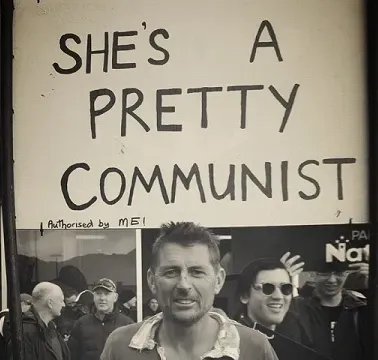
- 🪧 A 2017 Morrinsville placard calling entity["politician","Jacinda Ardern","New Zealand Prime Minister"] a “communist” became a memorable but largely mocked campaign moment during “Jacindamania.”
- 🤔 The label was widely seen as exaggerated, as Ardern’s politics aligned more with modern Labour figures like Tony Blair and Helen Clark than true communism.
- ⚔️ Political name-calling has deep roots in New Zealand, with both Right and Left historically using emotionally charged insults to discredit opponents.
- 🐎 In 1913, left-wing activists branded William Massey’s strike-breaking forces as “Cossacks,” invoking Tsarist brutality.
- 📰 By the 1970s, accusations shifted to “fascism,” with critics of Robert Muldoon warning of “creeping fascism,” often inaccurately.
- 📚 Terms like fascism and Nazism have specific historical meanings tied to figures like Adolf Hitler, but are frequently misused as rhetorical weapons.
- 💬 Today, “Far Right” has become the dominant political insult, especially among elites, often used loosely without clear definition.
- 🧑💼 The essay argues that this language is driven by the Professional-Managerial Class (PMC), a powerful group positioned between capital and labour with its own ideology.
- ⚖️ The PMC blends progressive ideals with technocratic, often authoritarian tendencies, opposing both free-market neoliberalism and populist movements.
- 🎯 It reframes political conflict by labelling both elite-driven reforms and grassroots dissent as “Far Right,” presenting them as a unified threat.
- 🏛️ In New Zealand, the PMC is portrayed as resisting a National-led push to shrink the state while also suppressing populist opposition from below.
- 🚫 The essay claims this could lead to increased restrictions on free expression, driven by institutions like universities and the public sector.
- 🧩 Ultimately, the “communist” label aimed at Ardern is portrayed as missing the real issue: the rise of a self-serving intermediary class consolidating power between rich and poor.