This is edition 2026/116 of the Ten@10 newsletter.
Hi all,
This is the Ten@10, where I collate and summarise ten news items you generally won't see in the mainstream media.
Enjoy!
1. Labour's Broken-Politics Congress
Bryce Edwards — The Democracy Project
- 🎤 Labour’s annual congress in Wellington adopted National’s 2023 diagnosis that “New Zealand is broken” — but showed little appetite for bold fixes.
- 📉 NZ Herald political editor Thomas Coughlan: “Labour thinks New Zealand is very broken — it’s not promising to fix it.”
- 💰 Despite supporters cheering attacks on Coalition cuts, Chris Hipkins would not commit to reversing the $2.4 billion in public-service reductions scheduled over the next three years.
- 🗳️ Pressed on whether Labour would reverse the cuts, Hipkins repeatedly fell back on: “We’re going to focus on winning the election first.”
- 🎭 RNZ’s Craig McCulloch described the event as “slick presentation” beneath which lay “tepidity and caution.”
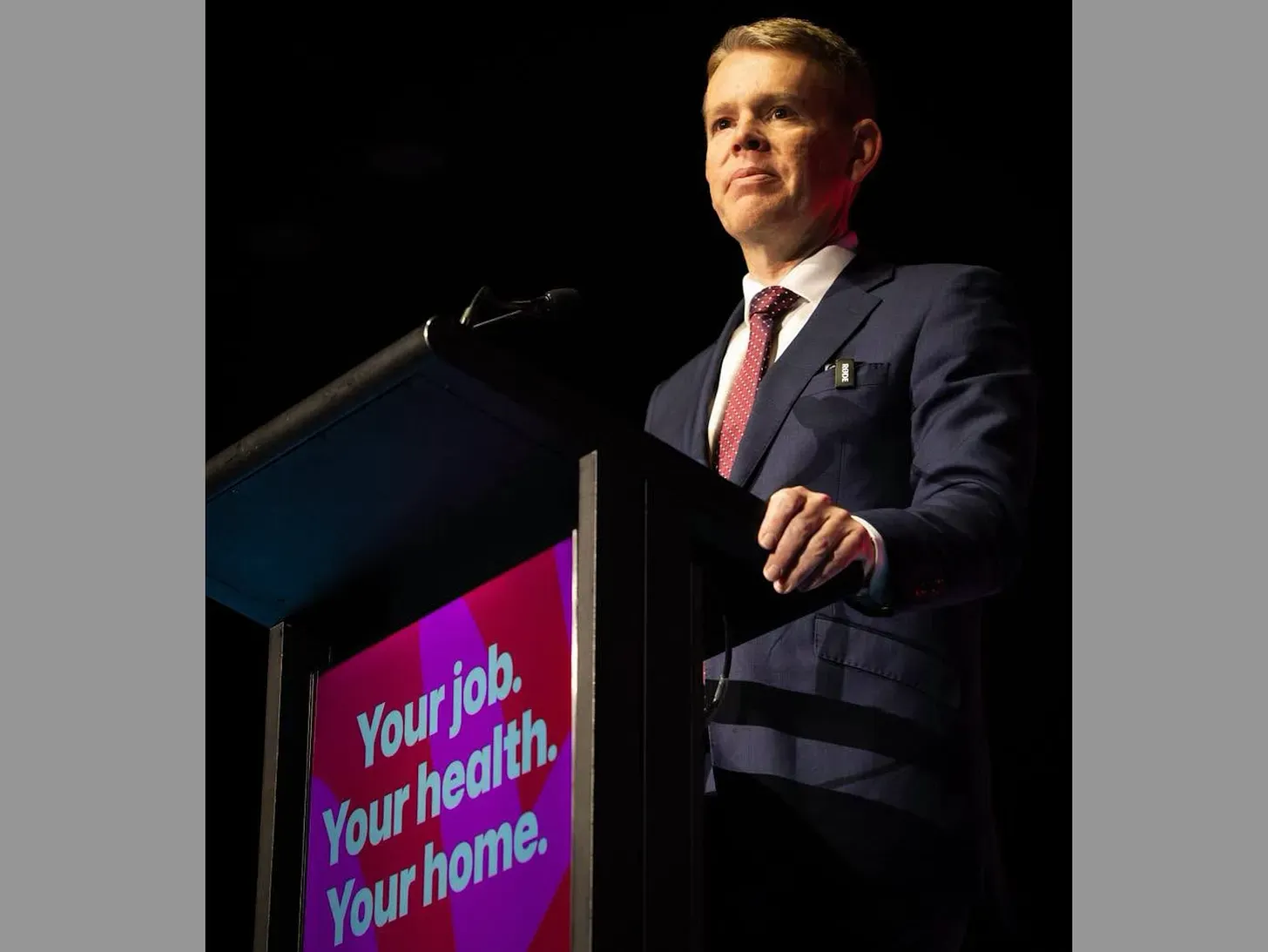
- 🔴 The slogan was tweaked from “jobs, health, homes” to “your job, your health, your home” — called “yet another symbol of the surface level change on offer.”
- 🚪 Labour tightly controlled media access: journalists were moved out before sensitive sessions, and speeches by campaign chair Kieran McAnulty and Māori campaign chair Willie Jackson were closed to media.
- 💡 The Spinoff’s Lyric Waiwiri-Smith noted Labour is “back in a major way, wielding its majorly moderate policies.”
- ⚠️ Edwards’ interpretation: a party that rations what voters see at its own conference is unlikely to be expansive or frank in government.
- 🎯 Takeaway: Labour leads in the polls but is running a caution-first campaign that may leave its “broken New Zealand” rhetoric unmatched by repair commitments.

2. Compulsory KiwiSaver and the Future of NZ Super
David Farrar — Polling Politics (Patreon)
- 🗳️ Farrar, who campaigned against Winston Peters’ 1997 compulsory-retirement-savings scheme and helped deliver a 92% no vote, now supports National’s plan to make KiwiSaver compulsory.
- 📊 In 1997 the choice was binary: state-funded NZ Super or a compulsory replacement. Today, KiwiSaver is already near-universal through auto-enrolment, with only about 5% of employees opting out.
- 💰 National’s policy combines a $1,500 “Baby Boost” at birth, compulsory membership, and contribution rises to 12% total by 2032 (6% each from employee and employer).
- 📈 A 22-year-old on $60,000 with 3% nominal wage growth would accumulate roughly $2.8 million by age 65 — about $1.2 million in real terms.
- 💵 That $1.2 million could generate $60,000 a year in retirement income without touching the capital, more than double current NZ Super.
- 📉 NZ Super is projected to rise from 5% of GDP to 8% as the population ages — an extra 3% of GDP, or about $13.5 billion a year.
- 🚨 To fund that gap without reform would require a top tax rate of 70% over $70,000, GST rising from 15% to 22%, or a 50% top rate over $48,000.
- 🎯 Farrar’s argument: once a generation grows up with compulsory KiwiSaver, a rational debate about reducing the cost of NZ Super becomes possible — avoiding massive future tax hikes.
- ⚠️ The left’s framing that National is “privatising super” misses the point, he says; the real endgame is making future Super reform politically viable.
- 🎯 Takeaway: Farrar reframes National’s KiwiSaver policy as a long-term escape hatch from an otherwise unsustainable pension bill.
3. Were Ministers Following the Science, or the Politics, on Teen COVID Vaccinations?
Centrist
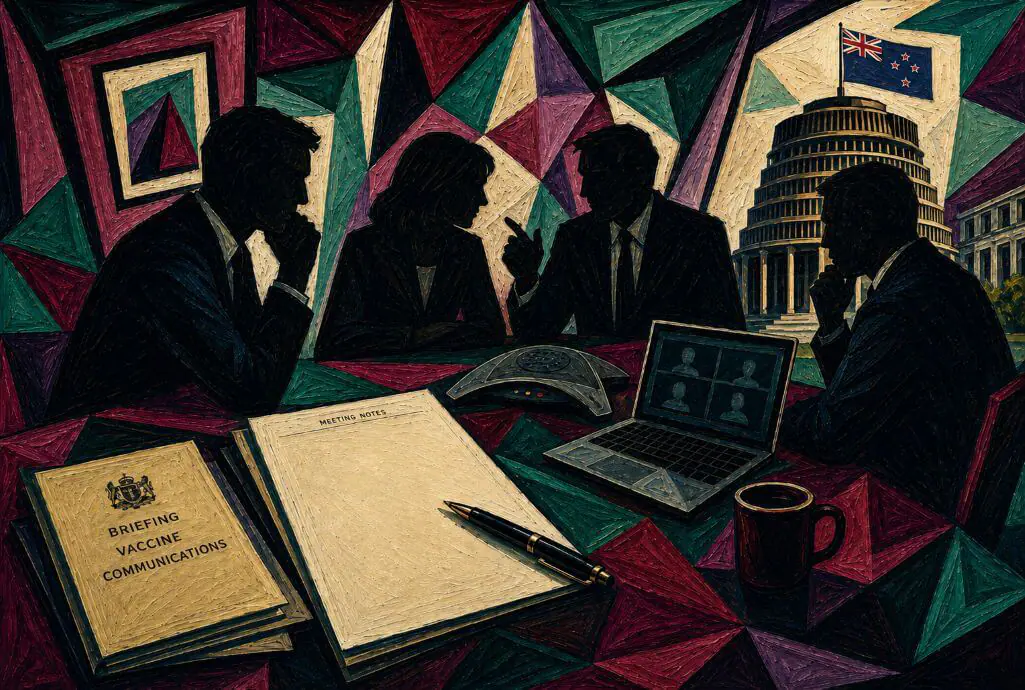
- 📅 Ministry of Health confirmed a Vaccine Ministers meeting took place on Friday 13 August 2021 at 1:30 pm via Zoom, days before Cabinet approved Pfizer for 12–15-year-olds.
- 👥 MoH named the chair (Chris Hipkins), ministers present (Ardern, Robertson, Little, Verrall, Sio, Henare) and senior officials including Ashley Bloomfield — but said the meeting was not minuted and no notes exist.
- 🏛️ The Department of Internal Affairs told lawyer Sue Grey the meeting she described “did not take place,” while DPMC confirmed a pre-meeting briefing for Ardern but withheld it in full.
- 📆 Published ministerial diaries are inconsistent: Ardern was listed at a housing visit in Mt Roskill, Hipkins at Mt Aspiring College in Wānaka, and Little at a Taranaki health event at the same 1:30 pm slot.
- 📧 Email trails show CV TAG’s myocarditis advice was communicated to Vaccine Ministers and draft clinical bulletins on youth dosing were prepared that same afternoon.
- ⚠️ A draft CV TAG record proposed a one-dose schedule for 12-15-year-olds and removing wording about the possible myocarditis benefit of longer dosing intervals.
- 🚫 MoH refused the OIA request for minutes under section 18(g)(i) because the information was not held.
- 🔍 Centrist’s conclusion: the meeting occurred, it was consequential, and the public record around it is contradictory and incomplete.
- 📉 The three-part investigation, drawing on documents obtained by Aly Cook and Sue Grey, raises questions about whether political timing or clinical evidence drove the teen rollout.
- 🎯 Takeaway: the story is not just what ministers decided, but what was discussed — and why no contemporaneous record exists.
4. The Greens Should Be Making NZ’s Tax Reform Debate Much Bolder
Bryce Edwards — The Democracy Project
- 💰 The old consensus against taxing wealth and capital is dissolving: Treasury, IRD, the OECD, IMF, ANZ’s CEO, and even right-wing commentators now say current settings are unsustainable.
- 📉 Yet at the moment the Overton window is shifting left, the Greens have watered down their tax agenda rather than pushing bolder reform.
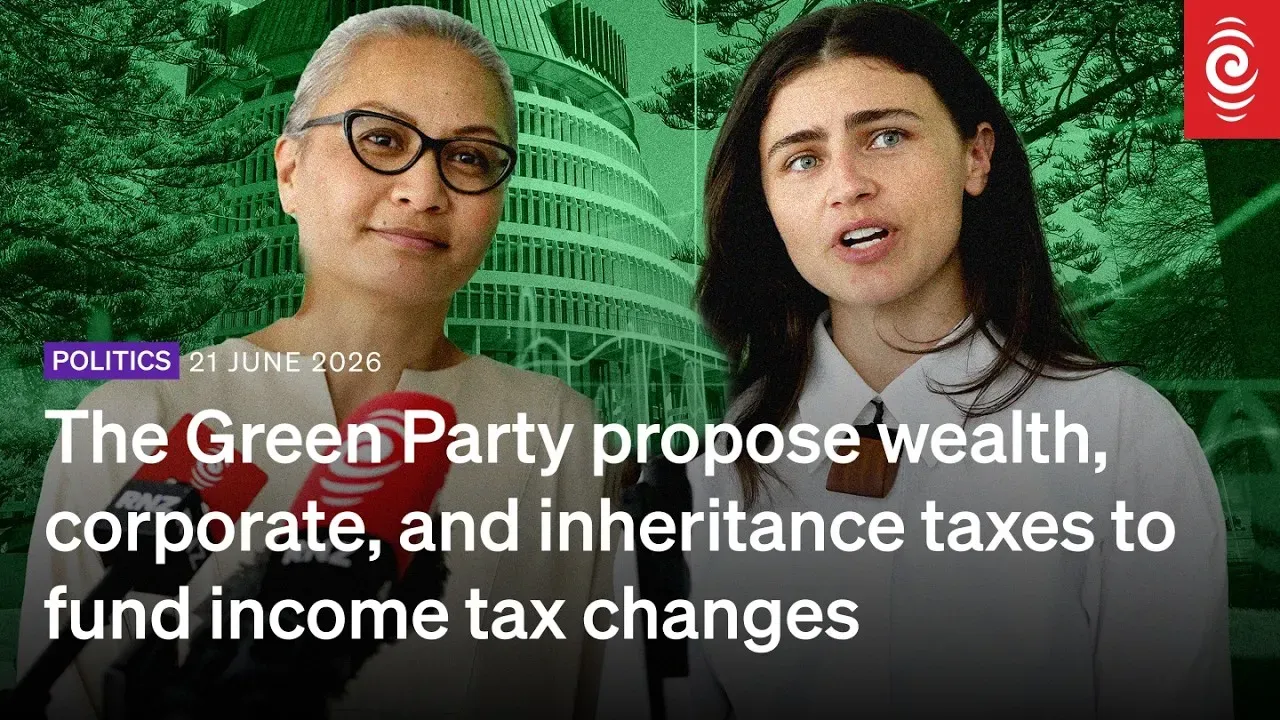
- 📊 Their 2026 “Tax System for All of Us” package includes a 2.5% wealth tax above $10 million, a 33% Capital Acquisitions Tax above $1 million lifetime receipts, 33% company tax for the largest 0.7% of firms, a big-bank levy, a big-tech withholding tax, a $10,000 tax-free threshold, and a 45% top rate above $160,000.
- 📉 Wealth-tax revenue has collapsed from roughly $13 billion to $3.7 billion as the threshold rose from $1m/$2m in 2020 to $10m in 2026.
- 💸 Whole-package revenue has fallen from $23.4 billion in the 2025 Alternative Budget to roughly $5 billion now — about one-fifth of the previous ambition.
- 🌍 Internationally, the package is not radical: bank levies, inheritance taxes, wealth taxes, two-tier company rates, and 45% top rates are common in comparable countries.
- 🗣️ Reaction was hostile: Luxon called it “economic lunacy,” Seymour called it “Hunger Games policy,” and Hipkins rejected it outright — a problem, since Labour support would be needed to pass it.
- 🎯 Edwards’ critique: the Greens are campaigning on a “tax revolution” that raises only a fraction of what they once promised, and have let their opponents set the terms.
- 🔥 The package’s real vulnerability may not be that it is too bold, but that it is too timid to fund the spending promises it is supposed to underwrite.
- 🎯 Takeaway: the tax debate has shifted, but the Greens have retreated rather than capitalised.

5. Can TOP Tip the Balance?
Grant Duncan — Politics Happens
- 📊 Duncan warns against over-reading a single Verian poll that put The Opportunity Party at 4.6%, just below the 5% threshold.
- 📺 TVNZ’s “on the cusp of making it into Parliament” interpretation is described as tea-leaf reading; a 1.3-point jump in a 1,000-person sample equals about 13 respondents.
- 📉 Verian’s April result for TOP was 3.3%, more in line with other polls; a Roy Morgan May figure of 6% is treated sceptically because other numbers in that report were also out of line.
- 📰 Duncan concedes TOP “does deserve credit for offering something different in terms of policies and personalities,” but says much of the apparent surge is being manufactured by journalists in search of a scoop.
- 🗳️ The post is behind a paywall, but the free section asks what the consequences would be if TOP did cross 5%.
- 🤝 A previous Duncan analysis from February explored whether parliament has “too many or too few parties” and whether TOP might tip the balance.
- ⚠️ The “kingmaker” speculation that followed the Verian poll is characterised as premature.
- 🎯 Takeaway: one poll does not make a parliamentary party; the media is amplifying a story that voters have not yet confirmed.
- 📈 If TOP sustains 5% through subsequent polls, the coalition maths become real; until then, it remains a narrative.
- 🎯 Takeaway: Duncan treats the surge as plausible but unproven, and largely press-driven.
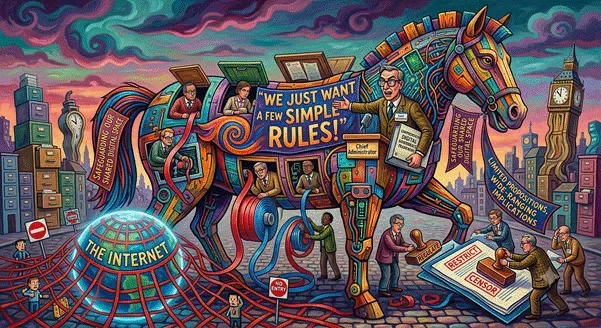
6. Reading Between the Lines: The Human Rights Commission Trojan Horse
A Halfling’s View
- 📷 The author supports the Deepfake Digital Harm and Exploitation Bill as a narrow criminal-law fix, but argues the Human Rights Commission has used it as a Trojan horse for a sweeping system-level AI and digital-platform regime.
- 🎁 The gift: criminalising non-consensual deepfake imagery, an almost unobjectionable proposal.
- 🪖 The hidden army: pre-emptive bans on “high-risk” AI tools, mandatory “safety-by-design” requirements, proactive platform detection duties, new unelected oversight bodies, and national impact-assessment frameworks.
- ⚖️ The Bill alone is praised as subsequent punishment through ordinary courts, not prior restraint; the Commission’s regime would act in advance and manage categories of risk rather than punish specific wrongdoers.
- 📝 The Commission labels the Bill a “necessary first step” but “inherently reactive and limited,” then demands a full overhaul.
- 🚫 The author rejects the logic: a narrow law leaving other problems unsolved does not justify bolting a sweeping control regime onto it.
- 🌫️ Vague terms — “high-risk,” “harmful,” “safety-by-design,” “intersectional harms” — hand definitional power to future officials and unelected bodies.
- 🏛️ The result is a transfer of policy from an elected Parliament to expert institutions with “broad discretion and faint accountability.”
- 🎯 Takeaway: pass the deepfake Bill, but reject the hidden systemic regime and force it to be debated on its own merits.
- 🗣️ The piece complements Halfling’s earlier critique of InternetNZ’s similar regulator push, reinforcing that both establishment bodies are using the same bill to expand state control over digital speech.

7. Israel Launches $30 Billion AI Superpower Plan
Jewish Onliner
- 🤖 In June 2026 the Israeli government approved a national AI program led by the National AI Directorate under Brig. Gen. (res.) Erez Askal, aiming to establish Israel as a top-tier global AI power.
- 💰 Prime Minister Benjamin Netanyahu: “AI is not just another technology — it is a revolution.”
- 🏗️ Core pillars include sovereign computing infrastructure of 100,000 GPUs/processing units, a national quantum computer, a National Artificial Intelligence Institute, and specialised cyber/physical AI hubs.
- 🌐 The sovereign-computing push is designed to reduce dependence on foreign cloud providers, including the AWS- and Google-backed Project Nimbus ecosystem.
- 📈 Outside estimates suggest full implementation could cost tens of billions of dollars; Tel Aviv University professor Nadav Cohen says 100,000 GPUs “could easily cost tens of billions.”
- 🔬 Israel is leveraging its defence experience in autonomous systems, drones, and battlefield tech as a unique advantage in Physical AI and edge computing.
- 🛡️ The program also establishes capabilities to counter deepfake technologies and AI-based threats.
- 🏛️ Nine government entities have already won competitive AI grants, with projected annual savings including NIS 15 million for the Tax Authority and NIS 6 million for the Ministry of Transportation.
- 💵 Private-sector momentum: DREAM opened Israel’s first sovereign AI data centre in February 2026 and raised $260 million in June, valuing the company at $3 billion.
- 🎯 Takeaway: Israel is treating AI as sovereign critical infrastructure, combining top-down government investment with private-sector momentum.
8. Do Europe’s Populists Have a Trump Problem?
Rocco Loiacono — spiked
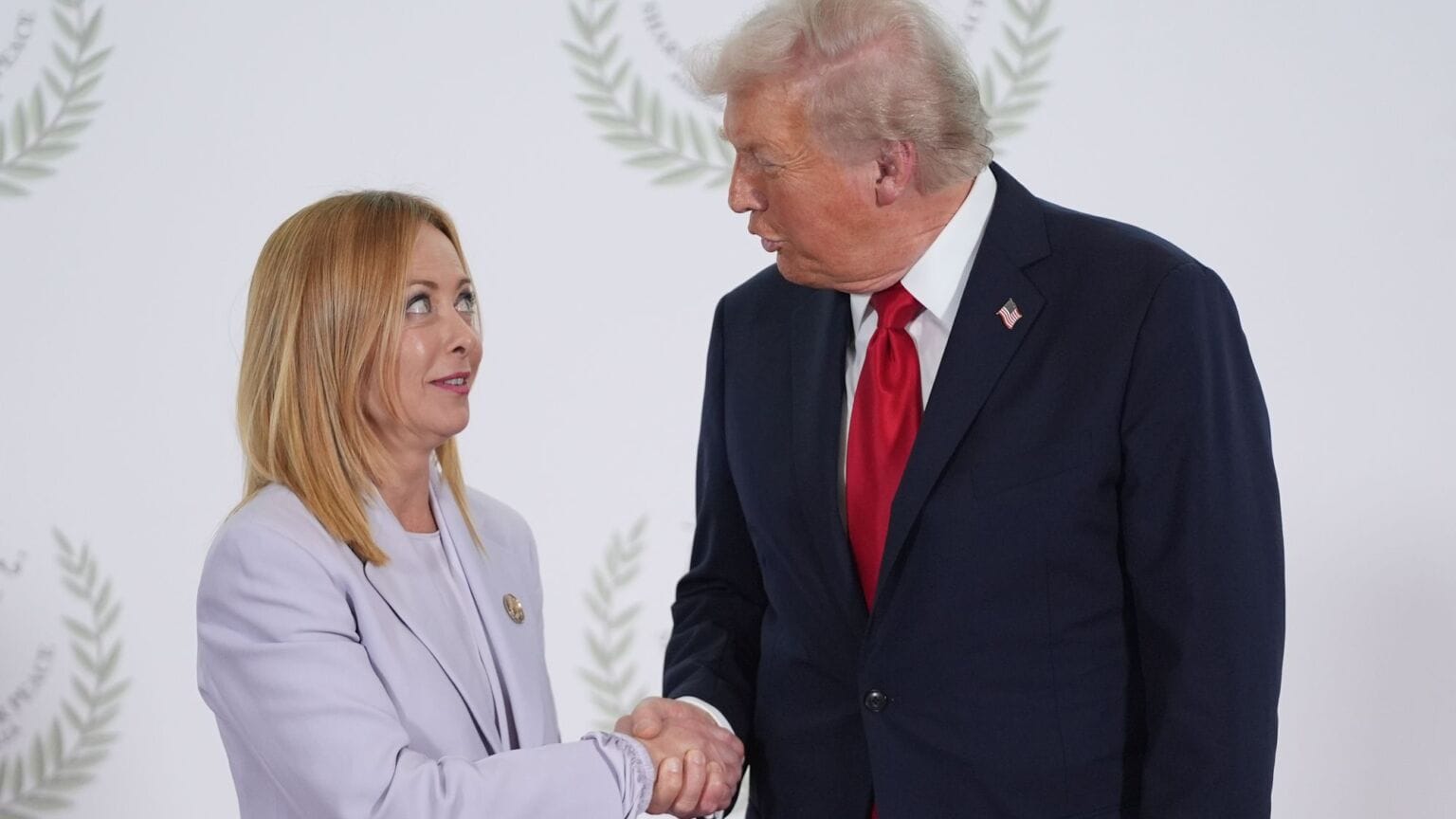
- 🇺🇸 Donald Trump claimed Italian PM Giorgia Meloni “begged” him for a photo at the recent G7 summit in France; Meloni denied it, and Italian foreign minister Antonio Tajani cancelled a July meeting with US counterpart Marco Rubio.
- 🔥 Trump then accused Italy of being an “ungrateful ally.”
- 🛩️ The underlying cause: in March 2026 Meloni refused the US request to use Italian air bases in Sicily to launch attacks over Iran — the first such refusal in the postwar US-Italy alliance.
- 🇮🇹 Because Trump is highly unpopular in Italy, the author argues the spat is “a blessing in disguise for Meloni,” allowing her to posture as a symbol of resistance.
- 📉 Meloni faces domestic headwinds: a failed referendum to reform Italy’s left-leaning judiciary and cost-of-living pressure worsened by the Iran War, given Italy imports nearly all its oil.
- 🗳️ A new challenger, former special-forces commander Roberto Vannacci, has split from Lega Nord and founded Futuro Nazionale, polling at 6% and pushing harder-line “remigration” policies.
- ⚠️ Vannacci accuses Meloni of “Melonisation”: campaigning as a right-populist but governing as a centrist close to Brussels and Ursula von der Leyen.
- 🎖️ At a recent Alpini elite-forces event, Meloni received an emotional, patriotic reception — “Brava Giorgia,” “Don’t give in.”
- 🎯 Takeaway: Europe’s populist leaders must manage a Trump factor that can simultaneously damage alliances and boost domestic standing.
- 🎯 Takeaway: the row has come at “the best possible time” for Meloni, solidifying coalition support and making her the dispute’s clear victor.
9. The Real Significance of the Israel-Lebanon Agreement
Jonathan Sacerdoti — The Spectator Australia
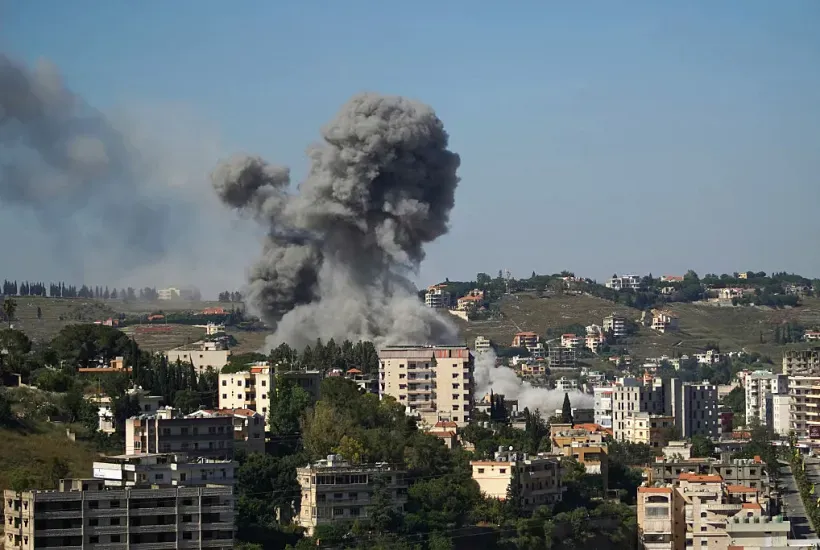
- 🕊️ A US-brokered Israel-Lebanon agreement is less about ceasefire mechanics than about a geopolitical shift: Lebanon is being treated as a sovereign state rather than an Iranian proxy battlefield.
- 🚫 Netanyahu: “Lebanon, Israel and the United States are essentially telling Iran that it is none of your business and that you have no involvement and no role.”
- ⚔️ Hezbollah’s Naim Qassem denounced the deal as “humiliating, disgraceful, and constituting a surrender of sovereignty,” and demanded the “Iranian-American memorandum of understanding” be implemented instead.
- 🛡️ Israel retains almost all territory captured in southern Lebanon and will not redeploy until Hezbollah is disarmed nationwide.
- 📍 Phased “pilot areas” allow the Lebanese Armed Forces to assume responsibility only after verified disarmament; the framework expands if it succeeds and pauses if it fails.
- ⚖️ Because Lebanon has accepted the terms, Israel’s continued presence is harder to label as simple occupation or to demand unconditional withdrawal.
- 🗣️ Lebanon commits to ending hostile political and legal campaigns against Israel and to direct Israel-Lebanon dialogue under American auspices.
- 📈 The agreement is asymmetric: even in a pessimistic scenario where Hezbollah obstructs, Israel keeps its current security position and Hezbollah is exposed as the obstacle to peace.
- 🌍 Reception in Europe is positive, and support within Lebanon reportedly extends beyond one community, including significant Christian and Sunni backing.
- 🎯 Takeaway: the deal redraws the Levant by detaching Lebanon from Tehran’s wider influence network.
10. Is Britain Doomed?
David Shipley — The Spectator Australia
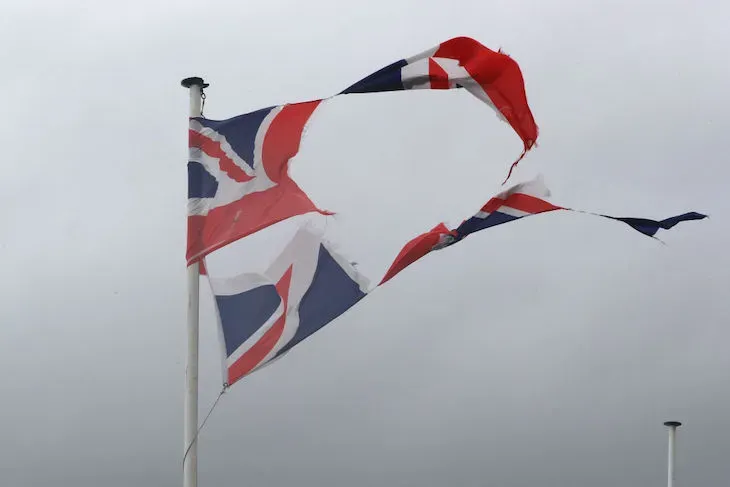
- 🇬🇧 David Shipley reads Britain’s recent political chaos and symbolic disasters through a medieval lens: events once interpreted as omens of national rise or fall.
- 📉 Keir Starmer has resigned; Britain has had six prime ministers in a decade, and a seventh — likely Andy Burnham — is expected before summer’s end.
- 🦢 The royal swan, struck by avian flu around Windsor; the black swans of Dawlish wiped out; a “queen raven” fleeing the Tower of London in 2021 with its body never found.
- 🦌 Police killed a white stag in Bootle in 2021 — a royal symbol since Richard II; Household Cavalry horses bolted through London in 2024, one bloodied white horse evoking the “pale horse” named Death in Revelation.
- 🌳 National symbols under assault: the Sycamore Gap tree hacked down in 2023; the 1,200-year-old Major Oak reportedly dying in June 2026; Stonehenge desecrated with orange paint; a baby whale dying at Teddington in 2021.
- 📜 Drawing on Keith Thomas’s *Religion and the Decline of Magic*, Shipley notes medieval Britons saw plagues and misfortune as punishments for national sin and the rise and fall of nations as expressions of divine purpose.
- 🎭 Starmer is accused of merely trying to “hold back the tide” — clinging to dying international laws, trying to undo parts of Brexit, and bound by domestic laws he could not imagine repealing.
- ⚠️ The article does not claim Britain is literally doomed; it uses medieval symbolism to dramatise a sense of institutional and national rupture.
- 🎯 Takeaway: Shipley’s frame is a literary provocation rather than a forecast, but it captures a mood of national disintegration that elites prefer to ignore.
- 🎯 Takeaway: whether read literally or symbolically, the piece asks whether Britain’s current political class is capable of governing a country whose symbols seem to be falling apart.
What our members are saying about Ten@10
Elizabeth
These articles are compulsory reading for me and the perfect addition to the usual list of Goodoil items!
Lynne
Absolutely brilliant to receive these current and thought provoking articles.
Jonathan
Just wanted to let you know that I’m loving this new 10@10. Much appreciated from someone who chooses to read/watch almost NO mainstream media.
Murray
Cam, relish your output as the newspaper in Christchurch is so intent on non news. Thankyou
Fred
Thanks for Ten @ Ten, really enjoy reading it.Keep it up. All the best, keep healthy.
Jocko
Wonderful info not otherwise available in NZ. More power to your elbow! Thanks.