This is edition 2026/124 of the Ten@10 newsletter.
Hi all,
This is the Ten@10, where I collate and summarise ten news items you generally won't see in the mainstream media.
Enjoy!
1. Homelessness Is a Political Choice
Bryce Edwards — The Democracy Project
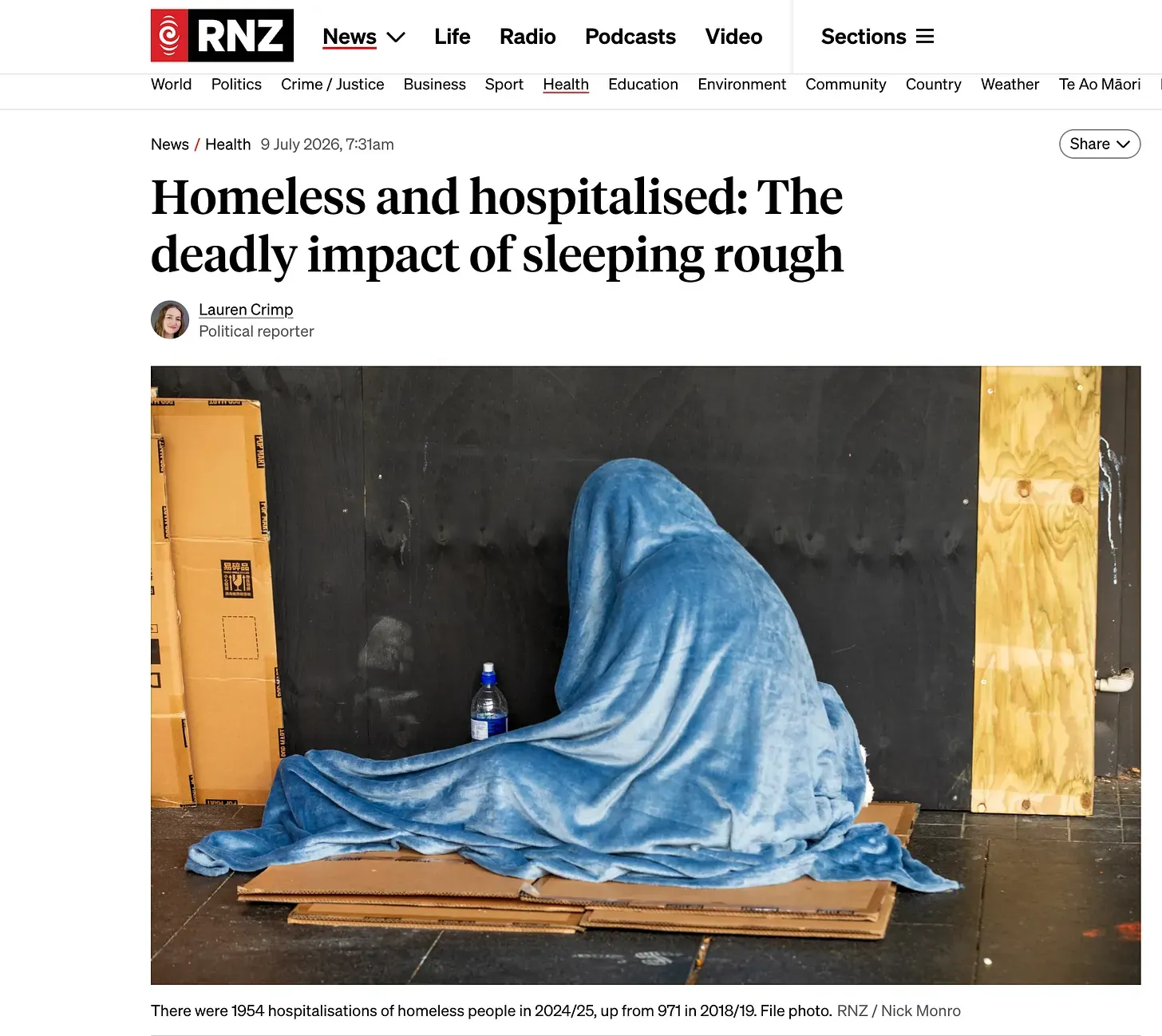
- 🏥 Edwards highlights RNZ’s Lauren Crimp investigation on rough sleeping and health: GP Dr Bruce Arroll at Auckland City Mission’s Calder Centre says it serves “the sickest I’ve ever worked with.”
- 📉 Calder Centre (2,300 patients, mostly homeless or formerly rough-sleeping) records a death every fortnight; average age of death is 55 for men and 54 for women — versus one death every three or four months at Arroll’s old suburban clinic of 5,000.
- 📊 Hospitalisations of homeless people doubled in six years: 971 in 2018–19 to 1,954 in 2024–25; seven of those hospitalised last year were babies under four; 25 were discharged from maternity wards.
- ⛺ A Salvation Army/Community Housing Aotearoa survey found Auckland rough sleeping more than doubled in the year to September 2025 — from 426 to 940.
- 🗣️ Auckland City Missioner Helen Robinson: “I have never seen this scale of homelessness in my 13 years… there’s totally unmet need.”
- ⚖️ Edwards argues the Government’s signature response has been move-on powers for police, not housing; a December aide-mémoire warned Treasury, Crown Law, Corrections, Police, MSD, the housing ministry and Oranga Tamariki all had concerns.
- 🗣️ Conservative Liam Hehir: the law “amounts to a power to move people on for being homeless. Not for threatening anyone. Not for blocking anyone’s path. For the fact of having no home.”
- 🎯 Takeaway: homelessness is framed as the predictable product of political choices — who gets housed, who gets subsidised, and who gets moved along — not a natural disaster.
2. NZ First’s Xenophobic Voting Policy
Natalia Albert — Less Certain
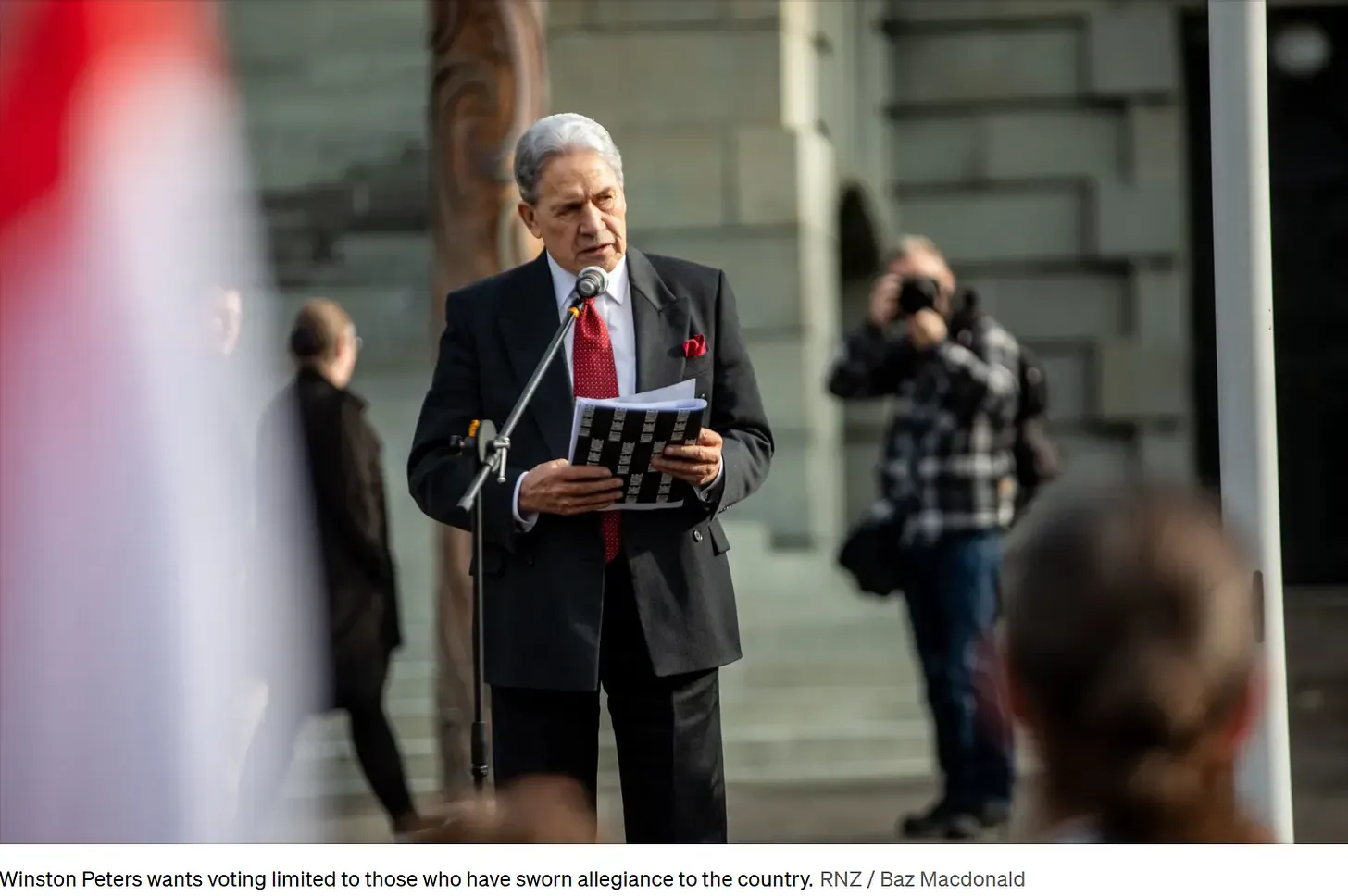
- 🗳️ NZ First has announced it will campaign to restrict general and local election voting to citizens only; permanent residents can currently vote under law dating from 1975.
- 🗣️ Winston Peters (Warkworth, 5 July): voting “should be a privilege of those who have sworn allegiance to New Zealand… If you haven’t… we are happy to let you live here permanently, but why should you get a say?”
- 🌏 Albert notes dual-citizenship barriers: China, India, Japan, Singapore and Indonesia (among ~50 countries) restrict dual nationality — taking NZ citizenship can mean surrendering the home passport.
- 💰 Naturalisation requires five years’ residence, 240 days in-country per year, English proof, character checks, and a $560 adult fee (up 19% after 22 years unchanged).
- 📜 She places the policy in a franchise-restriction tradition: Māori had no secret ballot until 1938, voted on a separate day until 1951, and lacked Māori-seat rolls until 1949.
- ⚖️ Legal academics note the Supreme Court has read electoral-qualification entrenchment as locking in only the age of 18 — so the citizens-only change may pass on a bare majority.
- 🎯 Takeaway: Albert calls the policy xenophobic, poorly sized (no public count of PR voters on the roll), and a waste of NZ First’s political capital while it holds major portfolios.
3. The VPN Ban
A Halfling’s View
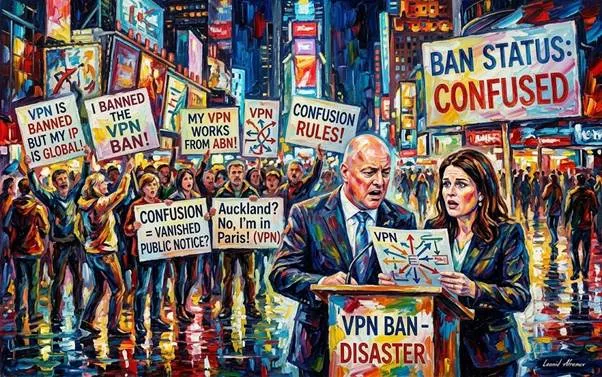
- 🛡️ The Education and Workforce Select Committee’s Online Harms report flags VPNs as a way under-16s could evade proposed social-media age restrictions and urges the regulator and platforms to explore limits.
- 📰 Henry Cooke (The Post) reported sources saying a VPN ban or restriction was part of Education Minister Erica Stanford’s plan and heading toward Cabinet.
- 🔐 The piece explains legitimate VPN uses: public Wi-Fi security, remote work (including Ministry of Justice remote access), protection from ISP profiling, journalists and dissidents, and access to geoblocked content.
- ⚠️ ACT and the Greens opposed VPN restrictions; the UK has also contemplated and then stepped back from a VPN ban for social-media age rules.
- 🏛️ The author warns that banning the tool punishes millions of legitimate users while criminals simply break the ban — cars, encryption and cash all have the same dual-use problem.
- 🎯 Takeaway: enforcing youth social-media bans via VPN restrictions risks turning privacy technology into a regulatory target and may be both unworkable and authoritarian.
4. A Very Kiwi Coup
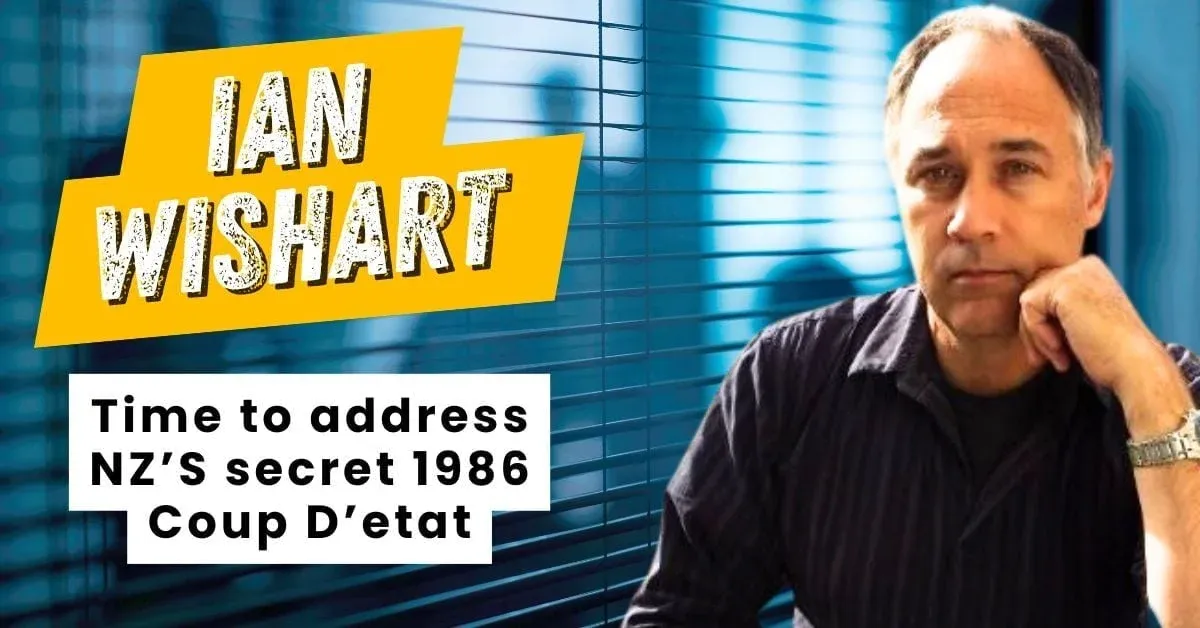
Ian Wishart — Reality Check Radio
- ⚖️ Wishart responds to former High Court judge Robert Fisher KC’s claim that New Zealand is already a republic “in all but name.”
- 📜 He argues the real elephant is the “secret NZ constitutional coup of 1986”: the Constitution Act 1986 and Imperial Laws Application Act 1988, which he says seized Crown authority from Westminster without popular ratification.
- 🇮🇪 Ireland’s 1930s independence, by contrast, required a public vote (autocthony) to establish a new source of constitutional authority.
- 👑 Wishart’s claim: New Zealanders remain “subjects” of a parliamentary monarchy in Wellington rather than sovereign citizens who delegated power to Parliament.
- 🗣️ “It was the ultimate smoky backroom deal, a quiet revolution. A very kiwi coup.”
- ⚖️ He says neither UK nor Lange–Palmer could lawfully transfer the Crown without ratification by the people — and that Australia and Canada sit in the same boat.
- 🎯 Takeaway: mere legislative tweaks won’t fix what Wishart calls an illegal, unratified parliamentary seizure of supreme power that has “intoxicated politicians ever since.”
5. Truth Is on Trial in Charlie Kirk’s Assassination
Douglas Murray — The Free Press
- 🔫 Murray argues the conspiracy theories around Charlie Kirk’s 10 September 2025 assassination are collapsing as the preliminary hearing for accused shooter Tyler Robinson proceeds in Provo, Utah.
- 📹 Evidence cited: surveillance of Robinson leaving the rooftop, a handwritten confession, texts to his lover, and his mother’s recognition of him from an FBI photograph; he turned himself in on 11 September after a family friend (a retired sheriff’s deputy) intervened.
- 🗣️ Online commentators blamed the Israeli government, Egyptian spy planes, Turning Point USA colleagues, Kirk’s widow, and crowd members in maroon shirts — almost everyone except Robinson.
- 🎙️ Candace Owens and Tucker Carlson, once close to Kirk, spent nearly a year poking holes in the government’s case and pointing elsewhere.
- ⚖️ A judge will decide whether the evidence is strong enough to go to trial; Robinson has not entered a plea.
- 🎯 Takeaway: Murray frames the case as a real-time test of whether evidence can finally overtake months of noxious conspiracy theorising.

6. This Is Kaitiakitanga
SPANIARD — Brash & Mitchell
- ⛏️ Ka Rūnaka of Ngāi Tahu is claiming a kaitiaki role against Santana Minerals’ Bendigo–Ophir Gold Project in Central Otago.
- 🦤 SPANIARD lists species extinguished pre-settler arrival — eastern and giant moa, Haast’s eagle, Finsch’s duck, New Zealand raven, Markham’s frog, greater short-tailed bat and more — plus climate and soil damage from extensive burning.
- 🗣️ “This is kaitiakitanga, as practised then and now. It’s tribal: undemocratic, unscientific, opportunistic, and self-serving.”
- 💰 Santana chair Peter Cook says Ngāi Tahu has requested significant payment — upward of the reported $100 million Meridian agreed for Waitaki hydro consents — and even company shares.
- 📜 The tribe has consultation rights under the Fast-track Approvals Act, RMA and Treaty settlement legislation; SPANIARD says the claims are “woolly, self-aggrandising and gratuitous.”
- 🎯 Takeaway: customary stewardship belongs in its lane; empirical science should lead technical decisions; “standover behaviour has no place in a modern democracy’s processes.”
7. A Guide to a Muscular Liberalism
Roger Partridge — Persuasion
- 📖 Partridge argues liberalism’s answer to “the good life” — freedom — tells you what to protect, not what to do with it; that silence is wise but, under assault, liberalism needs a more muscular defence.
- 🧠 Drawing on Aristotle, Mill, and Deci & Ryan, he lists four dimensions of flourishing: capabilities, meaningful relationships, purposeful work, and directing one’s own life.
- 🔍 Forms of flourishing cannot be prescribed in advance (Hayek on dispersed knowledge; Popper on conjecture and refutation; Mill’s “experiments in living”).
- 🇭🇺 He uses Orbán’s Hungary as a warning: press freedom fell to 74th globally; public universities were captured by loyalist foundations; the young and educated left; Orbán was defeated in April 2026.
- ⛪ Post-liberals (Reno, Deneen) are charged with hubris: treating the forms of the good life as known and licensed rather than discovered.
- 🎯 Takeaway: liberalism is not relativism — the dimensions of flourishing are knowable; the forms must stay open — and liberals must cultivate the ecology of freedom without trampling rights.

8. Iran and America: Contradictory Powers
Grant Duncan — Politics Happens
- 🇮🇷 The late Ayatollah Ali Khamenei was assassinated in an Israeli–American missile attack on 28 February; final burial was scheduled for 10 July in Mashhad, timed to rain on America’s 250th Independence Day.
- 📈 Duncan argues the assault strengthened the clerical–military system via a rally-round-the-flag effect; regime-change hopes among some Iranians have not materialised.
- 📊 About two-thirds of Iranians in a 2022 poll disapproved of government by religious law; a leaked 2024 government poll found 72.9% agreed religion must be separated from the state.
- 🌍 The Iran–US conflict is framed as a clash between national self-protection and global platform capitalism, with fossil fuels in the mix.
- ⚖️ Duncan argues liberal-democratic universalism always struggled with limits of toleration; identitarian hatred now defines both domestic politics and international relations — a gift to platform capitalism’s divide-and-rule model.
- 🎯 Takeaway: religious heritage and platform capitalism are the twin poles defining the age; Iran’s resilience and America’s fallibility both reshape the Middle East and beyond.

9. Memory Is a Terrible Statistician
Oliver Hartwich — Brash & Mitchell / NZ Initiative
- 📚 Hartwich and Bryce Wilkinson’s New Zealand by Numbers (2026) traces 100+ measures of NZ life, mostly back to 1970, to counter nostalgia and doom alike.
- 🚗 1973 saw 843 road deaths (worst on record); last year’s provisional toll was 272, with far more people and cars.
- 👶 Infant mortality: almost 17 of every 1,000 babies died before age one in 1970; last year it was four.
- ⏳ Life expectancy has risen almost eleven years since 1970; smoking and the 60% top tax rate are gone.
- 📉 The bad news: NZ ranked 3rd for income per head in the 1950s and 37th by 2024; the OECD productivity gap widened from 34% (1996) to ~40%; school results have slid for 25 years.
- 🏠 Houses still cost far too much; ageing demographics tighten the worker-to-retiree ratio each year.
- 🎯 Takeaway: “Countries do not decline or improve in one piece.” Stop trusting memory; check the long record.

10. Ban the Hardware, Not the Software
Ani O’Brien — Thought Crimes
- 📱 O’Brien accepts the evidence that social media harms children (Haidt’s The Anxious Generation, US Surgeon General risk warnings, RCTs showing reduced use improves wellbeing) and supports restricting kids’ access.
- 🤝 National and Labour both back an under-16 social-media ban; ACT and NZ First oppose; Greens have reservations — a “grand coalition” in the middle.
- 🚫 She rejects VPN bans and universal age verification that force every adult to identify themselves online, destroying anonymity for whistleblowers, abuse survivors and dissidents.
- 🧠 The harm is not only content but platform architecture: infinite scroll, autoplay, variable rewards and engagement algorithms — “pokie machines” for the thumb.
- 👧 Freya India’s work on girls: adolescence becomes public performance; identity formation is no longer private; boys face rising loneliness and declining real-world socialising (Twenge).
- 💡 Her alternative: ban or tightly regulate the hardware for minors — smartphones and always-on internet devices in childhood — rather than building an authoritarian software-and-identity state for adults.
- 🎯 Takeaway: save childhood without destroying adult privacy; the method matters as much as the objective.
What our members are saying about Ten@10
Elizabeth
These articles are compulsory reading for me and the perfect addition to the usual list of Goodoil items!
Lynne
Absolutely brilliant to receive these current and thought provoking articles.
Jonathan
Just wanted to let you know that I’m loving this new 10@10. Much appreciated from someone who chooses to read/watch almost NO mainstream media.
Murray
Cam, relish your output as the newspaper in Christchurch is so intent on non news. Thankyou
Fred
Thanks for Ten @ Ten, really enjoy reading it.Keep it up. All the best, keep healthy.
Jocko
Wonderful info not otherwise available in NZ. More power to your elbow! Thanks.