

This is edition 2026/188 of the Ten@10 newsletter.
Hi all,
This is the Ten@10, where I collate and summarise ten news items you generally won't see in the mainstream media.
Enjoy!
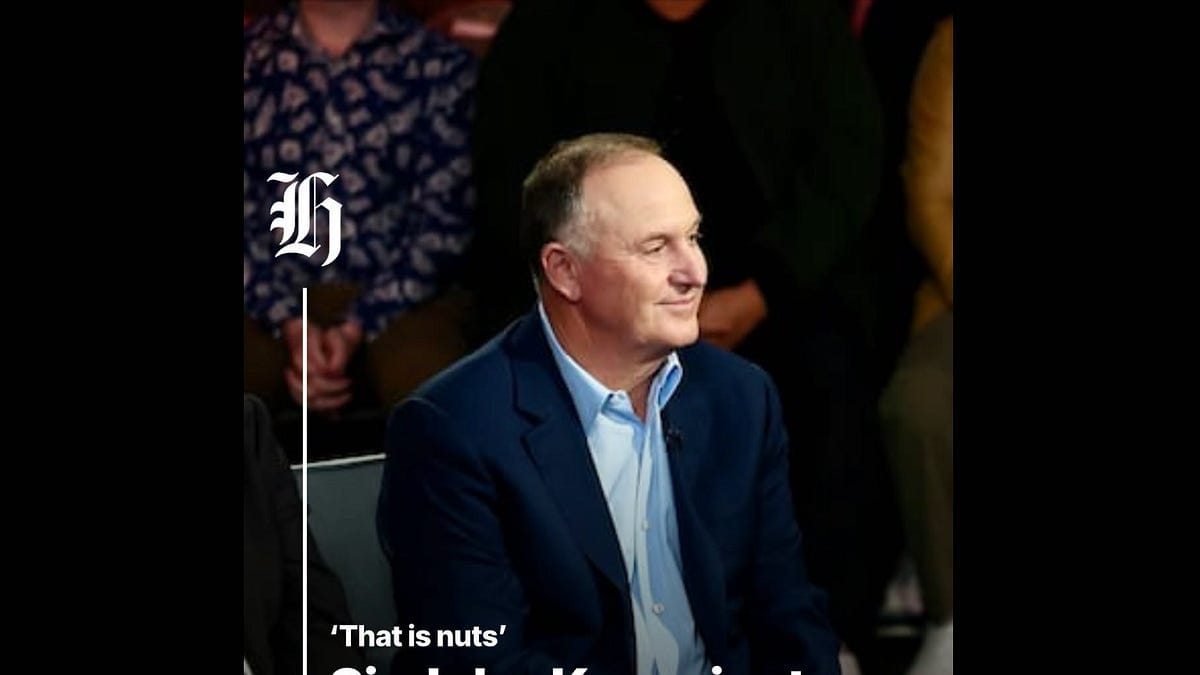
1. Democracy Briefing: Who's afraid of the billionaire question?
Bryce Edwards - The Democracy Project
- 🎤 Jack Tame noted the NBR Rich List now counts 26 New Zealand billionaires, up from 18 a year earlier, and asked Luxon and Hipkins: “Is it morally acceptable for any one person to be a billionaire?” Neither gave him the yes or no he wanted.
- 📰 Since then John Key, Tamatha Paul, Chris Penk, Simeon Brown and various commentators have weighed in, often with considerably more conviction than the two leaders.
- 💰 Edwards says it is not just theoretical: some of the billionaires being defended and attacked are among the campaign’s biggest backers, and Harry Mowbray, father of the billionaire Zuru entrepreneurs, is running a strategic-voting campaign to help the centre-right.
- ⚖️ David Harvey objected that the question “assumes wealth needs moral permission”, and Penk defended the leaders. Edwards agrees the yes or no demand was a gimmick, but calls it arguably the best question of the night because neither leader could answer from a script.
- 💣 Tame told Tova O’Brien both leaders treated it “like an unexploded hand grenade”, and he could not understand why Luxon did not simply say National wanted more billionaires, businesses and entrepreneurs.
- 🏠 Bryan Bruce thought Hipkins missed a social-democratic argument: “How much inequality should a democratic society tolerate when some citizens cannot afford adequate housing, healthcare or food?” Edwards calls that a better question.
- 🚀 At the Herald’s “Future of New Zealand” debate, Sir John Key demanded, “What sort of wowsers have we become?”, pointed to Peter Beck and Graeme Hart, and called the idea there was something wrong with their success “nuts”.
- 🟢 Green MP Tamatha Paul called extreme wealth parasitic and said billionaires “need to pay their fair share”, adding “I’m not saying they should not exist altogether.” Faced by RNZ’s Guyon Espiner with James Cameron, who with his wife gave the Greens $50,000 in 2023, she would not condemn him personally.
- 🥊 Edwards calls Paul’s sweeping denunciation a bit of a fail, and Key’s answer inadequate because it dodged the harder questions about inequality and the distribution of wealth.
- 💡 Takeaway: a former National prime minister and a Green MP offered a more interesting ideological contest than the two men competing to lead the next government.

2. A Stupid Question
David Harvey - A Halfling’s View
- ❓ Harvey calls the debate question on whether it is moral to be a billionaire one of the more absurd to emerge from the leaders’ debate, and says it should have been rejected at the outset.
- ⚖️ The question, he writes, “assumes wealth needs moral permission, as if the default is guilt.” An honestly earned fortune is an achievement to admire, not something to excuse.
- 🧠 Wealth is not a fixed pile the rich have grabbed, he argues. It is created by minds, and money is a tool of exchange representing productive effort, not the root of evil.
- 🤝 A billionaire who got rich selling products people freely chose to buy has dealt with millions of people as a trader. Everyone judged themselves better off, and nobody was forced.
- 🚫 He calls the claim that billionaires owe their wealth to society an immoral demand, and says taxing fortunes to redistribute them means taking by threat what someone earned.
- 🏭 Billionaires do not hold a billion dollars in cash, he notes. Most of it is ownership stakes in companies that already employ people, fund research and build infrastructure.
- 🚀 The chance of an enormous payoff draws capital and talent into risky ventures, and large fortunes fund things governments neglect, such as the Gates Foundation’s work on malaria and polio.
- 🔍 Judge conduct, not net worth: did they treat workers fairly, pay their taxes as the law requires and avoid harming others?
- 💡 Takeaway: Harvey calls it the most inane, stupid and irrelevant question posed in the campaign so far.
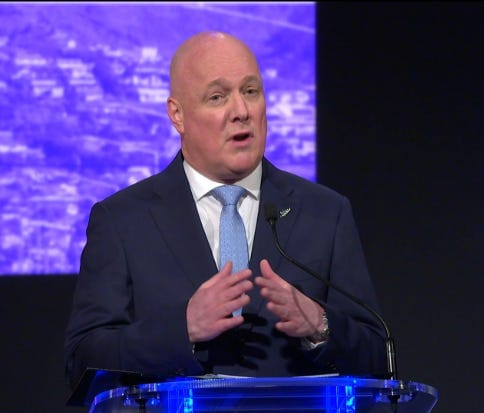
3. THE NATIONAL PARTY’S DEATH WISH
John McLean - John’s Substack
- 🗳️ McLean says National is pushing “two ticks National”. John Key told the 27 September campaign launch that voters thinking otherwise were “stupid”, and campaign manager Simeon Brown repeated the message on The Platform.
- 🔀 He argues Nat/Nat voting actually reduces the chances of a National, ACT and NZ First government. For right-leaning voters, he says, the best tactic is the National candidate plus ACT or NZ First on the party vote.
- ✅ There is nothing untoward about vote splitting under MMP, which contemplates it, and he notes the Māori Party is promoting it for its own ends.
- 👑 He puts National’s stance down to “a vainglorious delusion of entitlement”, a divine right to govern.
- 📉 National won just over 38% at the last election and is polling about 28%. On that, he says, Nicola Willis, Chris Bishop, Paul Goldsmith and Speaker Gerry Brownlee would not be back in Parliament.
- 📺 From the TVNZ debate he lists Luxon’s “clangers”: not conceding it is not immoral to be a billionaire, saying he had not read the medical school admissions report, deferring to the ICJ on Gaza, and ruling out Opportunity.
- 😠 McLean says Key’s 8 October interview with Sean Plunket made clear his aversion to vote splitting stems from personal hatred of Winston Peters, and that Key would rather a Hipkins government than an emboldened NZ First.
- 🇬🇧 For where National is heading, he points to the shrivelled British Conservative Party.
- 💡 Takeaway: “Nationalism is a powerful force for good and National is no longer nationalist.”
4. RODNEY HIDE: Tamatha Paul has found the immoral ones. She should check the caucus room
Rodney Hide - Brash & Mitchell
- 🎵 After Jack Tame’s billionaire question, Green MP Tamatha Paul told TikTok, “The answer is yes,” calling billionaire wealth “parasitic”.
- 🎯 She then promised to quit politics if anyone could name an ethical billionaire among New Zealand’s 26.
- 🎬 On RNZ’s Midday Report, Guyon Espiner named James Cameron, a New Zealand citizen on this year’s Rich List at $1.6 billion, who with his wife gave the Greens $50,000 in 2023. Paul said she would not go through billionaires individually.
- 💸 Hide notes Green MP Golriz Ghahraman had pushed a member’s bill to cap political donations at $35,000 a year. It failed, and Cameron’s cheque was not returned.
- 🩺 Offered Bill Gates, Paul said he was “popping up in the Epstein files”. So the test, Hide says, is really the company you keep.
- 🏛️ He then looks at the company she keeps: Metiria Turei’s benefit and enrolment admissions, Ghahraman’s shoplifting case, Darleen Tana’s expulsion under the waka-jumping law, Elizabeth Kerekere’s exit, Julie Anne Genter’s contempt finding and Benjamin Doyle.
- 🏠 In August Paul told the House that National’s Grant McCallum bought a Wellington house to claim allowances. He had bought in Paihia, in his electorate, and is still waiting for an apology.
- 🛒 In a market, Hide says, nobody gets a cent unless someone hands it over willingly. The only outfit that takes your money without asking is the one Paul works for.
- 💡 Takeaway: Paul promised to quit if anyone named an ethical billionaire. Espiner offered one, the one who gave her party fifty grand. “She’s still in politics.”

5. The chickens come home to roost
Liam Hehir - The Blue Review
- 🏉 Hehir says the 2026 result is likely to turn on four small but potentially decisive bounces of the rugby ball.
- 🟠 First, Opportunity. It is the only minor party positioning in the centre, the major-party vote is at an all-time low, and most polling has it above 5%. If it cannot break through this year, it never will.
- 🔵 Second, National’s overhang. He thinks it more likely than not that National keeps about five more electorates than its party vote entitles it to, though he is no fan of efforts to intensify that.
- 🟤 Third, Te Pāti Māori’s overt gaming of the system to engineer its own overhang, which he says is drawing much less consternation in the mainstream media.
- 📅 Fourth, enrolment now closes at midnight on 25 October, before advance voting opens, which may slightly blunt the usual drift of special votes to the left.
- ⚠️ The overhang is the one that will damage our constitution, he argues. If National wins on an overhang, Labour will not hold back on a Māori-seat overhang next time, and escalation follows.
- 🇺🇸 He points to the US Senate filibuster: Democrats scrapped it for executive-branch and lower-court nominees in 2013, Republicans extended that to the Supreme Court in 2017, and the “Flight 93 election” logic took hold.
- 🇫🇷 The better warning is France’s Fourth Republic, with more than twenty governments between 1946 and 1958, until the Algerian crisis brought in de Gaulle.
- 💡 Takeaway: stability needs both sides to show restraint, and Hehir fears our point of no return “is now firmly in the rear-view mirror.”
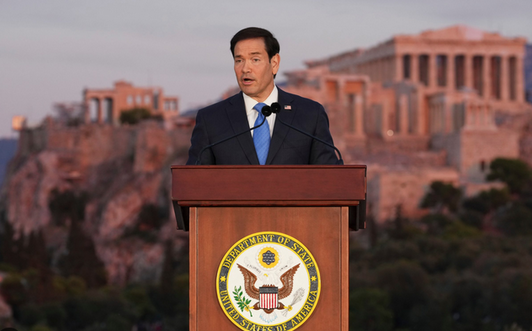
6. After the Fourth Listen to Rubio's Soaring Rhetoric...
Olivia Pierson - OliviaPierson.org
- 🎙️ Pierson says it is “still like dying and going to heaven” to hear Secretary of State Rubio raise the bar in political discourse, and quotes him at length.
- 🏛️ The ancients, Rubio says, believed in the great man who obtains immortality through his deeds, won by striving and sacrificing for something larger than himself.
- ⚔️ His examples: Socrates refusing to abandon the inquiry into truth, the 300 Spartans fighting to the last man, and Achilles choosing glory at Troy over a long, peaceful life.
- ✝️ Those qualities shaped the Western moral imagination, he says, from the Christian martyr and Saint Thomas More to the Alamo and the Declaration of Independence’s pledge of “our Lives, our Fortunes and our sacred Honor.”
- 🫡 From the Greeks the West inherited its sense of duty: the soldier who will not abandon his post, the captain who goes down with his ship.
- ☠️ He contrasts that with Iran’s radical mullahs, whose cult of death hails child suicide bombers. “Our heroes may be willing to die for their cause; but our heroes do not worship death.”
- 🌍 These values, Rubio says, are not universal but the product of a distinct character, and of a civilisation “we must fight to defend today”.
- 🇳🇿 Pierson’s response: “Oh God, a 1000 times, Amen!” She tags Winston Peters, David Seymour, Christopher Luxon, Chris Hipkins and Chlöe Swarbrick.
- 💡 Takeaway: she calls this the rightful future of political discourse. “A command to RISE.”
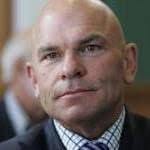
7. RODNEY HIDE: Everything blew up in Elon Musk's face. Then he made a trillion dollars
Rodney Hide - Brash & Mitchell
- 📰 In April last year RNZ ran a CNN piece headlined “Everything is blowing up in Elon Musk’s face”, reporting he had lost US$100 billion in three months.
- 🗞️ The Atlantic, The New York Times and a Listener book review piled on. “Shattered. Broken. Finished.”
- 🚀 On 12 June SpaceX listed on the Nasdaq, raising a record US$75 billion, and Musk became the world’s first trillionaire. Forbes puts him at about US$1 trillion.
- 🚗 Tesla is worth about US$1.48 trillion, Tesla New Zealand’s revenue nearly doubled last year to $285.3 million, and this week Trump gave Musk the National Medal of Science.
- 🛰️ Falcon boosters have landed more than 660 times, and Falcon 9 flew a record 165 times last year. Starlink has about 11,000 satellites and over 10 million subscribers, and got news out of Wairoa after Cyclone Gabrielle.
- 🗣️ He bought Twitter for US$44 billion, handed over the Twitter Files and introduced Community Notes, which Meta copied in January 2025.
- 🤖 Tesla robotaxis carry the public in parts of six US cities with nobody at the wheel, and xAI built its Colossus supercomputer in 122 days. Neuralink, the Boring Company and Optimus robots complete the list.
- 🙊 The media never corrected itself, Hide says. RNZ and the Herald ran the trillionaire news off the wires with no reflection.
- 💡 Takeaway: “It wasn’t an explosion. It was lift-off.” Rather than welcome him, Hide says, we throw rocks, as Tamatha Paul did this week in calling billionaire wealth “parasitic”.

8. Still too clever by half
Liam Hehir - The Blue Review
- 🎓 Hehir calls Don Brash highly intelligent and says he understands the mechanics of MMP perfectly well. As a former Reserve Bank governor, his statistical intuitions are probably superior to Hehir’s own.
- 🤨 His political foresight is another matter. Brash came close to endorsing Winston Peters in 2017.
- 🗳️ Brash was impressed enough by NZ First’s promise of a referendum on the Māori seats, a Hobson’s Pledge priority, that he publicly contemplated voting for the party. “How did that work out?”
- 📰 Brash was responding to Hehir’s Herald article calling the vote-split campaign a fool’s errand.
- 🔢 Brash spends considerable energy explaining how an engineered overhang could give the coalition a three-year stay of execution. Hehir says nobody has really disputed that.
- ⚖️ What is in contention, he writes, is not the electoral mathematics but the electoral politics.
- 🔵 He concedes a small National overhang looks plausible on current polling, an organic result of a party polling under 30% while holding around two-thirds of the electorates.
- 💡 Takeaway: the real question, Hehir says, is how many extra seats an organised strategic-voting campaign would bring, at what cost, and at what greater risk.

9. Tactical voting and the overhang strategy: a smart idea?
Grant Duncan - Politics Happens
- 🗳️ Duncan notes voters on both left and right are being urged to split their two MMP votes to maximise the overhang.
- 📊 In 2023 just over a third of voters split. Te Pāti Māori won six of the seven Māori seats while Labour topped the party vote in all seven, giving TPM a two-seat overhang on 3.1% of the party vote.
- ✅ Overhangs are “a feature, not a bug”, he writes. Candidates who win electorates won them fairly.
- 🟤 TPM started the tug-of-war by asking Māori-roll voters to give their party votes to other left parties. One risk is that Labour and the Greens, possibly with Opportunity, form a government and leave TPM on the sidelines.
- 🔵 On the right, some urge a National electorate vote with an ACT or NZ First party vote. National, worried about losing Nicola Willis and Chris Bishop, insists on “two ticks blue”.
- 👍 For the strategy: it is within the rules, it can help cause or prevent a change of government, and it makes voters think ahead to government formation.
- 👎 Against: voters become fodder for powerful influencers, gaming the system could prompt calls for another MMP referendum, people do not vote for their preferred party, and tactical votes can bring unknown list MPs into Parliament.
- 📜 The “vote for a coalition” argument is misleading, he says. The ballot asks for one party, and coalitions are formed after the election. Key called split voting “the opposite of clever”, and Peters criticised him for it.
- 💡 Takeaway: vote as you see fit, but heeding a call to vote tactically en masse “may not produce the expected result.”
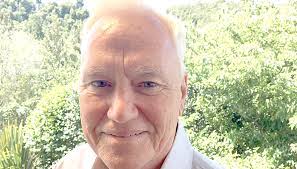
10. RICHARD PREBBLE: Bad news and more bad news for National
Richard Prebble - Brash & Mitchell
- 📉 The latest TVNZ-Verian poll has the coalition losing.
- 🗺️ Applying a 5% swing, Prebble says National loses nine electorates: Banks Peninsula, Henderson, West Coast-Tasman, Hutt South, Wairarapa, Wigram, East Cape, Kāpiti and Mt Roskill.
- 🔢 That leaves National 36 electorates. On 29% of the party vote it is entitled to 35 MPs, so not one National list MP would be elected, and winning back Tāmaki makes the arithmetic worse.
- 📝 His caveats: polls measure the party vote, not the electorate vote, he assumed a uniform swing, and he did not allocate Opportunity’s support.
- 🔀 At the last election nearly 60% of ACT party voters gave their electorate vote to National, and nearly 44% of Green voters gave theirs to Labour.
- 🔵 The lesson, he says: on this poll the centre-right loses, and National’s two-ticks strategy is not working.
- 🟤 Other polling suggests Te Pāti Māori’s electorate-only strategy could be enough to tip the balance. Strategic voting will decide the election.
- 💡 Takeaway: Luxon saying he would rather not be in coalition is like planning to win Lotto. “Luxon needs a cup of tea with Seymour. And perhaps Peters too.”
What our members are saying about Ten@10
Elizabeth
These articles are compulsory reading for me and the perfect addition to the usual list of Goodoil items!
Lynne
Absolutely brilliant to receive these current and thought provoking articles.
Jonathan
Just wanted to let you know that I’m loving this new 10@10. Much appreciated from someone who chooses to read/watch almost NO mainstream media.
Murray
Cam, relish your output as the newspaper in Christchurch is so intent on non news. Thankyou
Fred
Thanks for Ten @ Ten, really enjoy reading it.Keep it up. All the best, keep healthy.
Jocko
Wonderful info not otherwise available in NZ. More power to your elbow! Thanks.


