Here’s the toughest drinking-game in the world: take a drink every time the legacy media trot out ‘far-right’ or ‘Trump’ in any given Guardian article, then try and walk a straight line. Good luck, if you can bring yourself to read the following jeremiad.
A Trump-admiring far-right millionaire lawyer and self-styled “outsider” has defeated a leftwing senator by a razor-thin margin to win Colombia’s presidential runoff, in an election that promises to mark a dramatic shift in the country’s decades-long armed conflict.
That “razor-thin margin” was, in fact, over a quarter of a million votes. As a percentage, it wasn’t much narrower a margin than several recent American presidential elections, or the first preference vote count in the 2025 Australian federal election. But this is a candidate who’s not only not a leftist, but openly ran on a platform of opposing the establishment. So, of course the Grauniad has to poison the well for all they’re worth.
So, we get, in a thousand-word piece, four ‘far-rights’ and five ‘Trumps’. It’s almost like Guardian writers have a Lovense vibrator connected to their computer, which gives them a happy little buzz every time they type one of their approved trigger-words. And that’s just the males. Have fun getting that image out of your head.
Of course, the real issue here is that Colombia is just the latest in the wave of elections steadily erasing the ‘Orange Revolution’ which had the Guardianistas so creaming themselves a decade ago. Mostly because Latin Americans are just sick of the crime and violence.
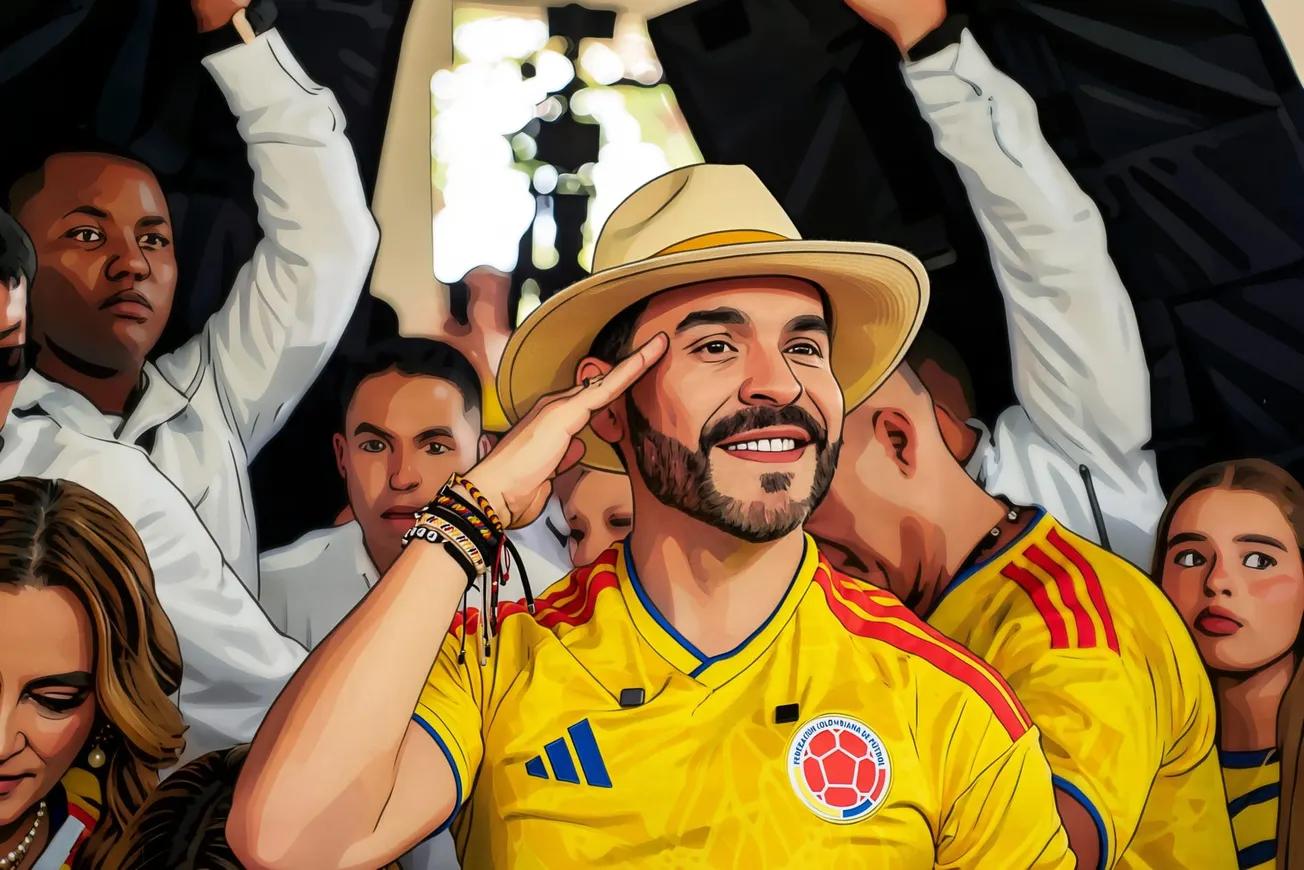
Abelardo de la Espriella’s win ends four years of Colombia’s left-wing president, Gustavo Petro. Petro was constitutionally barred from another term and threw his weight behind leftist Senator Iván Cepeda. The result fits a clear regional pattern: voters across Latin America are rejecting the left’s record on crime, economic failure and coddling of armed groups.
In a campaign dominated by the violence that has once again engulfed the country, De la Espriella prevailed on a promise to adopt an iron fist approach against criminal groups.
Colombians are no doubt looking up along the Panamanian isthmus to El Salvador, where the murder rate has plunged since Nayib Bukele ruthlessly jailed criminal gangs. The likes of the Guardian bleat about ‘human rights’, but Salvadorans are happy to have gone from living in one of the world’s most dangerous countries to one of its safest.
Petro’s “total peace” policy produced the predictable result: temporary ceasefires exploited by criminals while violence surged back to levels not seen since the 2016 peace deal. De la Espriella, who calls himself “El Tigre”, has promised mega-prisons and to treat gangsters like the vermin they are. He also wants American help hitting coca plantations. Colombia remains the world’s top cocaine producer because left-wing governments kept negotiating with the people who run the trade.
To solve Colombia’s problems, we need to build a very close alliance with the US, which is not only our main trading partner but also our most important strategic ally in the fight against organised crime.
Donald Trump endorsed him after the first round. Other regional leaders who have already turned against the left – Javier Milei in Argentina, Daniel Noboa in Ecuador, José Antonio Kast in Chile – quickly congratulated the winner. When Petro leaves office in August, only a handful of left-wing governments will remain in the region.
De la Espriella, a criminal lawyer who once represented paramilitaries fighting leftist guerrillas, campaigned as an anti-establishment outsider. He promises to shrink the state by 40 per cent and break completely with Petro’s failed approach of endless talks with armed groups. His vice-president pick, a former finance minister under the previous conservative government, signals at least some economic seriousness.
Latin America has spent decades cycling through left-wing experiments that deliver higher crime, weaker economies and more powerful narco-guerrillas. Voters are finally pushing back. Colombia’s result is not an aberration: it is part of the same rejection that produced Milei, Noboa and the growing strength of right-leaning forces from Honduras to Peru.
The Grauniad can keep typing ‘far-right’ until its keyboard short-circuits. The people on the ground have made their choice clear: enough with the left’s excuses, enough with the body count and enough with politicians who treat criminals better than their victims.