
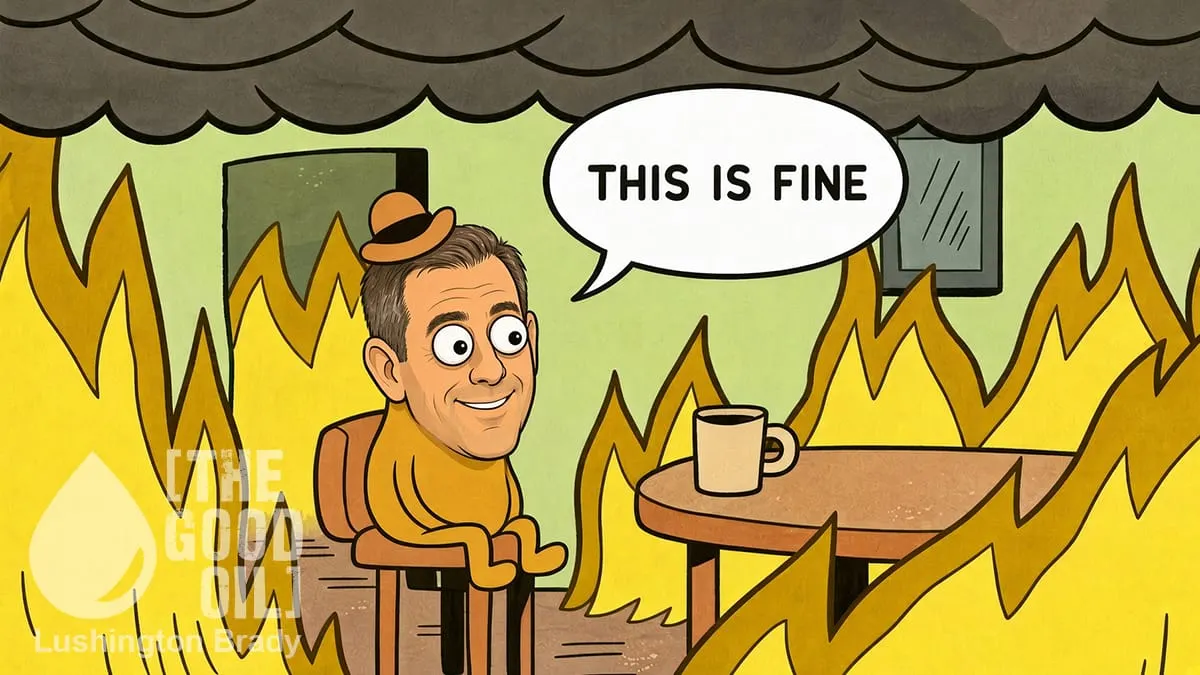
Budgets are usually a pretty dry affair. Once upon a time, the most the headline writers could work with was the old, ‘Beer, Cigs, Up!’ chestnut. But then there are the horror shows.
One of the more infamous recent ones was the 2014 Tony Abbott/Joe Hockey first-term budget: not because it was economically bad – even its ‘austerity’ measures were relatively modest – but because it was so politically tone-deaf that it crippled the new government before it had barely started. The footling proposed Medicare co-payment, which would have in effect affected almost nobody, was a golden gift to a media-left establishment already gripped by Abbott Derangement Syndrome. Most importantly, though, it broke a key election promise not to touch pensions. An electorate that was sick of being lied to their faces (such as Julia Gillard’s infamous “There will be no carbon tax” lie on the last day of the 2010 election) reacted with incandescent fury.
Then along came Zippy’s 2026 budget.
As I’ve already reported, Chalmers has ripped going on a trillion dollars of wealth from the country’s economic guts in just six months. The only thing more heroic than Zippy’s failure, though, is his lead-plated denialism.
The treasurer may persist in lecturing the nation from the dispatch box with the airy condescension of a kindergarten headmistress, but the verdict in the street is already in. A fiscal statement that destroys nearly a trillion dollars of wealth and still dominates the front pages five months down the track for all the wrong reasons cannot, by any metric known to political science, be spun as a triumph. It is an unmitigated disaster.
No budget still at the centre of negative news and politics nearly six months after it was brought down can be considered a political success. In Newspoll the ALP fell from 31 per cent primary vote in May to a near-record low of 27 per cent in July and satisfaction with Anthony Albanese fell from 40 per cent to 36 per cent.
The subsequent polling barely flatters them. While Labor’s primary vote has staged a pitiful crawl back to 29 per cent, the prime minister’s satisfaction rating remains stuck fast in the mid-30s doldrums. The electorate is waking up to the bitter reality that the government’s grand narrative of ‘equity’ is merely a bureaucratic euphemism for capital destruction.
Consider the housing market, where Treasury’s rosy prognostications have collided head-on with brutal reality. The mandarins in Canberra soothingly assured us that the budget’s assault on capital gains and investment structures would cause a mere two per cent blip in price growth, alongside an insignificant couple of dollars added to weekly rents. Instead, national home values have cratered by over five per cent, with projections pointing towards a catastrophic 15 per cent fall, whilst rents have surged upwards. Rather than making homes affordable, Dr Chalmers has managed to engineer a property rout while simultaneously torching rental supply. It takes a particular kind of genius to pull off both feats at once.
To watch the government attempt to salvage this mess is to witness a theatre troupe stumbling through an unrehearsed farce. Every sitting week brings a fresh humiliation:
Even after a series of backdowns over proposed changes to superannuation, small business and investment, as well as continuing confusion over savings in the NDIS, health and veteran’s affairs, the budget still casts a pall over the government.
Meanwhile, the spending juggernaut rolls merrily onward. Rather than confronting the sacred cows that are bleeding the nation dry, Chalmers prefers to treat taxpayers like cash registers. The National Disability Insurance Scheme, which began life as an exercise in high-minded charity, has metastasised into an uncontrollable budgetary black hole, swallowing revenue whole whilst the promised billions in savings dissolve into vaporous rhetoric.
The Reserve Bank, having pushed interest rates to a 15-year high to mop up the inflation created by Canberra’s drunken-sailor expenditure, has effectively called the treasurer’s bluff. It’s not global headwinds or faraway regional squabbles driving domestic inflation: it’s the Commonwealth’s insatiable addiction to spending money it does not have.
Yet still we’re treated to the usual platitudes, as if a politician’s waffle provides comfort to a family staring down another crippling mortgage repayment or a small business fighting off solvency concerns. The treasurer insists that his reforms will merely tidy up the ledger and penalise only the wicked, yet every enterprise from the corner store to the regional tradie finds itself trapped in the regulatory crosshairs.
Voters have had enough of the shell games. You cannot spend your way to fiscal health, nor can you tax an economy into prosperity. Dr Jim’s budget was meant to cement Labor’s economic authority; instead, it has exposed the uniparty’s fundamental inability to govern beyond the next handout.


![[The Good Oil] Stuff Up of the Day](https://storage.ghost.io/c/31/f4/31f4e20a-0315-499e-83ff-139e8eab53bf/content/images/size/w1304/format/webp/2024/09/Stuff-up-image-1.webp)


