
Summarised by Centrist
Labour leader Chris Hipkins has defended MPs’ unusually generous superannuation arrangements by arguing that strong pay and retirement benefits help protect the political system from corruption.
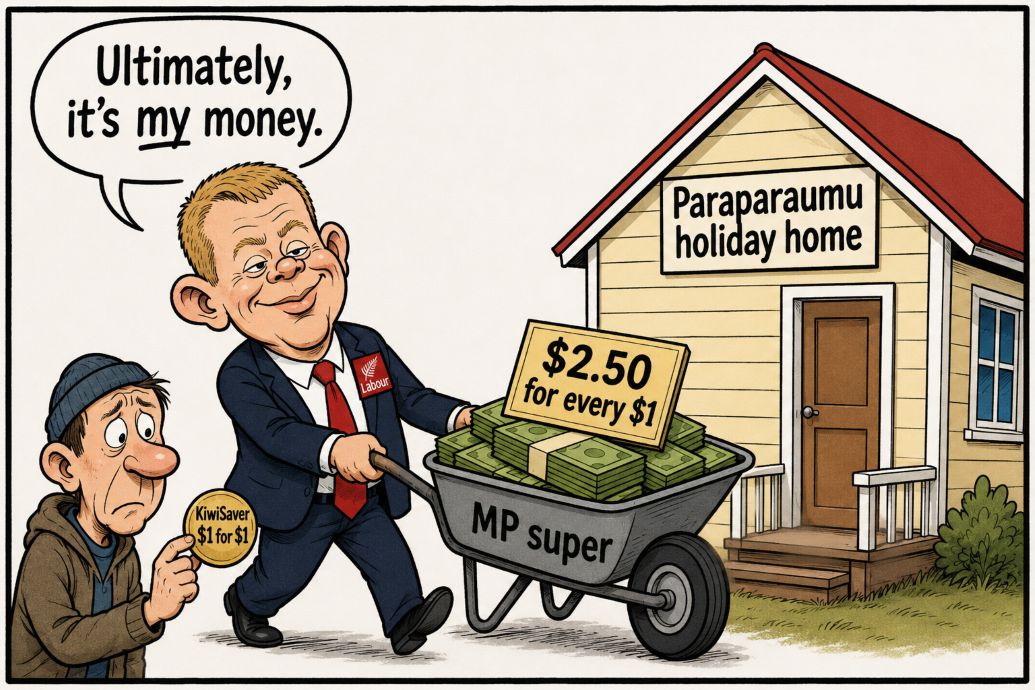
For every dollar an MP contributes, taxpayers provide a gross subsidy of up to $2.50, capped at $36,240 a year. Tax is deducted from that subsidy before the balance is paid into the MP’s superannuation scheme. By comparison, an employee contributing to KiwiSaver at the default 3.5% rate receives roughly $1 from their employer for every dollar they contribute.
Hipkins said providing well for MPs during and after their political careers reduced the risk that they would take secondary employment or make decisions with future job prospects in mind.
His comments follow scrutiny of a Paraparaumu holiday home owned by his private superannuation scheme, which receives the generous parliamentary subsidy. Hipkins acknowledged that the scheme’s funds were helping pay the mortgage, but defended the arrangement by saying, “Ultimately, it’s my money.” Ordinary KiwiSaver members cannot direct their retirement savings into a family holiday home.
A 2020 Remuneration Authority review concluded the scheme was not fair to taxpayers and recommended phasing it out for new MPs in favour of KiwiSaver. The proposal was shelved during COVID and never revived.
ACT leader David Seymour said he had no objection to implementing the recommendation, although he argued greater attention should also be paid to highly paid public servants.
If every MP claimed the maximum contribution, the scheme would cost taxpayers about $4.4 million a year.
Loading...