Owen Cumming
Carbon dating is how we determine the age of fossils and relics from our past. But how does it actually work?
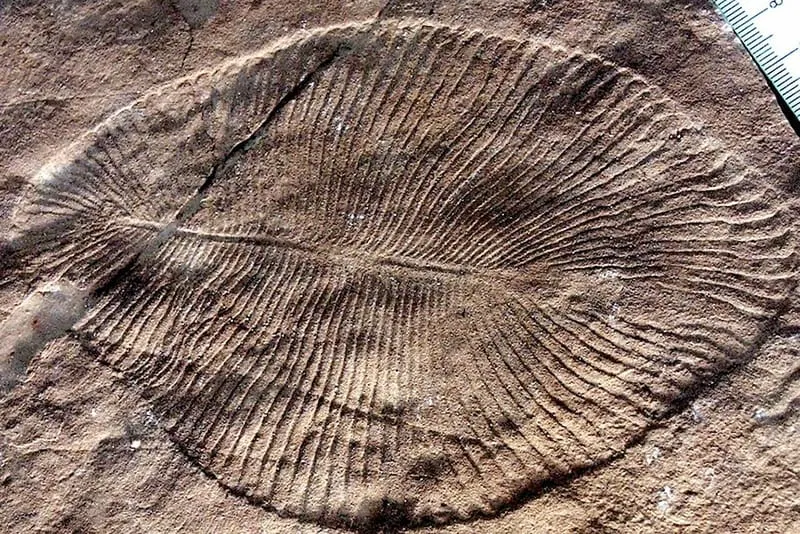
WA is home to the earliest fossil evidence of life and human culture on Earth. But when an archaeologist reveals a relic or a palaeontologist finds a fossil, how do they know how old it is?

GIPHY
The answer, my friends, is radiocarbon dating.
Carbon dating helps us uncover WA’s geological and aboriginal history by measuring the ratio of carbon-14 atoms to carbon-12 atoms in organic material.
But for most of us, it’s not totally clear what that actually means.
To understand, perhaps it’s best to go back to the beginning.
Carbon chaos
Picture this. We’re in Earth’s upper atmosphere.
Nitrogen-14 atoms (N-14) (7 protons and 7 neutrons in their nucleus) are floating around, relaxing.
Suddenly, the N-14 atoms are bombarded by photons from the Sun!

GIPHY
The force of it rips their protons and neutrons apart – rearranging their atomic nuclei to create carbon-14 (C-14) (6 protons and 8 neutrons)!
However, the C-14 atom is not relaxed but unstable! It was never meant to be.
So by ejecting an electron (also known as beta decay), C-14 begins turning one of its neutrons into a proton – slowly but surely turning itself back into N-14.
Meanwhile, carbon-12 atoms (C-12) (6 protons and 6 neutrons) float around in the atmosphere unbothered.

GIPHY
When you take a step back and look at the atmosphere as a whole, C-12 concentrations don’t change. However, N-14 is constantly turning into C-14.
As a result, there’s always a consistent ratio of C-14 to C-12 atoms in the atmosphere. That is very important.
Tick tock carbon clock
Humans and every other living thing on Earth take in carbon throughout our lives. And eventually, the ratio of C-14 to C-12 in our bodies ends up being almost exactly the same as the ratio in the atmosphere.
When things die, half the trapped C-14 will succeed in turning into N-14 every 5730 years. This is called a half-life. Meanwhile, the C-12 atoms continue to do absolutely nothing.
Half, of a half, of a half …
So something 5730 years old will have exactly half the ratio of C-14 to C-12 compared to the atmosphere.
Still with me?

GIPHY
After another 5730 years, half of the remaining C-14 will have decayed to C-12. So the ratio will be one-quarter of the atmosphere’s.
This cycle of C-14 atoms halving in concentration every 5730 years goes on and on for about 50,000 years.
At that point, there is only one 500th of the original C-14 left. And measurements start to get unreliable.

GIPHY
Understanding our past
By measuring the way carbon atoms change within the Earth, C-14 dating allows us to know when things were created. This gives us a better understanding of early human cultures and the history of our planet.
Yeah, it’s a lot of numbers to get your head around. But that’s the beauty of maths, right?
This article was originally published on Particle. Read the original article.