In Tom Sharpe’s classic satire of Apartheid-era South Africa, Indecent Exposure, local police commanders attempt to stop their men fraternising with local black women, by means of aversion therapy. The programme backfires when, alongside the slides of naked Bantu women, the dimwitted officer running the experiment accidentally includes pictures of his white wife, while the men are being given electric shocks to their genitals. As a result, the entire force turns into raging homosexuals.
That was satire, of course. Imagine the reaction, though, that in the real world, doctors proposed aversion therapy for gay men as a means of ‘curing’ their homosexuality. Actually, we don’t need to imagine anything: the moral panic over ‘conversion therapy’ has led to multiple new laws banning the practise (unless, of course, you want to convert little boys to girls, or vice-versa).
This all raises serious questions over just how far governments and bureaucrats should be allowed to go, to persuade or force allegedly free citizens to conform to their idealised worldview. Because we know perfectly well just how far governments and their bootlicking academic pets will go, to ‘nudge’ populations.
A recent scientific paper should sound the alarm over just how much further they would be prepared to go, if they could get away with it.
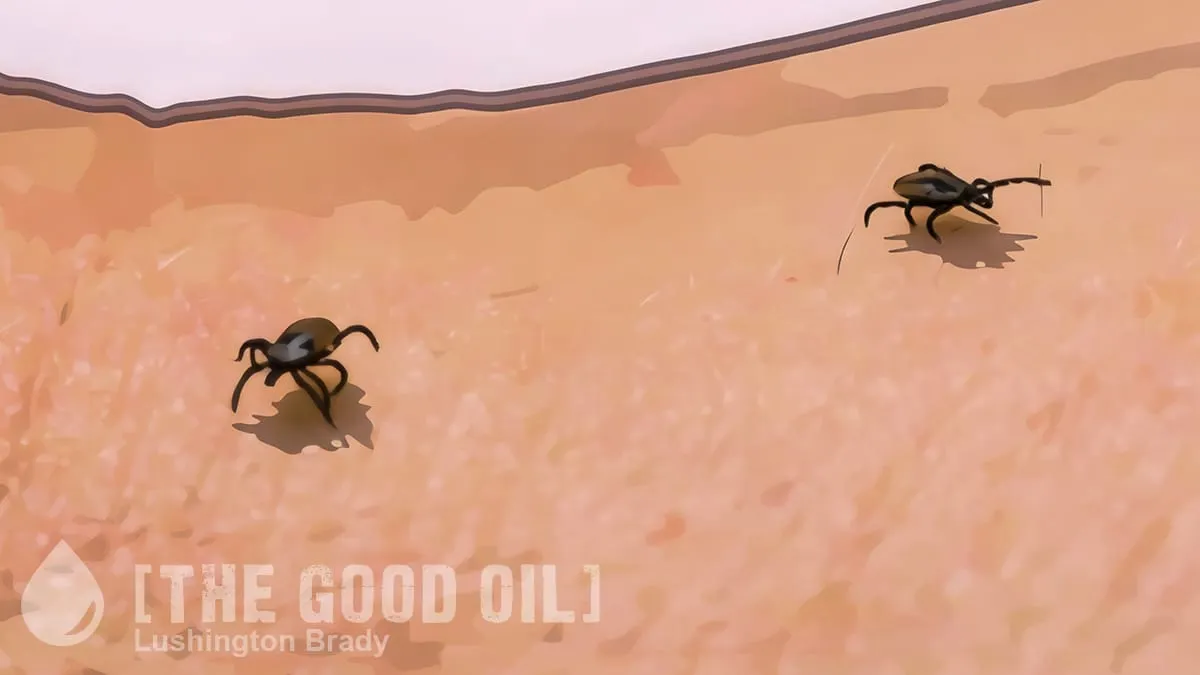
Two bioethics professors at Western Michigan University have published a paper exploring whether the intentional spread of alpha-gal syndrome, a tick-borne illness that causes a debilitating allergy to red meat, could be morally justified. Their argument rests on the assumption that eating meat is itself morally wrong. If that is true, they contend, then preventing the spread of the allergy is also wrong.
The authors wrote that “promoting” alpha-gal syndrome “is strongly pro tanto morally obligatory,” using the philosophical term to mean an act is required unless outweighed by stronger moral reasons against it.
“Herein, we argue that if eating meat is morally impermissible, then efforts to prevent the spread of tickborne AGS are also morally impermissible,” they wrote in the abstract. “After explaining the symptoms of AGS and how they are transmitted via ticks, we argue that tickborne AGS is a moral bioenhancer if and when it motivates people to stop eating meat.”
“We then defend what we call the Convergence Argument: If x-ing prevents the world from becoming a significantly worse place, doesn’t violate anyone’s rights, and promotes virtuous action or character, then x-ing is strongly pro tanto obligatory; promoting tickborne AGS satisfies each of these conditions,” they wrote.
The authors insist this is merely a thought experiment. One of them even eats meat himself. That defence is nowhere near as convincing as Jonathan Swift’s claim that A Modest Proposal was just a modest proposal. Swift suggested the Irish solve their poverty by eating their own babies. These academics suggest the rest of us solve climate change and animal welfare by letting ticks turn us into lifelong vegetarians against our will.
At least we know that Swift was joking. These two appear to be serious.
We have seen this movie before. The Tuskegee Syphilis Experiment ran for 40 years while the US Public Health Service watched black men die slowly and untreated, all in the name of science and the greater good. That was not a thought experiment. It was policy. The same moral calculus – the ends justify the means, the individual is subordinate to the collective – underpins both historical atrocities and modern ‘bioethics’.
The paper’s authors claim that spreading alpha-gal syndrome has “no significant negative effects on human health (so long as one avoids eating meat)”. Tell that to the people who go into anaphylactic shock after a single bite of steak, or indeed anything made using animal products. Tell it to the parents whose children can no longer eat normally. Or anyone who values bodily autonomy over the dietary vanities of activists and academics.
This is the same reasoning that justified vaccine mandates: the greater moral good of public health overrides individual consent. It is the same reasoning that built China’s social credit system: the state may reshape citizen behaviour by any means necessary, so long as the goal is deemed virtuous. Once you accept that eating meat is a moral crime, almost any coercion becomes permissible.
The authors say their work is hypothetical. So was the early modelling that justified lockdowns. So were the first papers floating vaccine passports. Thought experiments have a habit of becoming white papers, then legislation, then enforcement.
The question is not whether these two professors want to release ticks on the population. The question is whether we can trust the same governments who locked us in our homes for months not to send in the ticks.
Once you accept the moral premise is that meat-eating is so wicked it justifies deliberately infecting people with a lifelong allergy, then the same logic can be applied to anything else the enlightened class disapproves of. Sugar. Cars. Children. Dissent. At what point do we decide that bioethicists have wandered so far into moral madness that their thought experiments should be treated as the warning signs they are, rather than respectable academic discourse?
The paper is grotesque. The assumption that underpins it – that individual rights and bodily autonomy are negotiable when the cause is noble enough – is worse. We’ve already seen too many times how this movie ends.