Feminists have a strangely skewed view of the world. For instance, feminists will lament that 25 per cent of homeless are women – thus ignoring that three times as many men as women are homeless. Do they think that homelessness is somehow OK for men? Similarly, they obsessively memorise the names of murdered women, and demand that the rest of us ‘say her name’. But ask them to name any of the men murdered at three times the rate that women are and the silence is deafening. Why does the gender of the murdered matter? Any murder is surely a heinous crime.
Feminists will zero in on the slightest gender disparity in, say engineering and maths, yet completely ignore that biology and English or professions like teaching and nursing are overwhelmingly dominated by women. When men were the majority of university graduates, that was a gross injustice that had to be combatted with massive, heavily funded programmes to promote women in universities. Fair enough. Yet, now that women dominate university graduate rates, the opposite does not apply. In fact, when Milo Yiannopoulos established a scholarship programme for men, the reaction was banshee screeching from feminists.
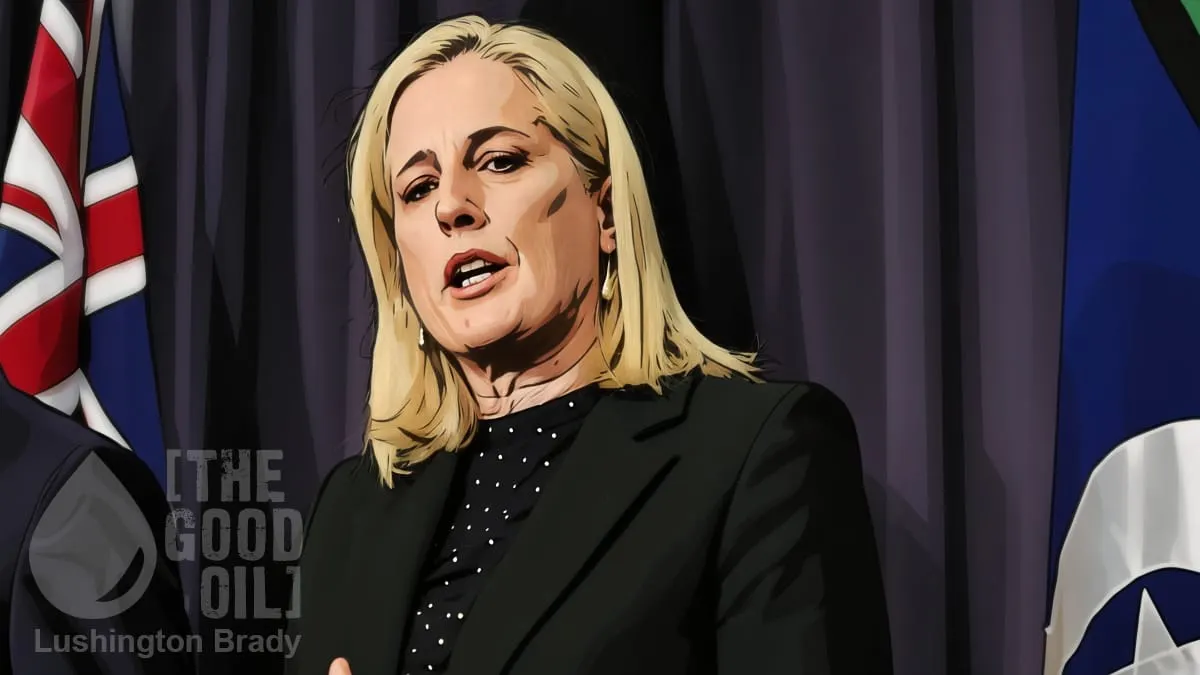
And now, at a time when young men and boys are falling through the cracks of the education system and dropping out in droves from the workforce, what does the Labor government do? Publish a “Women’s Budget Statement”.
After decades of improving socioeconomic circumstances relative to men – which had nothing to do with the federal government – it’s far from clear that 51 per cent of the population should be insulted with taxpayer-funded programs that cast them as virtuous, downtrodden victims requiring special assistance. Indeed, if any large group warranted a special budget “statement” each year, wouldn’t you think it might be young men and boys, whose socioeconomic circumstances have been reversing at a rapid rate?
Young men, in contrast to women, are sliding backwards fast. They now make up only 40 per cent of university graduates. The share of males aged 20 to 24 not in education, employment or training sits at 13.7 per cent, more than three percentage points higher than for young women. Women are increasingly out-earning men in the expanding care economy, professional services, health, education and the public service. Men still dominate the tiny number of ultra-high private-sector pay packets, but that is a vanishingly small cohort. In the public sector, women already hold the majority of senior executive roles and government board positions.
“Young men are disengaging from mainstream Australia, from work, from education, and from relationships,” the Page Research Centre said in a recent research paper. They make up a shrinking minority, 40 per cent in 2024, of university graduates, which points to declining fortunes later.
The government’s response is to double down on gender-responsive budgeting that puts ‘gender equality at the centre of budget decision-making’ while completely ignoring one of the two genders. Worse, treating boys and men as at best problems to be corrected. ‘Toxic’, to use feminist discourse.
The Women’s Budget Statement bangs on about ‘men’s violence against women’ as if every male carries collective guilt. It offers “education and awareness programmes” for school-aged boys on “healthy expressions of masculinity”. There is no equivalent concern for the four-year gap in male life expectancy, the overwhelming male share of workplace deaths, suicides and murder victims. Males also fill the prisons, yet the document offers no curiosity about why so many young men are falling into crime and despair.
Instead we get the usual cherry-picked outrage. Claims that female leadership produces better outcomes are trotted out without evidence. A recent large study from Brazil found that electing women mayors had no detectable effect on corruption across thousands of municipalities. The statement ignores this inconvenient reality, just as it ignores the complete absence of any push to get women into the dangerous, dirty jobs that still kill and maim almost exclusively men.
The statement also ignores evidence in favour of bullshit.
“When women are involved in decision making and policy design, outcomes are better for everyone,” the statement added – perhaps its most ridiculous, unsubstantiated claim. Finance and Women’s Minister Katy Gallagher didn’t inspire much confidence in this claim when she didn’t appear to care for the difference between gross and net savings at a recent Senate estimates hearing […]
Only last, week a large new statistical study by French and American economists concluded female leadership didn’t make a jot of difference in Brazil. “Over the 2000–2020 and across six corruption measures (and thousands of municipalities), electing a woman mayor ha(d) no detectable effect on corruption,” the two authors wrote in a study that is unlikely to be referenced in next year’s Women’s Statement.
The federal budget is supposed to be about revenue, spending and economic management. Tacking on an 80-page feminist manifesto every year turns it into an exercise in political signalling. It tells young men and boys that their struggles with education, work and mental health are not a priority. It tells them the state sees them primarily as potential perpetrators rather than citizens in need of help.
If any demographic genuinely warranted a dedicated annual statement right now, it would be boys and young men. They are the ones dropping out of school, avoiding university, disappearing from the workforce and killing themselves at alarming rates. The government’s choice to publish yet another Women’s Budget Statement while these trends accelerate is not just tone-deaf: it is an active insult to half the population that is quietly falling behind.