Good morning; Class.
Welcome to Media Ethics.101, where today we will be discussing hate-speech which is a very important topic given nice Mr Little’s crusade to ensure publishing unkind things in the future will get people in a lot more trouble than before.
In today’s example we will look at the very excellent and super-ethical on-line magazine ‘Slate’ which is a reliably progressive resource with award-winning journalists and impeccable pedigree, having been owned by Msn, then Amazon and then the Washington Post. Gosh! Sorry, I got a little giddy mentioning all those liberal iconic’s in one sentence.
Now: I am going to ask you to look at the picture below which contains two screen-shots. One is an actual 100% real headline, actually published by Slate, the other is 100% phooey, it didn’t happen and will never happen because it’s foul hate-speech and would not make it past the sub-ed’s desk. The contributor would probably be fired, at the stake.
So, take your time and think very carefully before you answer. Which of these is an ethical, gritty, hard-nosed, truth-telling, holding-feet-to-the-fire headline, and which is an unethical, repugnant, outright-prejudicial, offensive, inflammatory and never-published headline? The editors at Slate can tell; but can you?
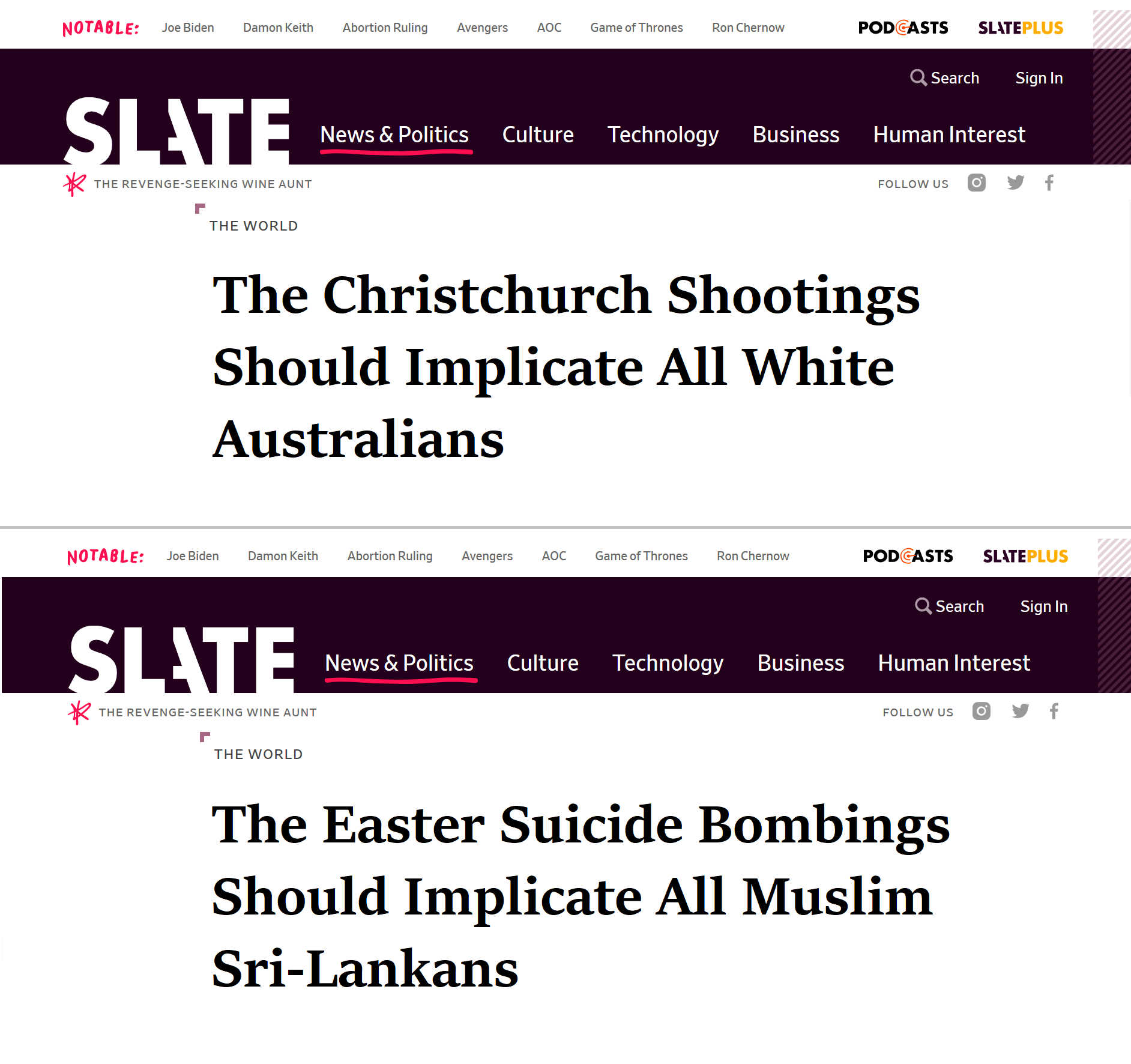
Answer: If both headlines seem equally unethical, repugnant, outright-prejudicial, offensive, and inflammatory in degree then you will not pass GO and will not win $200, but if you conclude the lower example is malign while the upper is meritable: Congratulations, you are well on your way to comprehending media ethics in these halcyon hate-busting days.