When studios started colourising old B&W movies in the ’80s, cinephiles were outraged. ‘Like slapping a coat of Day-Glo on the Mona Lisa,’ as one director said. Such concerns seem almost quaint today.
Few Hollywood horror movies can equal the unintentional horror of the opening scenes of Tron: Legacy (2010, great movie otherwise). A flashback sequence to the in-universe 1982 of the original film, shows Kevin Flynn (Jeff Bridges) talking to his young son Sam (Garrett Hedlund). Given the realities of nearly 30 years of ageing, Bridges is shot, ‘Fake Shemp’ style, from behind. Then he turns around.
A palpable ‘eww’ rippled through the theatre at the horrifying sight of a deep-fake ‘de-aged’ Bridges.
Deepfakes have got technically better since, but still no less settling. Alien: Romulus (2024) was a flawed, but mildly interesting, entry into the franchise. Until it ‘digitally resurrected’ the dead Ian Holm as killer cyborg Ash. Not a lookalike, which would have been fine, but a completely digital reconstruction of a dead actor.
Hollywood’s unscrupulousness is getting worse. Next up is an AI-deepfaked Val Kilmer, barely even cold in his grave, is set to be ‘resurrected’ for an upcoming movie he’d signed on for while alive, but become too ill to spend even a single day on set.
To give her credit, Taylor Swift is taking steps to make sure she isn’t the next digital Bride of AI Frankenstein to be exploited by soulless Hollywood.
US pop star Taylor Swift has applied to trademark an image of herself as well as her voice, amid growing concerns of content generated by artificial intelligence (AI).
The 36-year-old, known for the hit songs Love Story and Shake It Off, submitted three applications in the US on Friday to trademark her voice and likeness.
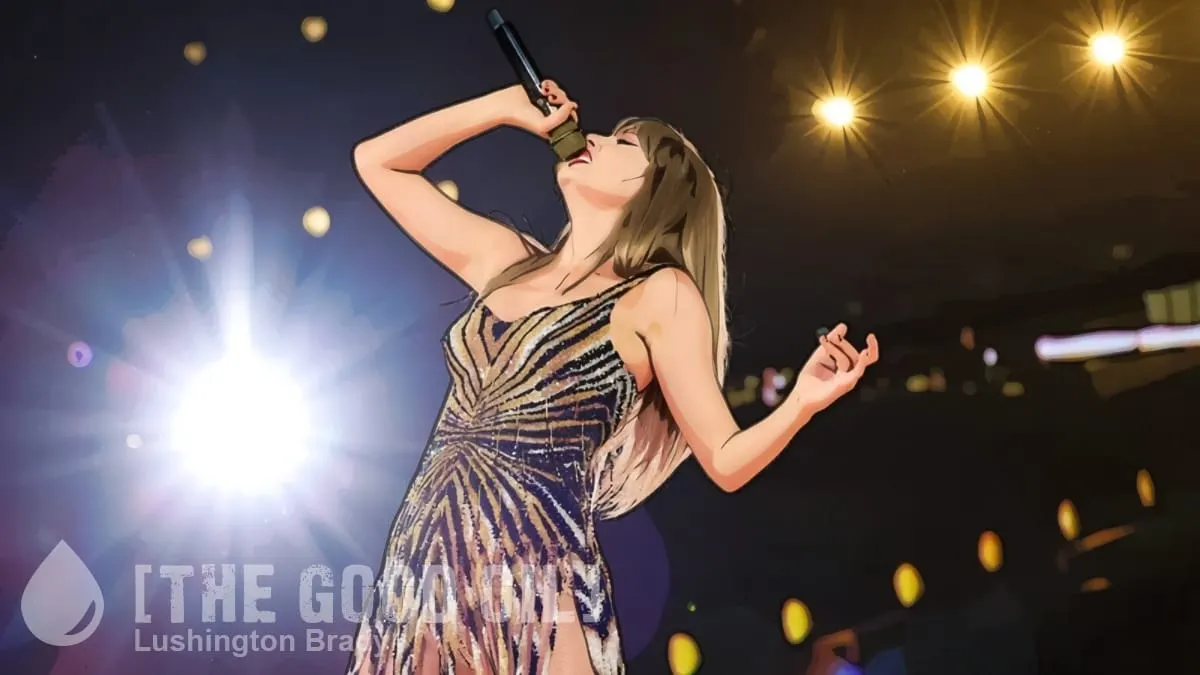
The applications included an image of herself from the Eras tour, along with two audio clips where she introduced herself while promoting her most recent studio album, The Life Of A Showgirl.
The image submitted was used to promote Swift's Disney+ docuseries The End Of An Era, and was described in the court filing as: "Taylor Swift holding a pink guitar, with a black strap and wearing a multi-colored iridescent bodysuit with silver boots. She is standing on a pink stage in front of a multi-coloured microphone with purple lights in the background."
One of the audio clips featured the star saying: "Hey, it’s Taylor Swift," while in the second, she says: "Hey, it’s Taylor. My brand new album The Life Of A Showgirl is out on October 3 and you can click to pre-save it so you can listen to it on Spotify."
Swift is not the only star trying to make sure they don’t get ‘Kilmered’ and digitally hauled out of their graves by studio ghouls.
Interstellar actor Matthew McConaughey recently told the Wall Street Journal he had trademarked his voice and image to protect himself from any unauthorised use by AI apps.
Swift is breaking new legal ground when it comes to copyright law. In 1988, Bette Midler successfully sued Ford Motor Co, when it used a ‘soundalike’ to impersonate her voice for a car commercial, when she turned down a deal for them to use her actual recording. The court ultimately ruled that the voice of someone famous as a singer is distinctive to their person and image: thus as a part of their identity, it is unlawful to imitate their voice without express consent and approval.
Swift is attempting to take that legal concept one step further.
According to trademark attorney Josh Gerben – who first highlighted the details of the applications on his site GerbenLaw – involving spoken voice through audio clips has not been tested in US courts before.
Mr Gerben added that the applications could provide Swift with an “additional layer of protection”.
He said: “By registering specific phrases tied to her voice, Swift could potentially challenge not only identical reproductions, but also imitations that are ‘confusingly similar,’ a key standard in trademark law.
“The image-based filing serves a similar purpose: by protecting a distinctive visual, down to Swift’s commonly worn jumpsuit and pose, Swift’s team may gain additional grounds to pursue claims against manipulated or AI-generated images that evoke her likeness.”
As Computing Forever YouTuber Dave Cullen demonstrated, AI-reproducing a voice (in that case, his own) was both easy and deeply unsettling. But if there’s a buck to be made from it, you can bet the entertainment industry will be on it like flies on the proverbial.
Just as Jackie Coogan long ago set a legal precedent that protected future child stars’ earnings, perhaps Tay-Tay will similarly protect future artists’ likeness, visual and aural, from Hollywood’s digital necrophilia.