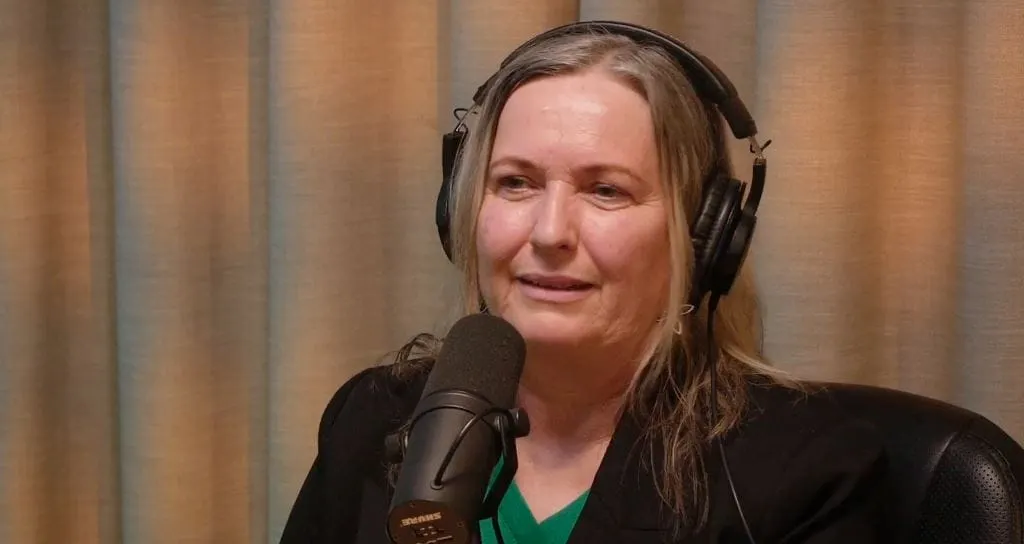
Dr Norman Fenton
Until he retired in 2023, Norman Fenton was a professor in risk information management at Queen Mary University of London.
The viral story surrounding Cambridge sociology professor Jason Arday has dominated discussion about the failings of Britain’s elite universities. It has become a symbol of allegations of plagiarism, institutional deference to Diversity, Equity and Inclusion (DEI), and an allegedly embellished personal narrative that, critics argue, went insufficiently scrutinised by universities reluctant to question a celebrated black academic.
Whatever the eventual outcome of those allegations, the affair has already exposed something much bigger than the conduct of one individual. It has prompted many people to ask how universities that pride themselves on rigorous scholarship and critical inquiry could apparently become so reluctant to ask obvious questions.
The timing is remarkable because the story emerged just as my new book, The Capture of Academia: How Universities Shape Power, Silence Dissent and Influence Society, was published.

The Arday affair is not the story I set out to tell, but it is the latest and perfect illustration of it.
Ironically, despite publishing numerous books during my academic career with respected mainstream publishers, none was prepared even to consider this one. The subject matter was regarded as too controversial, so in the end I had little choice but to self-publish through Amazon.
That reluctance itself says something about the climate I describe.
For 47 years I worked inside the university sector. I came from a working-class background in East London, got my BSc in Mathematics at the London School of Economics, completed my doctorate at Sheffield and then held positions at University College Dublin (UCD), Oxford University, South Bank, City University and eventually Queen Mary University of London, where I spent the final 22 years of my career as a professor of risk. I had sabbaticals in Germany and the Isaac Newton Institute of Mathematics, Cambridge University. I supervised dozens of PhD students, secured major UK and European research grants, published extensively, won prizes, founded a successful software company and was elected a fellow of the Alan Turing Institute.
I was not an outsider looking in. I was part of the system.
Over those decades I watched universities undergo a profound transformation.
Most people assume universities simply reflect society. Increasingly, the opposite is true. They shape it. Universities educate the teachers, civil servants, journalists, lawyers, doctors, scientists, politicians and business leaders who go on to influence almost every aspect of public life.
For much of my career I shared the broadly left-of-centre outlook common in academia. I believed in equality of opportunity, a strong social safety net and liberal democratic values. Gradually, however, that culture evolved into something very different. Influenced by cultural Marxism, critical race theory and identity politics, an increasingly dominant worldview came to interpret society primarily through the lens of power, oppression, privilege and group identity.
As this ideology spread, there seemed to be only one acceptable position on a growing range of issues. Climate change became an existential emergency requiring sweeping intervention. Brexit was treated as an act of national self-harm. Donald Trump became uniquely beyond the pale. Mass migration was assumed to be unquestionably beneficial. Gender ideology rapidly became immune from critical examination. Even modest scepticism about any of these orthodoxies increasingly attracted suspicion.
This transformation affected far more than political conversation. It influenced recruitment, promotion, research funding, peer review and publication. Research supporting prevailing assumptions generally encountered fewer obstacles than research challenging them. Academics quickly learned which questions advanced careers and which jeopardised them.
The irony highlighted by the Jason Arday affair is that universities appeared increasingly reluctant to apply sceptical scrutiny where it might undermine an approved narrative, while becoming ever more willing to marginalise those who questioned fashionable orthodoxies in entirely different fields.
I experienced that personally.
For years I kept many of my concerns private. I had students to supervise, research teams to lead and responsibilities to fulfil. I hoped the excesses would eventually correct themselves.
Then came Covid.
During the pandemic I publicly challenged statistical claims, exaggerated risk assessments and public policies that I believed lacked adequate evidential support. Rather than engaging seriously with those arguments, many colleagues simply stopped engaging with me. Invitations to speak disappeared, my public lectures got cancelled. Professional relationships cooled. Decades of publications, grants and international recognition suddenly counted for remarkably little. Within months I went from respected professor to academic pariah.
Academic freedom, I discovered, extended only as far as ideological conformity.
I retired in 2022. By then the choice had become simple: silence or honesty.
Increasing and obsessive DEI bureaucracies, activist scholarship and the marginalisation of dissent are not isolated problems but symptoms of a much deeper institutional capture. Graduates carry these assumptions into government, the media, the law, finance and education, where they become embedded in institutional practice. Financial incentives only reinforce the process: funding follows fashion, peer review protects prevailing views and standards gradually erode. Universities have also become increasingly dependent on organisations and foreign funding sources whose interests do not always align with open inquiry.
Universities have become engines of ideological reproduction, increasingly insulated from scrutiny and detached from the society they are meant to serve.
That is the argument developed throughout the Capture of Academia. The book examines how this transformation happened, how it operates in practice and its consequences for open inquiry, free speech and liberal democratic values, including academia’s growing tolerance of antisemitism disguised as anti-Zionism.
Universities will not regain public trust without serious reform. That is the case the book makes.
There is one final irony.
Until March this year I had a blue-tick verified X account, @ProfNFenton, with around 94,000 followers. It was the principal way I communicated my work and engaged with readers. In March, the account was hacked by a cryptocurrency scammer. I recovered it a week later, installed two-factor authentication and received a recovery code from X. Shortly afterwards the account was suspended for “suspicious behaviour”.
Every attempt to recover the account produces the bizarre response that no @ProfNFenton account exists, despite the fact that the account remains publicly visible to everyone else. X says it cannot verify my identity, even though it was perfectly capable of doing so before the suspension and despite my having followed every recovery procedure it requested.
For four months I have received no meaningful response. Recorded-delivery letters sent to X’s London office have gone unanswered. The Information Commissioner’s Office is investigating my complaint because X continues to deny me access to my own personal data, including years of private direct messages and contacts.
Whether this treatment results from bureaucratic incompetence or something more deliberate, I cannot say.
What I can say is that the practical effect is identical.
This article was originally published by the Daily Sceptic.