When Matt Ridley wrote “The Myth of Basic Science”, refuting the dogma that necessary basic science had to rely on government funding, the outraged screeching was deafening. The counterarguments were whisper-quiet, at best. Ridley’s would-be refuters relied entirely on two rebuttals: the Space Race and the internet.
Ignoring that a sum total of two exceptions goes a long, long, way to proving the rule, neither supposed counterargument survives much contact with reality. The Space Race disappeared as soon as the Cold War imperatives shifted. It languished in 1960s technology for over four decades, until the private sector literally put a rocket up it.
As for the internet: not only did Al Gore not invent it (though, to be fair, he never claimed he did – it was his Democrat fanbois who peddled that lie), the government’s contribution was negligible.
The internet was not a government gift to humanity. Private companies built it.
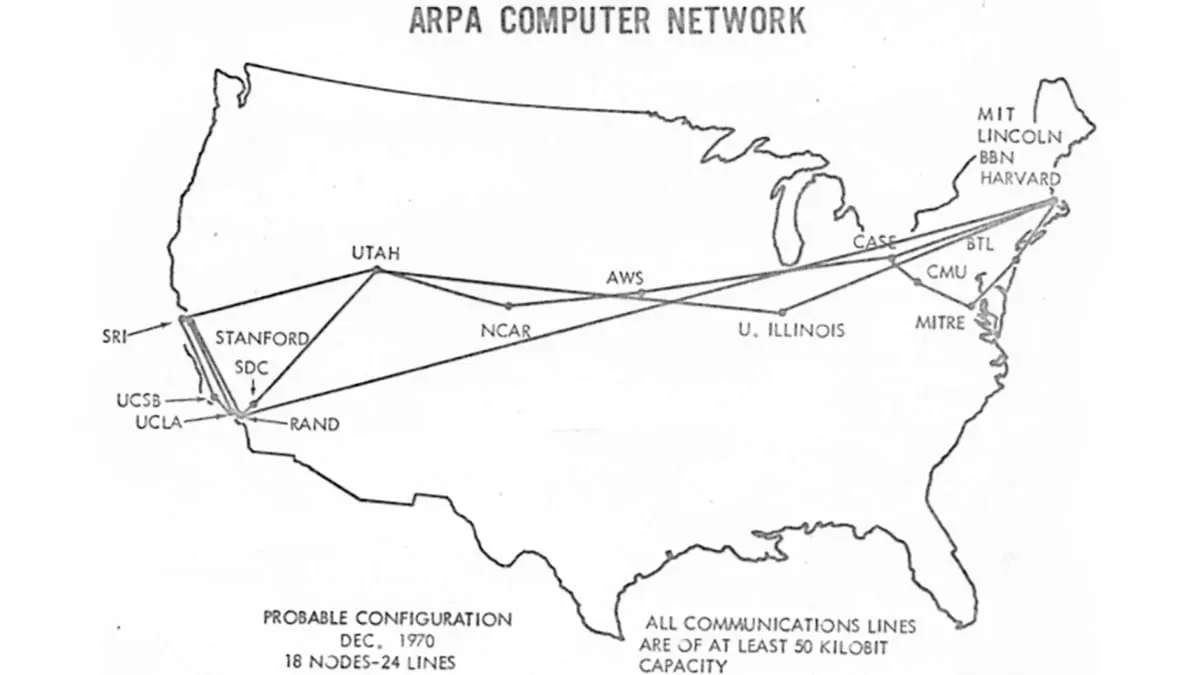
ARPANET, the 1969 Defense Department research network, connected four university nodes and moved data between government contractors. That is where the state's contribution ends.
And it’s where the internet would have ended, had it been left up to the government. The National Science Foundation banned commercial traffic on the net until 1991. It was only when the government yoke was lifted that the internet you actually use today exploded into being. The commercial web you shop on, stream from and communicate through came from private investment and entrepreneurial competition in the 1990s.
Tim Berners-Lee wrote the World Wide Web protocols at CERN, a physics lab, not the Pentagon. Netscape, a private company funded by venture capital, built the browser that made the web accessible to ordinary people. MCI and Sprint built the backbone infrastructure. Marc Andreessen and Jim Clark did more for your internet access than any defence appropriations committee ever did.
Profit motive turned a narrow military communications tool into civilisation’s nervous system. Remember which institution did which job.
The myth persists because it serves a political purpose. Every time a politician wants to justify funding some new bureaucratic technology initiative, someone invokes DARPA like a prayer. The implication is that without government seed money, private actors sit paralysed. History says otherwise.
The same sleight of hand appears whenever the left wants to claim retroactive ownership of progress.
While leftists treat government’s participation in markets as a “gift,” they also imply that utilization of a government project by the private sector entitles government to an equity (or tax) interest.
“You didn’t build that,” in the words of Barack Obama. Well, your sclerotic government certainly didn’t, you smirking, fatuous goon.
The telephone, the automobile and commercial aviation: entrepreneurs drove all of it, with government typically arriving late to regulate the profits out of whatever was working. The pattern holds across history. Breakthroughs in computing, biotech, energy and materials science overwhelmingly trace to private labs, venture capital and competitive markets, not five-year plans or grant committees.
Governments can occasionally fund narrow defence projects or some blue-sky research. But if that was the key to success, then the tens of billions Ronald Reagan invested in the SDI would have had us all in flying cars while poodle perms and leg warmers were still high fashion. Instead, it didn’t deliver a single finished technology.
Even then, the commercial payoff usually requires private risk-taking and market discipline to scale. The myth of government as the indispensable spark is convenient cover for expanding the administrative state, crowding out genuine innovation and saddling productive citizens with ever-higher tax burdens to fund the next ‘strategic’ initiative that mostly enriches consultants and bureaucrats.
Ridley was right. The data on patents, productivity growth and transformative technologies shows private enterprise as the primary engine. The internet itself is exhibit A. A handful of defence-funded nodes became the global economy’s backbone only after profit-seeking companies were allowed to play. Pretending otherwise isn’t scholarship: it’s ideology dressed up as history, wheeled out whenever the political class wants another blank cheque from taxpayers who already funded the roads, the courts and the original research.
The next time someone invokes government ‘investment’ as the secret sauce of progress, ask them what the private sector built while the bureaucrats were still writing the grant applications. The answer is almost everything that actually works.