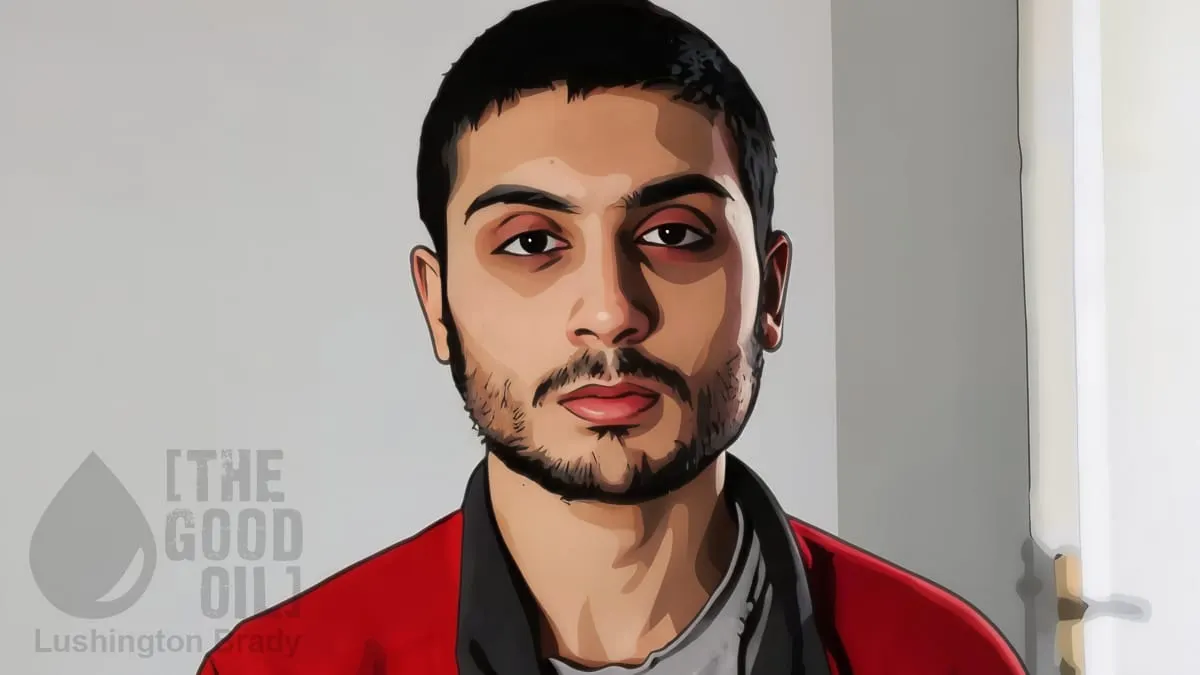
As Anthony Albanese and Tony Burke (who just coincidentally relies almost entirely on Muslim votes to keep his arse on the velvet) hand-wave hordes of former citizens of the caliphate into the mini-caliphate of Western Sydney, they peddle the same, tawdry excuse every time. These ISIS brides and their ISIS broods are just poor, innocent naifs, who made a mistake, as teenagers do.
Yeah, right.
Shoplifting is an adolescent mistake. ‘Borrowing’ your parents’ car and crashing it is an adolescent mistake. Watching Islamic snuff videos and being so keen to join in that you cross half the world to join a sex-slaving, head-lopping death-cult? That’s something else entirely.
As for the ones who were taken along as children: well, they’re very much not children, now. They’re young adults: young adults who’ve spent over a decade thoroughly immersed in an Islamic death cult.
Take the heart-wrenching, tear-stained narrative of young Yusuf Zahab. The taxpayer-funded weeping willows at the national broadcasters would have you believe he is nothing more than an unfortunate Sydney schoolboy caught up in bad company. A wide-eyed 23-year-old victim who, at age 12, was simply dragged along on a lethal overseas misadventure by relatives.
“I always think it is because of my brothers … It’s because of them,” he said. “That’s why my mother, father, me, that is why I think they got us here. They got us into all this trouble.”
It is a remarkably tidy alibi, is it not? Blame the dead siblings. One brother was a lethal combatant, wiped out by an airstrike; the other, Muhammad, was an infamous kingpin within the Islamic State apparatus who actively orchestrated the trafficking of his family straight into the Syrian slaughterhouse before meeting his own fiery end in Iraq. But little Yusuf, we are assured by human rights groups and sympathetic media, was the odd one out: the only member of this murderous Islamic brood who didn’t go all-in for the caliphate.
So committed was Canberra to this fable that our bureaucrats quietly stamped him an Australian passport, preparing to welcome him back with open arms alongside the latest convoy of black-clad brides. The welcoming committee had the luggage tags ready. But then a curious thing happened on the road to Damascus.
The Americans intervened.
Just as the repatriation plan reached its climax, US military forces descended on the Syrian compound where Zahab was detained, plucked him out of Kurdish custody and carted him across the border into Iraq. Not to board a Qantas flight home, mind you, but to face the rather less forgiving machinery of Iraqi justice, where terror charges carry a mandatory appointment with the hangman’s noose.
Human rights lawyers immediately launched into their predictable screeching, claiming Iraqi investigators supposedly deemed him a harmless bystander who never lifted a finger. Yet one has to wonder why the Pentagon took such exceptional trouble to disrupt the Australian government’s quiet little family reunion.
“The investigations also revealed the multiplicity of roles within the organisation, which were not limited to combat activities, but also included military, security, financial, logistical, administrative, medical, technical, and media activities.”
The Iraqi Supreme Judicial Council was quite specific on the matter: thousands of foreign jihadists were interrogated, not merely to determine who squeezed a trigger, but to uncover the logistics, the intelligence operations, the administrative machinery and the barbarous enslavement of Yazidi women. And while the Iraqi authorities quietly released a handful of foreigners against whom evidence was genuinely lacking, including a Finnish lad and an American citizen, Yusuf Zahab was conspicuously kept under heavy lock and key.
That glaring distinction begs the obvious question: what do the Americans and the Iraqis know about Zahab’s decade inside the caliphate that Anthony Albanese and Tony Burke are too terrified to tell the Australian public?
The Albanese government has repeatedly tried to claim it has no appetite for bailing out those who pledged allegiance to the black flag (nor, as we’ve seen, for punishing those who fly the black flag from the Sydney Harbour Bridge). Cabinet ministers posture for the press gallery, tough-talking about notorious jihadists rotting in foreign cells, yet, behind the curtain, Australian passports were being minted to fly a decade-long veteran of the caliphate straight into our suburbs.
The helplessness defence is rapidly disintegrating. Zahab was not living in an idyllic suburban enclave: he spent the formative years of his life in the crucible of a genocidal death cult. The Americans clearly had no intention of allowing a potentially radicalised operative to be delivered onto Australian soil with a government-funded welcome mat. By snatching him at the 11th hour, US intelligence may very well have spared Australia from a catastrophic security disaster: an act of basic national self-preservation that our own prime minister flatly refused to perform.
![Marvellous Melbourne’s Big Day of Diversity [Updated]](https://storage.ghost.io/c/31/f4/31f4e20a-0315-499e-83ff-139e8eab53bf/content/images/size/w1304/format/webp/2026/10/The_GoodOil_YogiThemAgain.jpg)