Pee Kay
No Minister
Have you ever heard of Oranga Marae? No?
Despite the name, it is not actually a physical place.
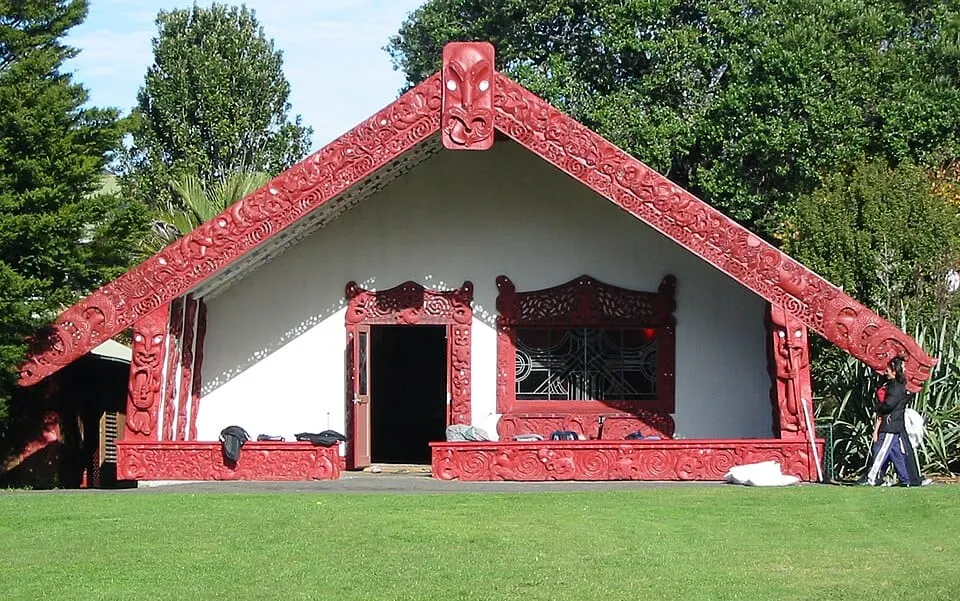
Oranga Marae is a government fund dedicated entirely to upgrading, rebuilding, and maintaining marae across New Zealand. It operates as a joint Crown investment programme between Te Puni Kōkiri (Ministry of Māori Development) and the Department of Internal Affairs. The Oranga Marae programme claims to offer the advice and funding needed to sustain both physical marae structures and their cultural heritage.
With all that in mind, isn’t the question – Why?
What the name Oranga Marae cunningly conceals is that its primary benefactor is actually Lotto.
In fact, the New Zealand Lottery Grants Board has handed the Oranga Marae committee a massive $42,381,988 for the 2025/2026 financial year alone.
An eye-watering sum like that raises a massive question: where does all that $42,000,000 actually go and who is really profiting?
This huge dollop of generosity It is supposedly required “because marae are the primary hubs for preserving Māori identity, language, and traditional knowledge. Many rural marae face deteriorating buildings, compliance costs, and an aging workforce to maintain traditions.”
Is that not the same situation rural churches and community halls face?
Additionally, marae are deemed to “act as vital civil defence centres during regional emergencies like floods or earthquakes. These (huge) funding upgrades supposedly ensure “these facilities remain safe, structurally sound, and culturally operational to support local communities”.
Aahh.
The Oranga Marae committee has been allocated a spectacular total of $182,381,988 over the last five financial years from the Lottery Grants Board. That equated to 17.96 per cent of the total amount of grants distributed by the Lottery Grants Board.
Official data from the Lottery Grants Board released via the Department of Internal Affairs reveals a massive cash injection to Oranga Marae over the last five years. Funding skyrocketed from $27 million in 2021 to an active peak of over $42 million today.
The 5-Year Funding Surge:
- 2021/22: $27.0M (Ardern government)
- 2022/23: $35.0M (Ardern government)
- 2023/24: $35.0M (Hipkins/Luxon government)
- 2024/25: $43.0M (Luxon government)
- 2025/26: $42.4M (Current active budget – Luxon government )
https://www.communitymatters.govt.nz/oranga-marae/oranga-marae-202526-record-of-grants
I say it is time to shine a light on Te Puni Kōkiri and expose their funding processes to better public scrutiny.
At a tick under $244 million for 2024/25, Te Puni Kōkiri’s largess (grants/donations) raises serious questions about whether taxpayer funds are simply benefiting a select hierarchy. Do you think there is there any trickledown?
Consider the positive impact on all New Zealanders if that $244 million was redirected into vital areas like health, education, and infrastructure.
Maybe Internal Affairs Minister Brooke van Velden has seen through this funding subterfuge because come July 1st, the specialised Oranga Marae funding committee, originally established to provide targeted support to marae, will be dissolved.
While the official narrative attributes the dissolution of the Oranga Marae Committee to an administrative and structural overhaul and aimed at streamlining and centralising the lottery grants system, a sceptic could reasonably question whether “centralisation” is merely a buzzword. The government maintains the decision was not sparked by any biased fund distribution, claiming a broader regional outlook will better identify service gaps.
One can only assume by erasing a dedicated, culturally focussed committee under the guise of “centralisation” we will see the usual complaints from the usual suspects.
Whether Brooke van Velden influenced the dissolution of the Oranga Marae funding committee remains unclear, however, given that the Minister for Māori Development, Tama Potaka, oversees Te Puni Kōkiri and recently sanctioned a 7.5 per cent funding increase for the Oranga Marae 24/25–25/26 programme, it is difficult to envisage any diminishing of the agency’s funding of either essential or spurious Māori support programmes. Programmes supposedly designed to drive regional development and community self-reliance.
Prime Minister Chris Luxon must be quite aware of this continued generosity. He is part of the larger group, cabinet, that signs off on Minister Tama Potaka’s budget, including the 7.5 per cent funding boost. His fingerprints are to be found on Te Puni Kōkiri’s “generosity”.
Te Puni Kōkiri operates under strict legislated monitoring and public accountability processes, yet its generous grant regime marches on. As a core government department, it must comply with the same rigorous government sector oversight as any other ministry. But by bypassing standard government bureaucracy and investing directly with tribal leaders and Māori-led providers creates an uncomfortable element of murkiness.
So, under the flimsy and spurious guise of fulfilling the government’s Treaty of Waitangi obligations, is Te Puni Kōkiri simply a conduit for delivering race-based funding streams into the hands of the Māori hierarchy, streams that are shielded from mainstream transparency?
The spreadsheet below is constructed from their website data – https://www.tpk.govt.nz/en/mo-te-puni-kokiri/corporate-documents/corporate-publications/investment-recipients/te-puni-kokiri-investment-recipients-list-202425

$243,863,528 million dollars budgeted in one financial year!
And still, they demand more.
Once you get over the initial shock of seeing a staggering $243,863,528 of your hard-earned taxpayer dollars handed out to Māori “initiatives” in a single financial year, prepare to have salt rubbed directly into the wound.
Take a close look at how Te Puni Kōkiri sells this to the public. They don’t call it spending. They don’t call it a subsidy.
Their website creatively employs the word investments.
Let’s call this exactly what it is: a cunning semantic con job. Designed to deceive the reader.
In the real world, an investment implies a risk taken for a projected financial return, doesn’t it? Surely it means the capital comes back, along with interest, to benefit the person who funded it?
But in the parallel universe of political double speak and ambiguity, “investment” is just a bureaucratic euphemism for a one-way, non-repayable cash handout.
It is pure, unadaulterated free money!
Strip away Te Puni Kōkiri’s corporate jargon and look at the hard facts of where our taxpayer money actually went –
- Cyclone Funds: These are straight, non-repayable grants – not emergency loans, just free cash.
- Development Fund: Calling these “investments” is double-speak: recipients have zero obligation to pay back a single cent.
- Housing Network: A massive $17.5 million was handed out as a capital grant, completely free of debt.
- Infrastructure Fund: These non-repayable grants shield select groups from the commercial debt realities every other Kiwi developer faces.
- Rangatiratanga Grants: Calling non-repayable funds an “investment” is a virtue shield; if you don’t pay it back, it’s a gift.
By systematically replacing the word grant with “investment,” Te Puni Kōkiri attempts to mislead New Zealanders into believing the public purse is building an asset that will one day pay dividends back to the nation. It won’t!
This is a massive, government-condoned, transfer of taxpayer wealth operating on a one-way street.
It is entirely free of debt, virtually free of accountability to the taxpayers who funded it, and entirely free of any requirement to ever refund a single dollar to the public purse.
It is a $244 Million Linguistic Con job.
Is our government abetting the disguising of free money to an ethnic group as “Investments”?
Is this $244 million funding pipeline a calculated political scam, utilising disingenuous vocabulary to cover up a systemic line of racial benevolence?
Is it, to put it more bluntly, financial political appeasement?
By complicitly disguising outright handouts as “investments”, the government, who readily uses a narrative of fiscal responsibility, is actually blindfolding the taxpaying public.
In reality, this is purely a transfer of wealth: this funding can only be viewed as free money deployed as political currency to buy compliance and secure patronage.
Stripping away the corporate euphemisms exposes a cynical government strategy: using public funds to bankroll a separate, unaccountable economy. This is not building national infrastructure and wealth – it is purchasing political peace through permanent, non-repayable appeasement.
In the bubble that is parliament, it seems success isn’t measured by outcomes, it’s measured by how much taxpayer cash you can blow through before anyone notices. Tama Potaka’s $244 million 2024/25 Te Puni Kōkiri giveaway rolls on year after year, ostensibly completely unbothered by anything resembling strict data or measurable performance.
So, which ministers are directly responsible for keeping this, seemingly unaccountable, multi-million-dollar gravy train on the tracks for the benefit of a few chosen iwi corporate executives?
Look first to Tama Potaka. As minister for Māori development, he oversees Te Puni Kōkiri and holds ultimate accountability for these non-repayable grants. It is his ministry that rubber-stamps the “investments” and “investment” framing, quietly continuing the exact same pipeline of free money he inherited.
Next is Finance Minister Nicola Willis, the guardian of the nation’s purse strings. Willis, as head of cabinet’s finance team, will have signed off on Te Puni Kōkiri’s budget allocations, all while preaching aggressive fiscal restraint to the rest of New Zealand?
Three associate ministers of finance – Chris Bishop, David Seymour, and Shane Jones – jointly sign off on the budget, locking in buy-in from all three coalition parties.
Finally, cabinet protocol ensures the wider government is aligned – budget proposals must be collectively scrutinized and approved by the entire cabinet.
Despite campaigning to end “Māorification”, National has, in this case, effectively doubled down on Māori benevolence through funds such as Oranga Marae.
The glaring increase in Oranga Marae grants under the current coalition contradicts National’s explicit campaign rhetoric against government-sponsored Māori initiatives. This budget increase suggests a deliberate political calculation. Are National ministers increasing these grants to compensate Māori leadership for the public friction caused by the government’s broader policy pushbacks?
Isn’t it time for New Zealand to wake up?
Luxon looked us in the eye during the 2023 campaign and promised to end co-governance. However, his highly specific phrasing was cleverly designed to create a false impression of absolute resolution. In reality, he hid his true agenda: prioritising programmes that we now see are actually hugely beneficial to Māori.
They are quietly funding the very agenda they claimed to oppose – treating taxpayer money as a hush-money bribe to manage the public backlash.
The government isn’t fixing the problem: they are buying it off.
If you think National is rolling back co-governance, you are being conned. This National-led government is aggressively pumping cash into these initiatives as a desperate, backhanded payoff to quieten Māori opposition after the public backlash against Labour’s grace and favour to Māori interests.
It is total hypocrisy!
This article was originally published by No Minister.