If you’ve ever tried to debate a hardcore environmentalist, you’ll be sadly aware that the biggest hurdle is even getting them to live in the world of facts. That’s because there are any number of environmental ‘zombie facts’, completely false, that a great many people still believe despite having been debunked long, long ago. One of the most persistent is the ‘the Amazon is the lungs of the planet’ myth.
Almost as soon as Sting uttered it on the telly, it was debunked. The truth is that the Amazon, like most forests, is a net zero contributor to the atmosphere’s oxygen content, because the microbes that consume a tree once its dead exhale as much carbon dioxide as the tree ever produced oxygen in its life. In fact, the real lungs of the planet are the same creatures who transformed the Earth’s atmosphere two billion years ago: oceanic microbes. Yet, search ‘lungs of the planet’, and dozens of environmental and supposedly ‘scientific’ websites and publications will pop up still peddling the lie.
But that’s not the only zombie fact people believe about the Amazon. The other is that it’s a pristine wilderness that has been all-but-untouched by man until those wicked foresters came along. In fact, like most of Tasmania’s forests, large swathes of the Amazon are instead ‘old growth forest’. That is, forest that was once logged and grew back.
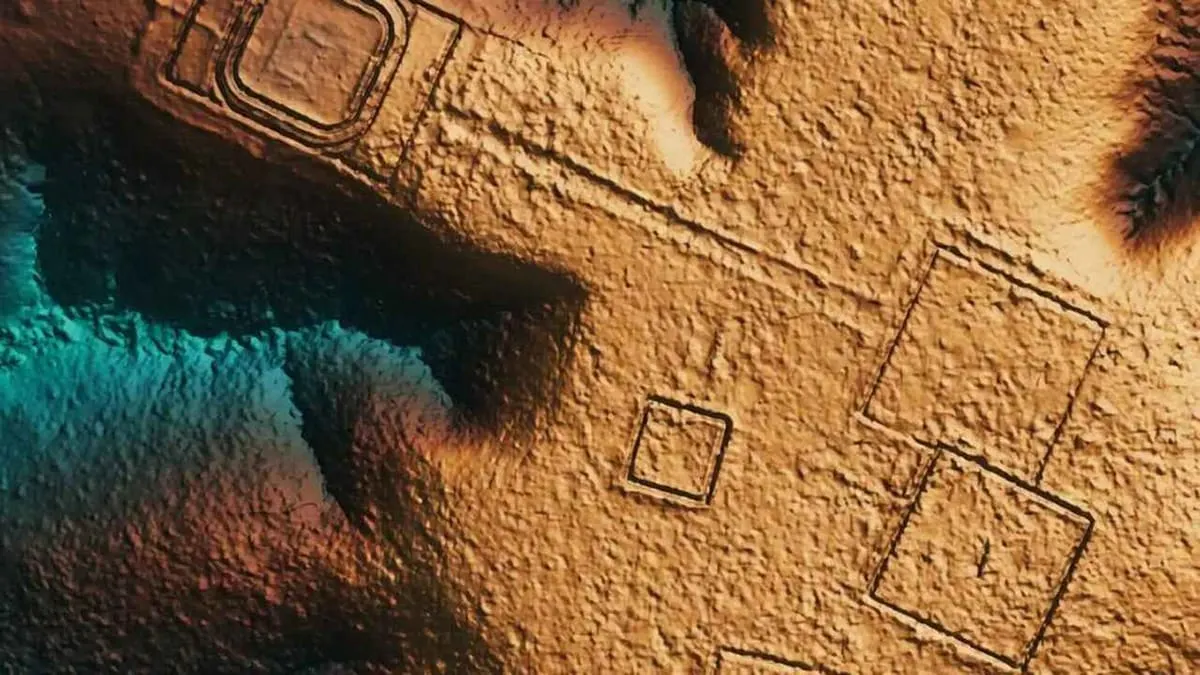
Recent research using LIDAR (laser imaging, detection, and ranging) to penetrate beneath the forest cover and unveil the topography underneath has ‘unearthed’ a previously little-known civilisation, the Aquiry. As many as three million people in population, the Aquiry dug tens of thousands of earthworks across southwest Amazonia. Activity that, obviously, not only cleared vast swathes of forest for the structures themselves, but necessarily would have cleared even more to feed the inhabitants.
The picture emerging is not one of virgin rainforest, but of a heavily engineered landscape. Between roughly 600 BC and 850 AD, this network of communities carved geometric ditches metres deep, linked them with straight roads, and turned southwestern Amazonia into a mosaic of clearings, fields and managed woodland.
For archaeo-anthropologist Martti Pärssinen of the University of Helsinki, the realization was transformative.
“I first experienced such a moment in 2002, when I flew with Alceu Ranzi and Sanna Saunaluoma over the monumental geometric earthworks and observed ancient roads connecting the sites in the state of Acre, Brazil, a region that had long been regarded as pristine rainforest," Pärssinen told ScienceAlert.
“It completely transformed my understanding and made me realize how mistaken earlier assumptions had been.
“More recently, I felt something similar when I came to understand that there may actually be up to 10 times more of these earthworks in the region than I had previously imagined.”
A recent airborne LIDAR survey of just 4,497 square kilometres, less than three per cent of Greater Amazonia, turned up 432 earthworks, 396 of them previously unknown. Extrapolating from that sample and earlier work, researchers now estimate the Aquiry sphere may have stretched across 183,000 square kilometres and contained anywhere from 24,000 to 30,000 such structures. At its peak, around 200 AD the population could have reached between 1.2 and three million people.
That is not a scattering of hunter-gatherer camps. It is a dense, organised human presence that required continuous clearing for maize, manioc, squash and cotton, plus the selective encouragement of fruit- and nut-bearing trees. The geometric earthworks themselves – large ceremonial and political spaces – would have sat at the centre of clearings ringed by wooden longhouses. In short, the ‘pristine’ forest so beloved of modern activists was, for a millennium and a half, a working landscape shaped by human hands.
“The scale of the archaeological record suggests that many other regions across Amazonia may have been far more densely populated and intensively modified than previously assumed […]
“At the center of many of these clearings would stand large geometric earthworks connected by broad and narrow roads,” Pärssinen told ScienceAlert when asked what the landscape might have looked like around 200 [AD].
After the civilisation faded around 850 AD, the trees simply grew back over the ditches and roads. What we see today is secondary growth on a previously modified canvas. The traditional story of an untouched wilderness, Pärssinen now says, should be abandoned.
Yet the zombie facts persist. Environmental campaigners still speak of the Amazon as if any human presence is an unprecedented violation. They ignore the evidence that large populations once farmed, built and managed the very regions now declared sacred. The same people who demand we treat the forest as inviolable somehow overlook that it has already been cleared, cultivated and reclaimed once before: without the planet’s lungs collapsing.
The Aquiry left no written records and few durable dwellings. Their story is told mainly in the earthworks LIDAR has revealed. One large question remains unanswered: what happened between roughly 850 and 1000 AD that caused the whole system to vanish?
That is a far more interesting and challenging question than persistently lying in the name of the environment.