Nigel
Pavlova Post is a New Zealand satire and parody publication. We take real-world headlines, everyday Kiwi life, and the country’s finest overreactions – then turn them into fictional, exaggerated comedy for entertainment.
New Zealand’s speed bumps have finally received the sentence every employee fears: there are some concerns about your performance and we’d like to have a chat.
Fresh reporting this week has put Waipā District Council’s review of 12 raised safety platforms back in the spotlight, with eight in Cambridge and four in Kihikihi being checked after concerns that some may not be performing as intended. Staff are looking at ramp steepness, platform height, signage, location and how the platforms behave when heavy vehicles and emergency services cross them.
So yes, apparently there is a correct amount of bump.
For years, motorists have naively assumed a speed bump had one job: appear beneath the front suspension, remove 14km/h from the speedometer and quietly relocate everything in the centre console. It turns out there are good speed bumps, bad speed bumps, and speed bumps that may soon require development goals and a meeting with management.
Please Rate Your Vertical Deflection
There is a serious reason for the devices. Raised safety platforms are designed to reduce vehicle speeds in places where pedestrians and cyclists are vulnerable, and road-safety evidence supports properly designed traffic-calming measures.
The comedy begins once engineers start discussing “vertical deflection”, which is the professional term for making a vehicle go up and then immediately back down again because apparently ‘give the Corolla a little hop’ did not survive peer review.
A successful platform needs the right design, construction and location. Too gentle and some bloke named Gary discovers his Ranger can cross it at 46km/h without disturbing the pie on the passenger seat; too aggressive and everybody inside briefly experiences the sort of vertical movement normally sold as an optional extra at Rainbow’s End.
The ideal platform therefore occupies a narrow engineering sweet spot somewhere between “was that it?” and “fuck me, where’s the trailer?”
Waipā’s review will determine whether its 12 platforms hit that target. Council says possible solutions for any that fall short could include reshaping ramps, changing their height or improving signs and road markings.
In the entirely fictional version of this assessment, each speed bump will receive an annual appraisal covering teamwork, reliability, communication and whether it has launched any unsecured Mitre 10 purchases into the rear footwell.
Any platform rated “needs improvement” will be placed on a six-month performance plan and paired with a more experienced bump.
A Ten-Thousand-Dollar Lump Of Road
Council says there is currently no funding set aside for physical changes, and estimates fixing each platform could cost around $8,000 to $10,000.
Ten grand sounds like a heroic amount to spend adjusting a lump in the road until you remember this is specialist infrastructure and not the traditional New Zealand traffic-calming method of leaving three cones beside a hole until everyone forgets what the original speed limit was.
At $10,000, though, motorists are entitled to expect a premium speed-bump experience. The approach should be smooth, the ascent confident and the descent firm but reassuring, with perhaps a complimentary mint delivered through the air vent once all four wheels are safely back on Earth.
Nobody should cross a newly refurbished platform and be left wondering whether they encountered council infrastructure or accidentally drove over a chest freezer.
The situation also creates a beautiful piece of transport logic. The platform was installed because motorists were travelling across that piece of road incorrectly; now specialists may have to correct the platform because it is slowing those motorists incorrectly.
First the driver needs slowing down. Then the speed bump needs fixing. Then an engineer needs to stand beside the speed bump measuring it, causing everybody approaching the engineer to slow down.
At that point the entire system has become self-sustaining and the speed bump can technically be removed.
Nobody Emails Council About A Beautiful Speed Bump
The awkward part for councils is that people rarely notice traffic-calming infrastructure when it works perfectly.
Nobody gets home after dinner, opens the laptop and sends an email saying, ‘Just wanted to congratulate the team on the raised platform outside the shops. Absolutely magnificent vertical deflection. Nan remained fully seated throughout.’
People remember the other ones.
They remember the speed bump that launches the work ute’s tape measure into a new postcode, the one you approach at walking pace but still cross with enough force to conduct an internal audit of every suspension bush, and the faded one whose yellow markings now exist mainly through oral history.
That helps explain why traffic-calming debates become so loud. The safety case can be perfectly legitimate while individual installations still produce enough vibration to make someone arrive at the next council meeting already angry.
Waipā says the point of its review is to make sure the existing platforms are properly designed and doing their job, with staff due to report back once the assessment and consultation work are complete.
For the 12 speed bumps involved, it will be an anxious few months.
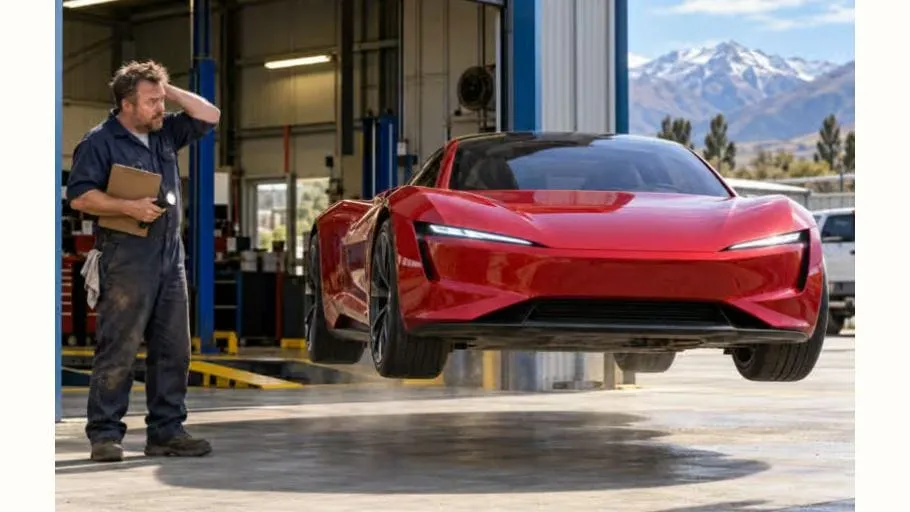
They were installed to assess motorists without warning, and now, after years of sitting silently in the road judging everybody else’s speed, somebody has finally turned up with a clipboard to judge them back.
Grown-Up Links
- Waipā’s speed bumps under scrutiny – Waipā District Council
- Why does Hamilton have so many speed bumps? – 1News / Local Democracy Reporting
This article was originally published by Pavlova Post.