
This is edition 2026/164 of the Ten@10 newsletter.
Hi all,
This is the Ten@10, where I collate and summarise ten news items you generally won't see in the mainstream media.
Enjoy!
1. Democracy Briefing: The "Banana Republic" crisis in the Financial Markets Authority
Bryce Edwards - The Democracy Project
- 🍌 Victoria University's Dr Martien Lubberink called Craig Stobo's May exit as FMA chair "Banana Republic at work." Edwards says a few months on it looks closer to the mark: institutions exist on paper, then get out of the way of whoever is running things.
- 📉 In recent weeks the Financial Markets Authority has lost both its chair and its chief executive under a cloud. Neither the agency nor the Government will give the public the key details.
- ⚖ Stobo went after an inquiry found his political commentary fell well below the neutrality expected of a Crown entity chair. Then CE Samantha Barrass left with immediate effect after suspension amid workplace-conduct allegations.
- 😰 Current and former staff allege bullying, retaliation and a culture of fear that deterred complaints. Multiple investigations have been run. Reports are withheld. Nobody will say what Barrass' departure cost.
- 📰 The National Business Review describes the regulator as "in tatters." Edwards frames it as another "Broken New Zealand" case study: a watchdog that looks fine until something serious goes wrong and nobody can get a straight answer.
- 🏦 The FMA was built after the 2006-2012 finance-company collapses, with losses put at more than $3 billion and 150,000 to 200,000 depositors treated as "prey." Simon Power launched it in 2011 to restore mum-and-dad confidence by enforcing the law.
- 💼 Today it reaches almost everyone with a bank account: KiwiSaver (about $140 billion of retirement savings and more than a billion in fees last year), bank and insurer conduct, advisers, and since 1 July consumer credit taken over from the Commerce Commission.
- 📊 Its own surveys are grim. Ease of Doing Business agreement fell to 53%, down 14 points from 2023. Only 63% of consumers were confident in the quality of financial-markets regulation against a 75% target.
- 🪞 Reflexive integrity: the FMA demands disclosure and conflict management from firms, yet will not say what it paid Barrass to leave. MBIE is now probing NDAs and board oversight. More than 60 people have come forward. Nine personal grievances in a year produced $181,950 in payments.
- 🎯 Takeaway: free preview pins a banana-republic charge on New Zealand's main financial conduct regulator. Paid sections cover Barrass' exit, the unanswered cost question, conflicts under the new chair, and why it matters. Do not invent the locked parts.
2. Who needs a Kiwimart, now here's the tricky part...
Liberty Scott - Liberty Scott
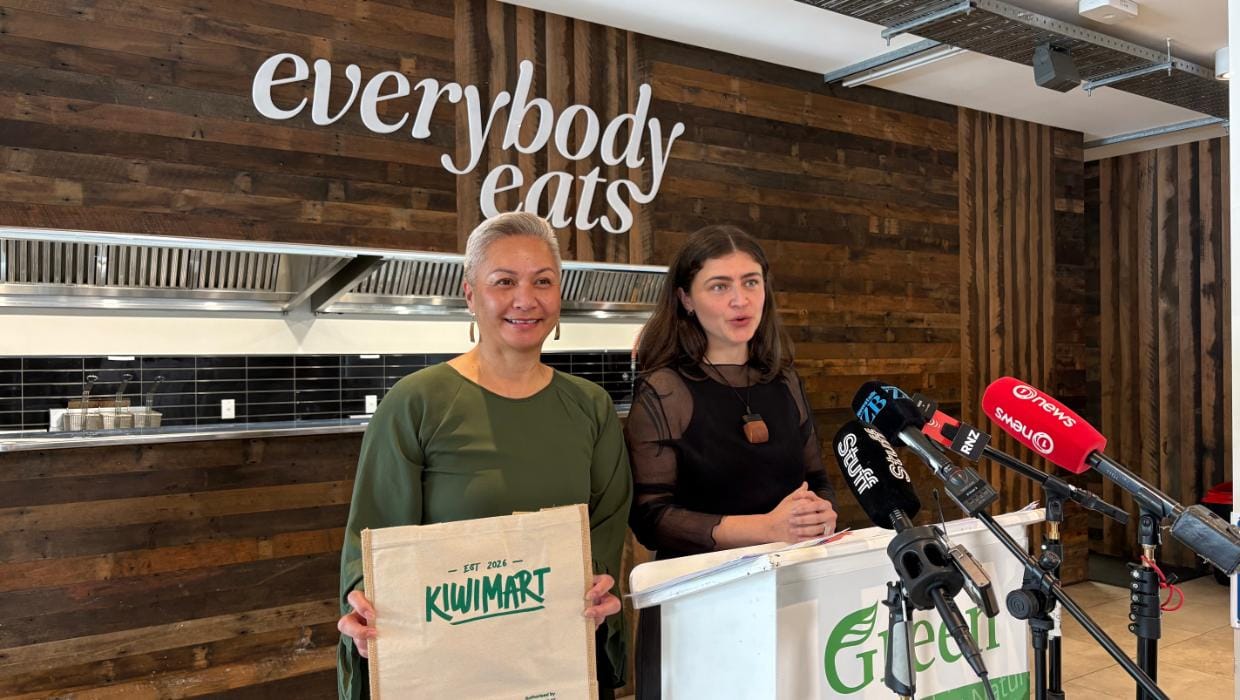
- 🛒 Chloe Swarbrick and Marama Davidson want to borrow from the next generation, and tax this one more, to bankroll a state supermarket competing with businesses that already pay those taxes. Neither has risked significant private capital on a business.
- 💰 They treat "obscene" supermarket profits as gospel. If the profits were real, Liberty Scott says, entrants would cut prices, raise productivity and win. That is how competition works when capital is put at risk.
- 🌏 The world is full of rival chains. Aldi is the third force in Australia, with smaller players like IGA and Supabarn. None has entered New Zealand. Either the profits are not obscene, or barriers to entry are too high, or both.
- 🚧 The RMA, plus councils wedded to planner orthodoxy, makes sites hard to find. Incumbents are listened to when they claim a new store would "undermine" existing shops. Many councillors also dislike cars and carparks.
- 🅿️ Supermarkets need land, parking, truck access and big signs. Cue NIMBYs and "no not here." Swarbrick and Davidson do not talk about that, because the RMA's nationalisation of land use is legislation they philosophically support.
- 🏛 Plan B is to "buy" a bunch of supermarkets. If owners say no: pay more of your money for a genuine windfall, or coerce a sale. Then, magically, state stores will be full of cheap, high-quality goods forever.
- 🧙 A socialist blogger is cited wanting nationalisation so the state can set price and employment standards at once: cheaper goods, higher running costs. Budget magic claims buying an asset "doesn't cost anything" because cash becomes an asset on the books.
- 📉 That forgets it is your cash, in an asset you do not control, whose value can fall when buyers face a confiscatory state. Cheaper goods, dearer operations, zero fiscal cost: MMT as a drug.
- 🎯 Takeaway: if profits were easy, private capital would already be here. The blog's case is that Greens-style Kiwimart talk skips entry barriers they themselves defend, then reaches for the taxpayer's chequebook.

3. JORDAN WILLIAMS - SHOCK, HORROR: ACT wants road money spent on... roads
Jordan Williams - Brash & Mitchell
- 🛣 ACT launched Keep New Zealand Moving, promising more infrastructure per dollar by stopping road-user money being spent on non-functional art and monuments.
- 🔍 Brash & Mitchell investigative lead Rhys timed an OIA dump to land with the policy. Across just three major transport projects, at least $15.8 million went on iwi and hapu resourcing, cultural monitoring, advisory roles and artwork.
- 📋 Otaki to North of Levin: $7.98 million on iwi and hapu resourcing, including $2.01 million on iwi adviser roles.
- 🌊 Transport Rebuild East Coast: $3.54 million to iwi and hapu groups for cultural oversight and monitoring.
- 🎨 Te Ara Tupua: $4.26 million for mana whenua sculptures and artwork. Nearly $16 million across the three alone.
- ✅ Williams draws a line: genuine sites of cultural significance, like a burial ground under a motorway, need consultation and mitigation. That is not the same as standing advisory roles, monitoring, reporting and art baked into delivery.
- 📊 The OIAs suggest roughly one percent of these major project budgets is swallowed by such requirements. New Zealand already spends heavily on infrastructure for comparatively poor results.
- ⛽ Motorists fund this through fuel taxes, road-user charges, rates and tolls. Williams asks whether that money should buy safer, faster, more reliable roads, not extras that do none of those things.
- 🎯 Takeaway: ACT's roads-for-road-money pitch meets hard OIA numbers. The dispute is not whether culture matters, but how many millions of road-user dollars disappear into process and sculpture.

4. Is our world becoming ungovernable?
Grant Duncan - Politics Happens
- 🏛 First-world states fail on housing, jobs and climate. Some want a more active state; others want to dismantle it for lost authority. Duncan asks whether both views are myopic.
- 📅 He pairs the approaching 25th anniversary of 9/11 with June 2016: Brexit and Trump's launch. Moments once treated as unthinkable, or comically absurd (The Simpsons imagining Trump), then arrived.
- 📸 Thomas Hoepker's Brooklyn photo of people chatting as the Twin Towers burned; Maximilien Lamy's July 2026 French beach scene with wildfire smoke behind. We want normality back while normality is already receding.
- 🪞 Looking in the rear-view mirror after the crash: populists and socialists revive a past that felt safer. Duncan says something new is needed; there is no restore-factory-settings button.
- 🌐 Declining respect for international norms, AI transforming work, poverty and inequality at dangerous levels, climate disasters of horrifying scale. Margaret MacMillan asks if we are already in early protracted disorder.
- 🐝 Political action becomes more swarm than hive: anti-vaccine protests, Toi Tu Te Tiriti, pro-Palestine flare and dissipate. Online activism helps platforms profile people more than it changes decisions.
- 🧠 Information overload replaces shortage. AI worsens the flood. Human cognition cannot keep pace. Oversight fails, regulation breaks down, even mighty militaries miss simple objectives, and building consents take forever.
- ⚠ Scary bit: authoritarian systems may prove more durable under overload because they narrow channels, sow doubt and radiate cynicism. Competitive multi-party government is more vulnerable than its past record suggests.
- 🎯 Takeaway: not a brief for populists or autocrats. Duncan's point is that ineffective government breeds them, and liberal democracy needs better public administration for the conditions we are already in.

5. RODNEY HIDE: We Argue Forever Because We Won't Say What a Human Is For
Rodney Hide - Brash & Mitchell
- 📣 We are good at arguing and bad at settling. Gender, welfare, speech, family, what children may be taught: same fights, louder each week, no closer to resolution. Each side claims facts, reason and the other's immorality.
- 📚 Hide turns to Alasdair MacIntyre's 1981 After Virtue: modern moral argument cannot be settled because the arguers no longer share an account of what a human being is for.
- 🧪 MacIntyre's image: a catastrophe wipes out science; later people rebuild from fragments of terms and charts. They sound serious. The framework that made the words mean something is gone. That, he says, is our moral life.
- 🗝 We still say rights, justice, freedom, fairness, harm. Those words came from traditions that assumed a human telos: an end toward which a person grows if things go well. Virtues fitted that end, as a knife is sharp for cutting.
- 🏗 The modern project kept moral conclusions while discarding the metaphysics. Enlightenment reason was meant to rebuild the house. MacIntyre's verdict: failure. What remains is rubble of incompatible first principles.
- 🧩 Autonomy, equality of outcome, utility, traditional duty, sacred victimhood: each camp argues brilliantly inside its frame. None can compel the others. The debate is interminable because they are not playing the same game.
- ❤ Emotivism: "this is unjust" often means "I strongly disapprove, and you should too." Feeling dressed as moral law. Loudest preference wins until a louder one arrives.
- ⌚ Without teleology you cannot say a watch is good until you know it is for telling time. Without an account of what a human life is for, flourishing, harm, rights and progress float. Policy fights hide deeper disagreement about what a man, woman and child are.
- 🎯 Takeaway: Hide no longer thinks culture-war fights are mainly about facts and procedure. Until we answer what a human is for, we will keep shouting and call it debate.

6. Is the Reserve Bank dancing with its own reflection?
Paul McBeth - Jenny Ruth's Just the Business
- 🪞 Fed chair Kevin Warsh's "hall of mirrors": central banks drop guidance breadcrumbs, then market pricing largely reflects that guidance back, blinding both sides to new developments and raising the odds of a mistake.
- 🛒 Those mistakes land on people with bigger grocery bills when inflation runs, or on the dole when an engineered recession bites.
- 📈 Warsh wants to move away from the 2012-era forward guidance and dot plot. Markets should judge growth, jobs and inflation themselves, not only second-guess the next Fed move. Salt's Bevan Graham: framework-not-forecast.
- 🏦 McBeth links that speech to the Reserve Bank of New Zealand's quarter-point hike to 2.75% last week. Swaps had been pricing aggressive hikes, convinced last year's cuts would be withdrawn fast.
- 📊 The two-year swap rate, which prices two-year mortgages, has climbed about 80 basis points this year to 3.73%. It has sniffed trouble before prior tightening cycles.
- 🛢 An oil shock from US-Iran conflict drove fuel prices up and threatened a fragile recovery felt more in heartland New Zealand than on Auckland and Wellington high streets.
- 🗣 Kiwibank's Jarrod Kerr and Simplicity's Shamubeel Eaqub opposed the hikes: shaky economy, supply-driven prices, demand-side OCR lever the wrong tool. Inflation expectations look anchored.
- ❓ Has RBNZ wandered into its own hall of mirrors? Governor Anna Breman hedged that the forecast track is not preset. Chief economist Paul Conway cited booming exports, structural change and the oil shock.
- 📄 The September MPS breakout says look through short-term oil spikes and avoid unnecessary instability. A hypothetical bludgeon to 4.5% would mean higher unemployment and a steeper output-gap hit.
- 🎯 Takeaway: markets still price further OCR rises toward about 3% by year end. After November's coalition whatever-it-is, McBeth reckons Christmas may be reflection time at No. 2 The Terrace.
7. New HBO Documentary Promotes Conspiracy Theory That Elon Musk Used "Space Lasers" To Rig Election For Trump
Michael Shellenberger - Public
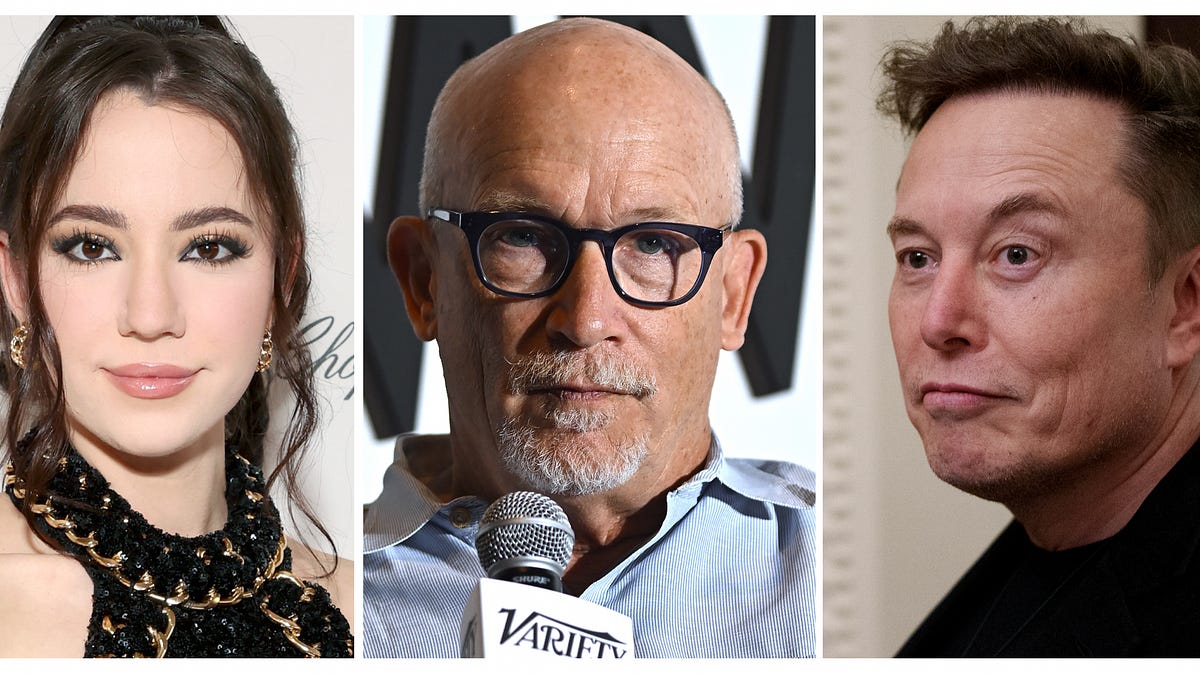
- 🎬 Alex Gibney's new Musk documentary, seen by The Hollywood Reporter, leans on Ashley St. Clair recalling Musk saying "I have ten thousand lasers in space," then asking whether he meant Starlink stole 2024 for Trump.
- 🗳 Election officials in North Carolina, Georgia and Pennsylvania say voting kit is air-gapped. Georgia's Mike Hassinger: "absolutely conspiratorial nonsense."
- ✅ FactCheck.org, PolitiFact (Pants on Fire) and Poynter all dismissed the Starlink theory in November 2024. Shellenberger notes THR's 5,000-word piece never mentioned those debunkings.
- 📰 THR editor Maer Roshan stood by the reporting, then said covering documentary material is not the same as adopting it as THR's conclusion. He still would not address why the fact-checks were withheld.
- 📡 Starlink's roughly 9,000 lasers pass data between satellites. Musk joked publicly in 2024 about having space lasers. CISA's Jen Easterly reported no malicious activity with material impact on election infrastructure.
- 📁 Second "revelation": DOGE data access could corrupt future elections via AI. Wired's Katie Drummond and Geoffrey Hinton speculate. A claimed whistleblower parallel to SSA's Charles Borges does not allege any transfer to SpaceX.
- 📅 Film premiere: Venice 8 September, theatres 16 October, HBO in 2027. Timed, Shellenberger argues, toward the midterms, as Gibney timed Agents of Chaos to 2020.
- 💙 FEC filings show Gibney's Democratic donations; he is hyper-partisan online. Agents of Chaos amplified a Russia narrative Durham later found lacked actual collusion evidence when the FBI opened its probe.
- 🎯 Takeaway: prestige documentary plus THR cover treatment recycles a theory election officials and hostile fact-checkers already killed. Paid lock may hold more; free cut is already damning on process.
8. Victor Davis Hanson: What Happens to MAGA When Trump Is Gone?
Victor Davis Hanson - The Free Press
- 📕 Exclusive Free Press excerpt from Hanson's new book The Counterrevolution: The Fall and Rise of Donald Trump and the MAGA Movement, out next week.
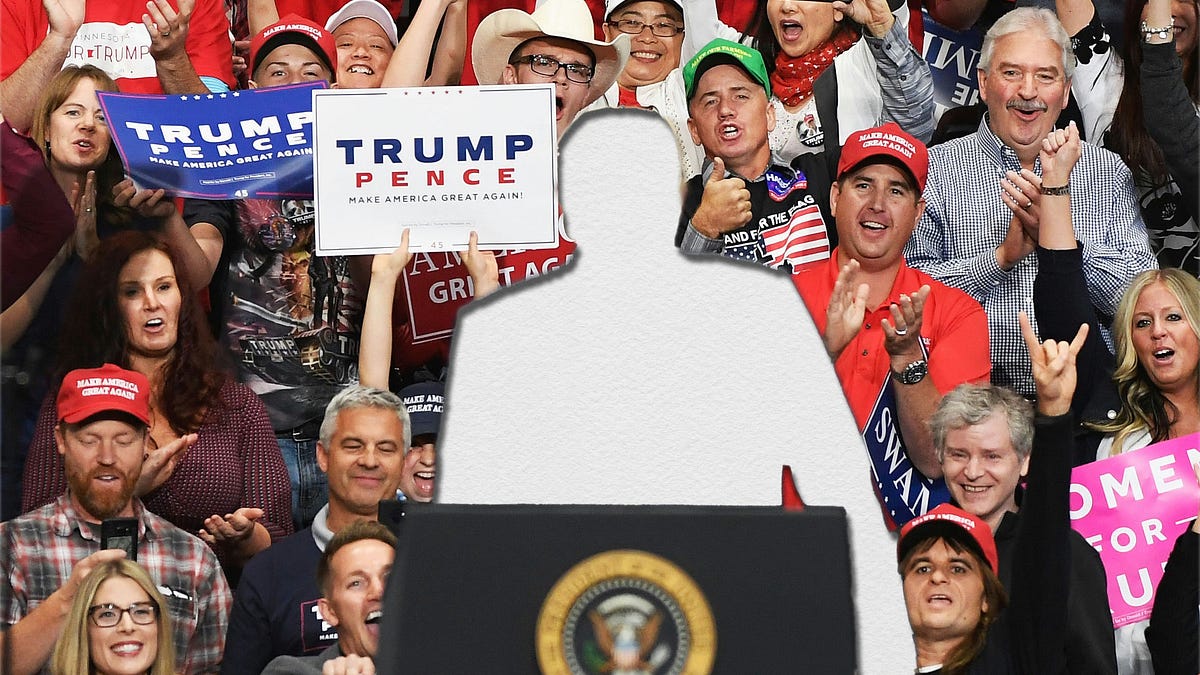
- 🗓 Since the golden escalator on 16 June 2015, Trump has been the decade's central force: hatred and adoration, fear and faith. 2024 made him only the second US president to win nonconsecutive terms.
- ❓ Editors frame the question Hanson takes on: what happens to MAGA when its founder relinquishes leadership? Will Trumpism outlast Trump?
- 📅 As the 78-year-old entered his second and last term on 20 January 2025, friends and enemies asked what happens to Make America Great Again on 20 January 2029, when he would be 82.
- ⏳ A post-Trump MAGA future, Hanson writes, starts with preliminary considerations. First: Trump's health, longevity and political viability in retirement.
- ⚡ Even supporters accept the whirlwind pace of the second-term start is unsustainable for any 80-year-old who scarcely sleeps, eats as he pleases, and wades into crowds almost daily.
- 📉 FP pull-quote of Hanson's line: as a general rule, an administration's unique political and personal brand is likely to erode under the next presidency, even from the same party.
- 🔒 Paywall hits immediately after that setup. Visible text does not reach succession names, Vance mechanics, or Hanson's full answer.
- 🎯 Takeaway: thin gated excerpt only. Report the question and the longevity caveat; do not invent the locked argument about who inherits MAGA.

9. Pauline Hanson is gunning for Aussie establishment
Hugo Timms - spiked
- 🧡 One Nation's "orange tsunami" blew Labor out of Secret Harbour, a safe Perth-fringe seat: about 16,000 votes to Labor's 12,000, a swing of nearly 20 per cent. Timms calls it Australia's populist moment arriving.
- 🏡 Secret Harbour is middle-class, affluent, young families and FIFO miners. Not deindustrialised, not immigration-swamped. Median Australia, not the fringe One Nation is supposed to own.
- 📈 Momentum: after the Bondi massacre in January, One Nation surpassed the Coalition in polls; by July it pulled even with Labor at 30 per cent.
- 🗣 Hanson is "divisive," meaning she says what educated circles despise and many Australians quietly like, especially on immigration. Outside Queensland her support long amounted to little while immigration was stable and living standards high.
- ✅ Now she is rewarded for consistency the majors abandoned: cut immigration, Net Zero has throttled the economy, multiracial yes, multicultural no. Suddenly everyone seems to agree.
- 📉 Albanese helped clear the path: net immigration 430,000 in 2024 for a country under 30 million; Net Zero over mining; the Voice referendum; and what Timms calls cynical betrayal of Australian Jews.
- 🔄 Under Angus Taylor the Coalition has some fight back, but like Badenoch in Britain it is early days after a record of revolving PMs, hard lockdowns and Net Zero 2050.
- 🐟 Hanson's strange appeal: twice-divorced former fish-and-chip shop owner who sounds like Kath and Kim. Among lawyers and career politicians, roughness reads as human.
- 🎯 Takeaway: if One Nation does as predicted in Victoria's state election, its weakest state, Timms says the map will not be redrawn so much as torched. Hanson's reply: get over it.

10. Hollywood's paranoid hatred of Israel
Brendan O'Neill - spiked
- 🎬 O'Neill opens on a letter signed by 180 showbiz folk defending Mark Ruffalo. He calls it green-ink paranoia linking Gaza, oligarchic power and Orwellian overlords watching everyone.
- 💥 It started when Ruffalo attacked the $111 billion Paramount Skydance / Warner Bros Discovery merger and dragged Israel in: David Ellison runs Paramount Skydance; father Larry Ellison's Oracle sold software to the IDF; therefore genocide-powered oligarchs will soon run a media giant used on you.
- ✡ Paramount said it was troubled by what looked like anti-Semitic tropes, calling genocide/apartheid talk about a corporate deal a bridge too far. The Ellisons are Jewish; O'Neill agrees the spider-web framing is iffy.
- 📜 The comrades' letter, signed by 180 creatives of Jewish heritage, claims the road to WarnerMount runs through Gaza and that blood money will build an Orwellian world where oligarchs watch what you stream and watch you.
- 🧪 Gaza is cast as an open-air laboratory for AI killing tools that will later be turned on the West. O'Neill calls out the vanity of watching Israel fight Hamas and worrying about Hollywood streaming catalogues.
- 🔗 Core commandment he rejects: oppression of Palestine is oppression of us all; Israel metaphorically shackles humanity; only its defeat frees the world. Sally Rooney-style liberation talk made universal.
- ⚠ Depicting the Jewish nation as boot-on-the-neck of the world, source of global tyranny and builder of the road to oligarchic deprivation is, he argues, the original anti-Semitism in modern dress.
- 🪞 Anti-Zionism repeats old libels about Jews (blood, child sacrifice, finance puppeteers) with Israel as the stand-in. Ellen Barkin: anti-Semitism is hatred of Jews, anti-Zionism is hatred of Israel. O'Neill: we see you.
- 🎯 Takeaway: the Ruffalo letter is Exhibit A that Israelophobia has curdled into conspiracy bigotry with ancient echoes, not careful media criticism.
What our members are saying about Ten@10
Elizabeth
These articles are compulsory reading for me and the perfect addition to the usual list of Goodoil items!
Lynne
Absolutely brilliant to receive these current and thought provoking articles.
Jonathan
Just wanted to let you know that I’m loving this new 10@10. Much appreciated from someone who chooses to read/watch almost NO mainstream media.
Murray
Cam, relish your output as the newspaper in Christchurch is so intent on non news. Thankyou
Fred
Thanks for Ten @ Ten, really enjoy reading it.Keep it up. All the best, keep healthy.
Jocko
Wonderful info not otherwise available in NZ. More power to your elbow! Thanks.