This is edition 2026/166 of the Ten@10 newsletter.
Hi all,
This is the Ten@10, where I collate and summarise ten news items you generally won't see in the mainstream media.
Enjoy!
1. Democracy Briefing: Winston Peters' diplomatic double standard
Bryce Edwards - The Democracy Project
- 🗣 Foreign Minister Winston Peters has spent years attacking governments that hand diplomatic jobs to political insiders. He has called it "jobs for the boys" and said trained diplomats get elbowed aside. In 2016 he described the pattern as a "mainly white brorocracy". Last year, bringing Trevor Mallard home early from Ireland, he said politicians should not be getting diplomatic jobs at all.
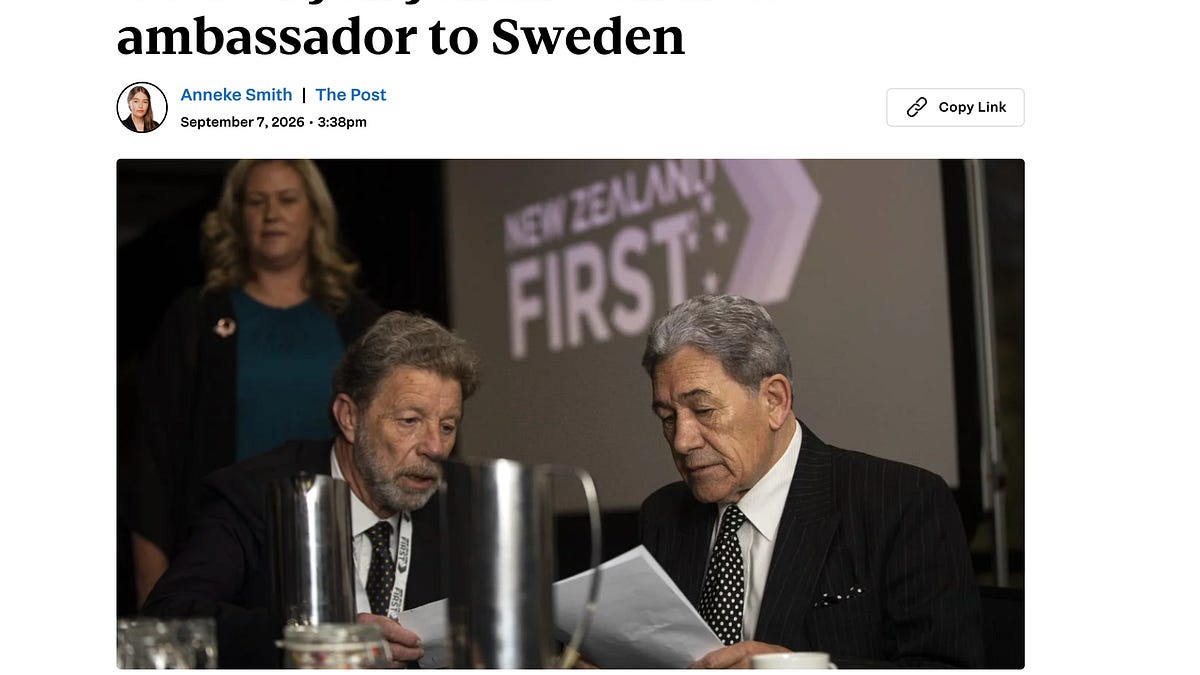
- 🇸🇪 One of Peters' own closest advisers, Jon Johansson, has now been appointed New Zealand's next Ambassador to Sweden. He was Peters' chief of staff in the 2017-2020 Labour-NZ First government and returned after the 2023 election as a senior specialist ministerial adviser on foreign affairs. He travels with Peters, sits in meetings with foreign ministers, and has helped write some of the chunkier speeches.
- 🎓 Before the Beehive he spent 17 years as a political scientist at Victoria University of Wellington and was a regular commentator. Edwards says Johansson plainly has relevant experience and may well be a good ambassador. That is not the dispute.
- ❓ The problem is the standard Peters has demanded of everyone else, and the process. How are New Zealanders meant to know Johansson was the best person available, rather than the person the Foreign Minister already knew and trusted?
- 📜 At the University of Otago in 2022, Peters told politics students diplomacy should be confined to careerists, "not former politicians being 'grass widowed', 'rewarded', or as a 'trade off' for early retirement". He compared putting an inexperienced person in a diplomatic job to "a novice into a surgeon's operating room or a gyrocopter operator into a cockpit of a 747". Only in "exceptional exceptions" should the rule be broken.
- 🏛 RNZ's Russell Palmer has recalled the 2016 line about a "mainly white brorocracy", and Peters calling political appointments "the absolute exception". When National sent Maurice Williamson to Los Angeles as Consul-General, Peters called it "just another example of National's jobs for the boys". On Mallard, he said: "We should not be having politicians in diplomatic jobs, full stop." That was last year.
- 🤝 Johansson is not a former MP, so Peters can draw that distinction. Edwards says the 2022 argument was broader: a professional diplomatic service, not just keeping former MPs out of embassies. Audrey Young reported in the Herald in 2024 that Johansson's advice sat outside MFAT advice. Peters himself called him, in 2019, his "most senior and trusted advisor".
- 🔒 Takeaway: the free preview stops at how little scrutiny the appointment has had. Paid sections named on the page, and not summarised here: how Johansson was selected, diplomatic jobs as politics, whether Labour will make much noise, the Wellington revolving door, why now, and why Peters should explain it.

2. RODNEY HIDE: KiwiMart - The Great Leap Forward
Rodney Hide - Brash & Mitchell
- 🛒 Hide says the Greens have a plan for cheaper groceries called KiwiMart. Force Foodstuffs and Woolworths to sell 120 stores and a couple of warehouses into state ownership at a heavy discount, spend about $2.8 billion, ban "price gouging", and milk is affordable. Competition, they say. Owned by all New Zealanders, for all New Zealanders.
- 📣 The slogan writes itself. So does the sequel. Year 1: KiwiMart opens with a mandate to prioritise affordability. Prices are lower because the Cabinet said so. The private chains, short 120 stores and a few billion, and staring at a price-gouging ban, stop discounting the specials that used to pull people in.
- 🧈 Year 2: KiwiMart is short of butter, fruit, and truck drivers who will work Sunday for a state rate. The minister says suppliers are "not playing ball". A temporary wholesale price schedule appears, just until the shelves look decent for the cameras.
- 🐄 Year 3: farmers find milk solids somehow cost more to produce than KiwiMart may legally pay. A few herds go to the works. The Greens discover "food security". Export controls on meat and dairy are floated so New Zealanders eat first. The Chinese buyer rings someone else.
- 🚛 Year 4: freight is the bottleneck. "Excess profits" in trucking. Another gouging ban, another schedule. The queue at the distribution centre becomes a moral issue. A People's Logistics Agency is temporary, of course.
- 🥗 Year 5: urban gardens and community food hubs cannot fill the gap the price system used to fill in an afternoon. The school lunch programme expands again, not because kids were hungry for lack of compassion, but because the shop is unreliable. What began as a third competitor is now a rationing system with better branding.
- 📋 Year 7: a Lettuce Board, or a Kai Commissioner, or both. Nobody remembers wanting either. Each failure proved the last lever was not big enough. Nobody votes to collectivise the country. They just refuse to admit the first lever was wrong.
- 🍊 Hide's contrast: New Zealand supermarkets are very good at providing what people want at a price they will pay. When he was a kid, oranges and bananas were a Christmas stocking treat. His kids have them in the bowl every day. The real competition argument, he says, is planning rules and how hard it is for a third chain to get a site.
- 🎯 Takeaway: forcing the taxpayer to buy the aisles and then capping prices is not competition. Hide calls it central planning without the loyalty card. Smother the price signal and food becomes scarce, then political. KiwiMart is chapter one. It has been tried before.

3. RODNEY HIDE: If it happened here
Rodney Hide - Brash & Mitchell
- 📢 Winston Peters is back on the MFA account telling Israel how to behave. Settlements. Settler violence. Annexation. Two-state. International law. Hide says every press release of this sort lands the same way in Jerusalem: enemies hear that New Zealand is not with you, and voters hear that Wellington's first instinct is to manage Israel's response, not name the aggressor and stand clear.
- ⚖️ That is not neutrality, Hide writes. It is pressure applied to the side that was invaded.
- 🩸 On 7 October 2023, Hamas and its allies murdered 1,195 people in a morning. They dragged 251 hostages into Gaza. They burned families in their homes. They raped. They filmed it. They gloried in it. Israel's population was under ten million. New Zealand's is about half that.
- 🇳🇿 Scale the slaughter to New Zealand and Hide gets something like 650 New Zealanders dead before lunch, and well over a hundred dragged across a border into tunnels run by a death cult that still calls for elimination. Imagine that in the Bay of Plenty, or Northland, or a music festival outside Auckland.
- 🚫 We would not, he says, be holding seminars on "proportionate response". We would put security first, expect the world to back us, and for a fortnight get it.
- ✡️ Why the difference? Hide's answer: Israel is the Jew among nations. Years of propaganda have taught politicians that Israel is a colonising power, while crowds chant for its violent elimination, "from the river to the sea". "Proportionate" is never applied to the aggressor who started the war with massacre, only to the democracy that refuses to lose.
- 📝 A Foreign Minister can condemn Hamas in one paragraph and still spend the next year issuing instructions that, in practice, constrain only Israel. Peters will say he supports Israel's right to exist, and that Hamas has no place in a future Palestinian state. Fine, Hide says. Then stop writing as if Israel's duty is to lose more slowly.
- 🎯 Takeaway: a country that woke up to 1,195 of its own dead should not have to ask Wellington's permission before finishing the job. A country that has the right to exist has the right to defend itself.
4. Australia's Prime Minister Threatens Relationship With Trump Over New Demands For Sweeping Censorship To Counter Critics Of Mass Migration
Michael Shellenberger - Public
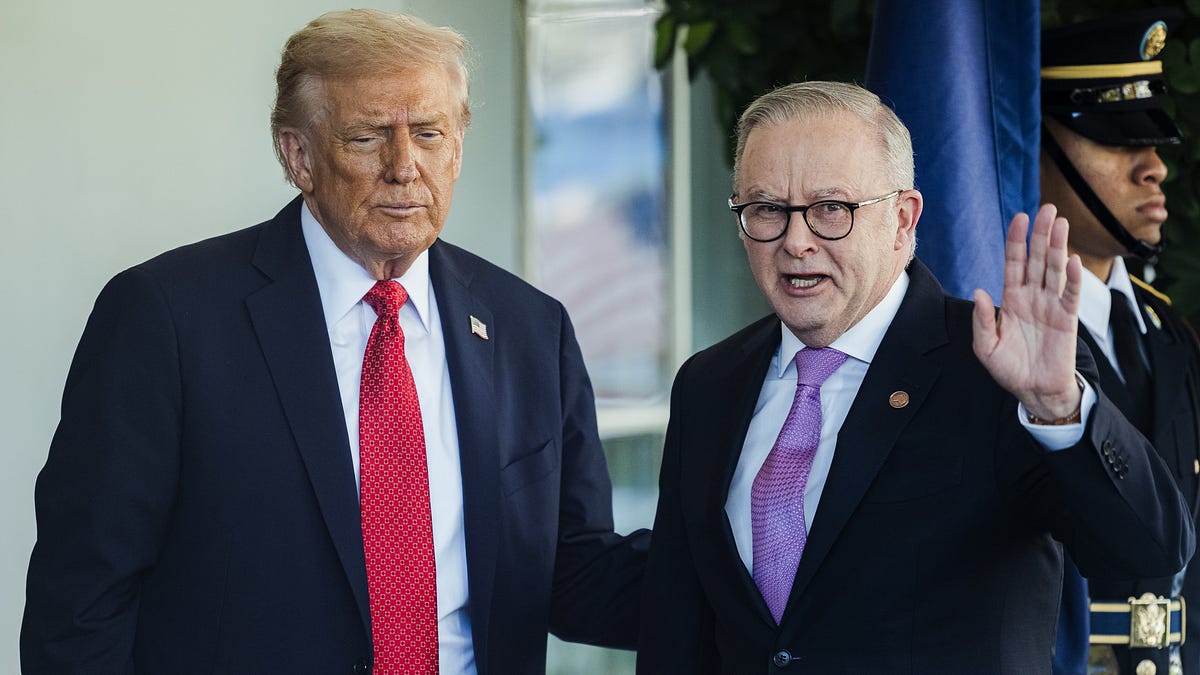
- 🤝 Since Donald Trump returned to the White House, Anthony Albanese has courted him and boasted of the results. In October 2025 the two signed a critical minerals framework at the White House. Albanese called the meeting "as warm and friendly as you saw". The framework commits the two governments to a combined $3 billion towards an $8.5 billion pipeline of priority critical minerals projects in Australia.
- 📜 On Monday the Albanese government introduced draft legislation that Shellenberger says would let Canberra impose sweeping censorship on American social media platforms, including X, and perhaps even on Americans. One section lets the government censor "any other material or conduct" that the Communications Minister "is satisfied may cause serious harm".
- 🎯 The subtitle of the piece: legislation to require platforms to remove anything that "may cause serious harm", written, Shellenberger says, to silence critics of mass migration.
- ⚠️ He says that test could cover almost anything, including criticism of mass migration and Muslim migrants after terrorist attacks. He cites last December's Bondi Beach attack, a father and son inspired by the Islamic State, who killed 15 people, including a 10-year-old girl, rabbis and a Holocaust survivor, at a Chanukah by the Sea gathering.
- 💵 A platform facing a penalty of up to A$109.2 million has every incentive, he writes, to suppress posts about protests that involved any unlawful act. Australians who say migrants bring terrorism could find themselves censored under government orders.
- 🔎 In July the Institute of Public Affairs warned that the Bondi tragedy was being used "as an excuse for internet censorship and surveillance". Albanese has already said One Nation, which Shellenberger compares to AfD and France's RN, would "peddle misinformation and disinformation".
- 🗣 Asked whether the bill would let her censor misinformation, Communications Minister Anika Wells said, "We can emphatically rule that out." Shellenberger's reply: the legislation would still let her censor anything that "may cause serious harm". Last year the government claimed anti-mass migration protesters were linked to neo-Nazis.
- 🔒 Takeaway: the free preview ends by saying this could upset a Trump administration that has made defending American platforms and free speech a high priority. The rest of the article is behind Public's paywall. Do not invent it.
5. Britain's turn against Israel is no accident
Stephen Daisley - The Spectator Australia
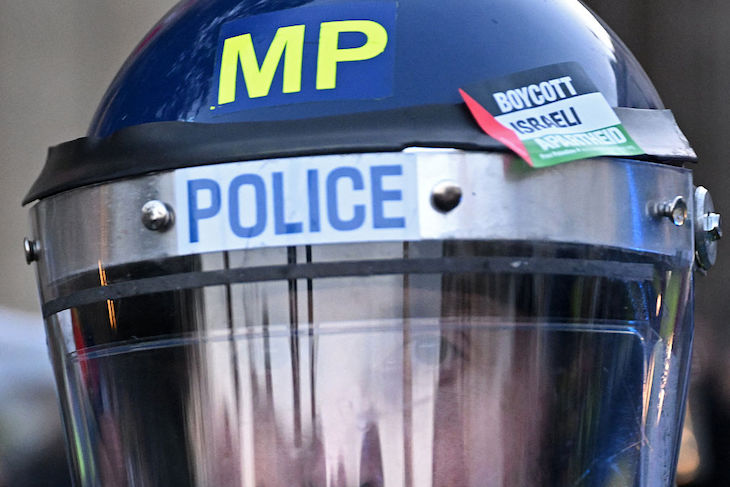
- 🇬🇧 With Andy Burnham's government preparing to unveil sanctions against Israel, Daisley says the pro-Palestinian lobby and the left more broadly have grounds to celebrate. The pretext is settlement-building, which Britain has long condemned. The context is a well-funded campaign since 7 October to demonise Israel until former friends turned sceptical or hostile.
- 🇶🇦 Some of the shift, he writes, is organic: military and diplomatic errors, and Itamar Ben Gvir and Bezalel Smotrich around the cabinet table. Much of it is a propaganda war funded by Qatar and Iran, states he says are suspiciously keen to split the West from a country with advanced defence technology, intelligence, and a record of breaking up Islamist cells.
- 📣 Amplify real civilian suffering in Gaza, mix in falsehoods and propaganda, and British sympathy after 7 October drains away. For most British voters, Palestine is not a big issue. There was a demographic, he says, with an insatiable appetite for a diet of Jewish perfidy, as the 2024 election showed.
- 🗳 Labour looks at urban England, London, Birmingham, Leeds and elsewhere, and is alarmed. Daisley names seats that came close for Gaza-focused candidates in 2024, including Jess Phillips in Yardley, Wes Streeting in Ilford North and Naz Shah in Bradford West. In Birmingham Ladywood (Shabana Mahmood), Slough (Tan Dhesi) and Rochdale (Paul Waugh), independents or the Workers Party came within ten per cent of toppling a Labour MP. In other seats, including Liam Byrne's and Rushanara Ali's, modest Green, Workers Party or independent gains could be enough next time.
- 🕌 Labour's response, he writes, is sectarianism. It reckons Muslim voters see the party as a Zionist puppet and would be reassured if Labour distanced itself from Israel. It knows a pitchfork campaign can worsen hostility toward visibly Jewish Britons, their businesses and their places of worship, and figures it can always add a bit more to the fund that trains Jewish children in self-defence for the walk to school.
- 💻 He lists the costs: relations and trade with a country that produces cutting-edge technology and life-extending medicines; the daily safety of British Jews; and a politics that used to be about Britain, not ethno-religious kinship.
- 🛂 The Conservatives' open-borders experiment, he argues, will change Britain's demographics at a pace not seen here before. Other source countries that want a concession may copy the method: slick propaganda, marches, and a little local difficulty in marginal ministerial seats.
- 🎯 Takeaway: Labour's turn against Israel is a victory for the Palestinian lobby. Anyone who cares for Britain's future, Daisley says, should greet it with apprehension, if not alarm. Few issues have this crossover appeal, but a country that wants it enough will find a way to frame the next grievance for the general public.

6. The AfD has smashed Germany's political cartel
Fraser Myers - spiked
- 📺 At the AfD victory party in Magdeburg the slogan on the screen was "Anything is possible". In Saxony-Anhalt the party won 44 per cent, just short of a majority of seats. Myers says a small eastern state has smashed what the AfD calls the cartel of mainstream centrist parties, and the message is meant for Berlin and the rest of Europe.
- 📊 The AfD was the most popular party in every social group the piece lists: men and women, young and old, university and high-school educated, blue-collar and white-collar, civil servants and the self-employed. Turnout rose to 78 per cent, from 60 per cent in 2021, bringing in people who usually stay home.
- 📉 The SPD managed 9 per cent. The CDU, in office at state and federal level, was cut to 17 per cent. In 2018, running for CDU leader, Friedrich Merz pledged to halve AfD support. In this state AfD support has more than doubled since the last election, and the CDU vote has more than halved. Lead candidate Ulrich Siegmund called Merz "our most important campaigner".
- 🛂 Myers traces the surge to migration policy since Angela Merkel opened the borders in 2015. In 2022, total arrivals were 2.7 million and net migration 1.4 million, above the Syrian-crisis peak. Crime has surged. Terror attacks are treated as normal, including the 2024 Magdeburg Christmas market attack by a Saudi-born terrorist: six killed, more than 300 injured.
- 🏭 Industry has been in freefall since 2019. About 350,000 jobs have gone as firms face Chinese competition and energy costs Myers ties to Net Zero. The state looks unable to do basic work: the Carola Bridge in Dresden collapsed in 2024, about 16,000 road bridges need urgent repair, and about 40 per cent of trains are delayed.
- 🧱 Under the Brandmauer, centrist parties will not form coalitions with the AfD or vote alongside it. Governments get stitched together from the liberal FDP to the Greens to Die Linke. Myers says the firewall was meant to delegitimise the AfD and has done the opposite. It lets the party claim to be the only alternative to the cartel.
- 🕵️ The domestic secret service has called the AfD a "right-wing extremist" organisation, which many voters read as political. Defence minister Boris Pistorius called for a ban in the week before the vote. A Der Spiegel front asked whether Ulrich Siegmund could be "the most dangerous man in Germany". He handed out signed copies at rallies.
- ⚠️ Myers does not wash the AfD clean. The party contains figures who have downplayed Nazi crimes and toyed with Nazi symbols and slogans. It is split over whether "remigration" means deporting illegal migrants or also reaches "unintegrated" migrants with German citizenship. Its Ukraine line, neutrality, can slide into hostility toward Ukrainians and admiration for the Russian invaders.
- 🎯 Takeaway: that a party with those black marks can dominate a state election is, for Myers, a further indictment of the political class. Saxony-Anhalt is not a local upset. Demonising voters, instead of heeding their concerns, is no longer a viable strategy.

7. Labour's shameful surrender to the anti-Israel mob
Jake Wallis Simons - spiked
- 📣 The piece opens with a Labour MP, speaking anonymously to the Telegraph, calling colleagues "muppets": the prime minister forced into sanctioning Israel by MPs "freaked out" by Gaza email campaigns and worried the anti-Israel Greens will steal their seats.
- 🚫 Andy Burnham and foreign secretary Ed Miliband, Wallis Simons writes, will announce a ban on goods and some services from Israeli settlements in the West Bank, among other sanctions. Miliband has called it a "comprehensive resetting" of relations with Israel. Labour has a majority of 157, and still bends. Keir Starmer's old seat of Holborn and St Pancras is up soon, with the Greens as serious contenders.
- 🎬 Last week Miliband, after meeting unnamed figures who had been "on the ground" in Gaza, posted a video of allegations about "horrific" actions, including medicines blocked and children dying while waiting for treatment. Wallis Simons reads that as the stage-set for a more hostile British policy toward the only democracy in the Middle East.
- 🏚 The supposed trigger is settler bullying of Palestinians. He says the people carrying out those crimes number in the low hundreds at best, out of about 530,000 settlers and 10 million Israelis, and asks why that, rather than Palestinian jihadism, is Britain's priority.
- 💷 What Britain stands to lose, on his list: bilateral trade of £5.9 billion last year, with a British surplus; Mossad tip-offs that MI5 has acknowledged; the Trophy active defence system for Challenger 3 tanks; the Israeli-built Watchkeeper drone, made in Leicester by Elbit, whose British arm employs almost 700 people.
- 💊 One in seven boxes of medicine issued in Britain, he writes, is produced by Teva. The capsule camera the NHS uses so tens of thousands of patients can avoid colonoscopies was invented by an Israeli missile engineer. Israelis have threatened to cut Britain out of Gaza reconstruction. So has Donald Trump. Before the announcement, the American administration accused Britain of anti-Semitism over Miliband's video. Some Israeli ministers, he notes, are urging the White House to recognise Argentina's claim on the Falklands.
- 📍 The building site in the argument is E1, a four-mile stretch that would join Ma'ale Adumim to Jerusalem. Britain says it threatens a two-state solution. Wallis Simons, citing Simon Sebag Montefiore, treats that formula as a faith. He recalls Camp David 2000, when Yasser Arafat was offered 92 per cent of the West Bank, plus Israeli land, Gaza and a capital in East Jerusalem, and Ehud Olmert's roughly similar offer in 2008. Both were refused. Bill Clinton: you cannot complain 25 years later that the doors are no longer open.
- 🎯 Takeaway: Wallis Simons says British foreign policy, now steered as much by Labour backbenchers as by the Foreign Office, treats the Middle East's only democracy as an enemy and jihadis, tyrants and corrupt regimes as friends. He quotes Matthew 23:24: strain out a gnat and swallow a camel.

8. Britain should not pay a penny in slavery reparations
Nigel Biggar - spiked
- 🌍 The pressure on British taxpayers for slavery reparations is rising. In February the African Union adopted a resolution, proposed by Ghana's president John Dramani Mahama, identifying slavery as a crime against humanity. In March the UN General Assembly passed Ghana's resolution calling transatlantic chattel slavery "the gravest crime against humanity" and reparations a remedy. 123 states voted yes. Argentina, Israel and the US voted no. 52, including the UK, abstained.
- 👑 This week Jamaica petitioned King Charles III to ask the Privy Council whether Britain is obliged to provide a remedy for slavery and its consequences. Ralph Gonsalves, former prime minister of St Vincent and the Grenadines, says it is "inconceivable" that reparations will not sit at the heart of November's Commonwealth meeting in Antigua and Barbuda.
- 🏛 At home, Labour MPs Clive Lewis, Nadia Whittome and Dawn Butler have called for "meaningful negotiations" with Caribbean countries. Bell Ribeiro-Addy demanded that Rishi Sunak apologise for Britain's role in slavery and colonialism. Since 2023, Irish billionaire Denis O'Brien has funded a lobbying campaign based in Lewis's office.
- 💬 David Lammy, then a backbencher in 2018, said Caribbean nations wanted reparations back on the table and Britain should listen: what do reparations look like, and how do we make that work? As shadow justice secretary in 2020 he said the starting point was truth and reconciliation, and that reckoning and repairing was "to some extent... obviously financial".
- 📚 Biggar calls the case historically and morally ludicrous, a cartoon of whites exploiting blacks. Martin Plaut's Unbroken Chains traces African enslavement of Africans across 5,000 years. European traders waited on the coast for African traders to bring captives. Biggar cites a History Reclaimed article arguing that those traders include ancestors of many Ghanaians, including, on that account, President Mahama.
- 🔢 Europeans transported 12.75 million Africans across the Atlantic. About a quarter were taken by the British. Figures Caricom and the African Union are less keen to quote: 9 million Africans taken to the Mediterranean, and 12 million to the Red Sea, the Persian Gulf and west of India, enslaved first by other Africans and sold to Arabs.
- ⚖️ In 1804, Biggar writes, an estimated 45 million chattel slaves worldwide, Britain's West Indies share just over 1 per cent. Of at least 41 million African slaves bought and moved across the Atlantic, the Sahara and the Indian Ocean, British merchants bought just under 8 per cent, Arabs about 37 per cent. Almost all were first enslaved by other Africans. In the 1850s the Fulani of what is now northern Nigeria ran plantations employing 4 million slaves at a time, more than Britain transported to the Americas in more than 140 years.
- 🚢 Unlike any African nation, Britain abolished the trade and then slavery in the early 1800s, and used imperial power to suppress the trade, including in Africa. Beninese historian Abiola Felix Iroko: when the British abolished the slave trade, Africans were against abolition. Plaut's point, as Biggar uses it: the trade is still alive in Mauritania, Mali, Niger, Sudan and Libya.
- 🎯 Takeaway: Biggar says the African Union pressing Britain, and not the African and Arab states that did far more of the enslaving, is outrageous as well as ludicrous. Caribbean governments know they would get short shrift from those capitals. Britain looks ripe for plucking because progressive elites wallow in guilt. He warns a reparations fight could cripple the Commonwealth, and that China, Russia and Iran would look on with glee.
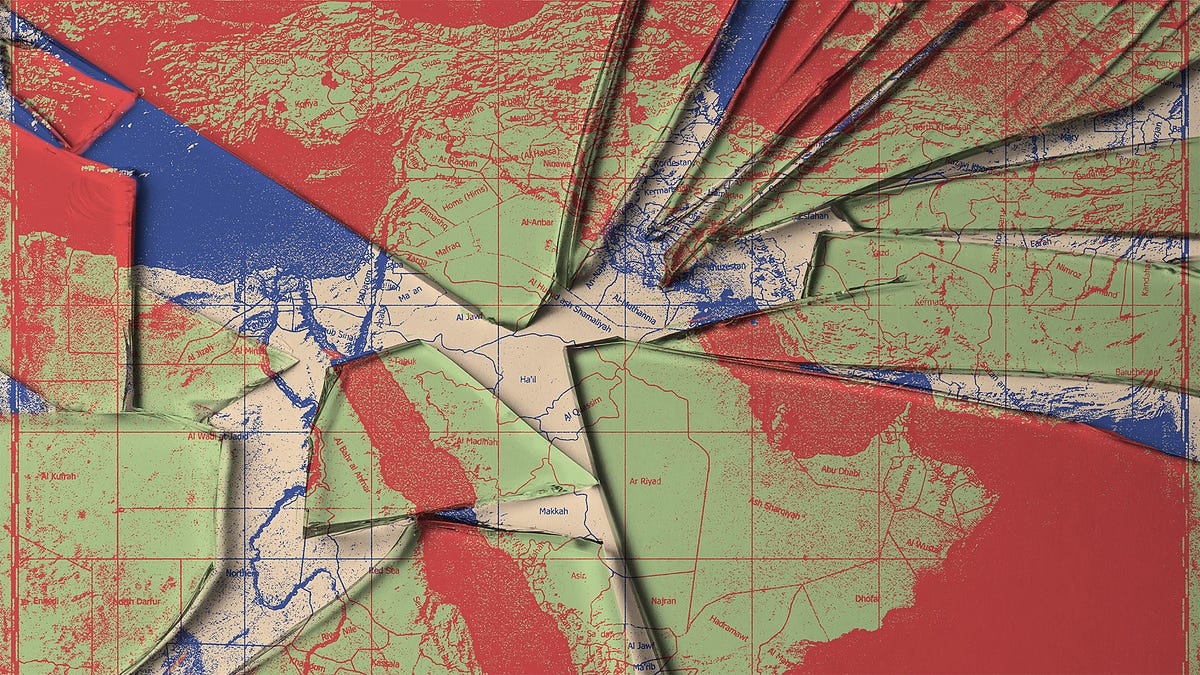
9. Simon Sebag Montefiore: Who Will Rule the Middle East?
Simon Sebag Montefiore - The Free Press
- 📖 The Free Press presents an essay by historian Simon Sebag Montefiore, written for them, from the argument of his forthcoming book The Cauldron, a history of the modern Middle East from 1900. His earlier bestseller Jerusalem (2011) was a 3,000-year history of the city. The question the editors flag: in a landscape of competing powers, who will win?
- 💬 The preview quote: "The relevance of Israel and its existent dilemmas is small compared to the tournament of regional and megapowers, and to the battle within Islam itself that are the issues that really make the Middle East turn."
- ⚔️ He calls the spasm since Hamas's slaughter on 7 October "The October 7 Wars": Israel and America versus Iran and its proxies, and a new era. America's armed blockade may be starting to make gains against Iran, which, he writes, is being quietly supported by China and Russia. Regional powers are trying alignments that would once have been unimaginable.
- 🛡 A month before the piece, on 7 August, Saudi Arabia, Turkey and Pakistan signed the Mecca Joint Defense Agreement, a self-declared "Islamic NATO" in which an armed attack on any one of the three is an attack on all three.
- 🤝 Israel, meanwhile, has signed a large defence contract with Greece and intensified cooperation with India. Iran has kept hitting Arab states, some advised on their defences by Ukraine, others by Israel, all by America, while Russia furnishes Iran with new missile technology.
- 🌍 Large and small powers are pushing neo-imperial interests into East Africa. US African envoy Massad Boulos (whose son Michael is married to Tiffany Trump) says 12 Middle Eastern powers are taking part in the Sudan war, which Montefiore calls the worst humanitarian catastrophe of the last three years.
- 🎟 The editors also plug a 1 October live event in uptown Manhattan: Bari Weiss with Montefiore on the opening night of his US book tour, with a limited number of tickets including a signed copy of The Cauldron. Paying subscribers had early access until Thursday at 12 p.m. ET.
- 🔒 Takeaway: the free preview ends on the question it poses, who will emerge to rule the Middle East, and then hits "Continue Reading". The answer, and the rest of the essay, is behind The Free Press paywall. Do not invent it.
10. Band-Aids don't fix bullet holes. Neither does vaporware.
Alex Berenson - Unreported Truths
- 🩺 Berenson's opening: think American medicine is a mess now, wait until Google and OpenAI try to fix it. The software and social-media billionaires want the $5 trillion the United States spends on healthcare, and promise artificial intelligence will remake drug discovery and medicine itself.
- ⏳ The interest is personal too. He says they seem offended that fortunes cannot keep them alive forever, or at least longer than poor people, and have fallen for lifehacks, longevity extension, and often psychedelics. Biology and computing are a bad match. Silicon Valley's puffery makes it worse.
- 🧪 The cautionary tale is Elizabeth Holmes. She dropped out of Stanford at 19 in 2003 promising to revolutionise blood testing. She is now in a federal prison camp in Texas after 2022 convictions for fraud and conspiracy at Theranos, due out around 2031. Berenson draws the account from John Carreyrou's Bad Blood (2018), first reported for the Wall Street Journal.
- 🔬 Holmes knew almost nothing about the biology of blood testing, he writes, but insisted Theranos could get reliable results from samples a fraction of a conventional draw. She would not listen to people she hired who said she could not bend physics and chemistry. Her skills, on this telling: charming wealthy older men (the board grew to include Henry Kissinger, George Shultz and Jim Mattis) and lying without blinking.
- 💰 Investors poured about $1 billion in over a decade. At the 2014 peak Theranos was valued at about $10 billion and Holmes's stake at more than $5 billion. Fortune put her on the cover: "This CEO is out for blood." She modelled herself on Steve Jobs and cared more about a small, pretty, iPhone-like device and the tiniest possible blood draw than about a machine that worked. Secrecy and internal silos kept engineers, chemists and designers from working together.
- 🏪 Even in 2015, 12 years after she left Stanford, the testers were prototypes that could not reliably do basic tests such as blood potassium. Walgreens had paid $140 million for the right to offer the tests and never properly checked whether the technology worked. Deadlines were missed. Rather than admit failure, Holmes ran tests on standard Siemens machines hidden on another floor, then diluted the tiny samples with saline because those machines did not work well with them either. Results were often wrong. A regulatory gap between the FDA and Medicare kept oversight at bay.
- 📰 Carreyrou's sources started talking. Theranos and outside counsel David Boies tried to intimidate sources and threatened the Journal. By 2017 Theranos was effectively out of business. It filed for bankruptcy in 2018.
- 💻 Berenson's contrast: medicine is slow, from bench to bedside. The great gains in life expectancy came from sanitation and nutrition, not gadgets. Computer science has the opposite problem, progress outrunning the ability to manage it. OpenAI and Anthropic did not exist when Carreyrou started on Theranos and are now among the most valuable companies in the world. Valley culture is sell it now, design it later.
- 🎯 Takeaway: Holmes is a dark forecast of the pressure medicine will face as the richest companies try to reinvent biology and remake humanity. Theranos is the clearest example so far of speed, secrecy and anti-regulatory hype applied to medicine. It will not be the last.
What our members are saying about Ten@10
Elizabeth
These articles are compulsory reading for me and the perfect addition to the usual list of Goodoil items!
Lynne
Absolutely brilliant to receive these current and thought provoking articles.
Jonathan
Just wanted to let you know that I’m loving this new 10@10. Much appreciated from someone who chooses to read/watch almost NO mainstream media.
Murray
Cam, relish your output as the newspaper in Christchurch is so intent on non news. Thankyou
Fred
Thanks for Ten @ Ten, really enjoy reading it.Keep it up. All the best, keep healthy.
Jocko
Wonderful info not otherwise available in NZ. More power to your elbow! Thanks.