Table of Contents
Yvonne van Dongen
Veteran NZ journo incredulous gender ideology escaped the lab. Won’t rest until reality makes a comeback.
As it happened I have barely gone out on the town since I became a Disagreeable Bigot. Partly circumstance (getting over a major health episode) and partly inclination (feeling like I’d done it all). A kind of ennui I suppose.
But an American songstress I’d loved for a long time was coming to a church near me and I thought, well I can walk there and back so there’s no excuse. Truth is I barely listen to music any more, but again, location, location, location.
Last time I saw the songstress, she was a young slip of a thing playing in a central city pub on stringed instruments that looked like they’d been made by some backwoods hillbilly using found materials. The pub patrons were rowdy and talked over her haunting voice and unusual twangs. I wanted to slap them all.
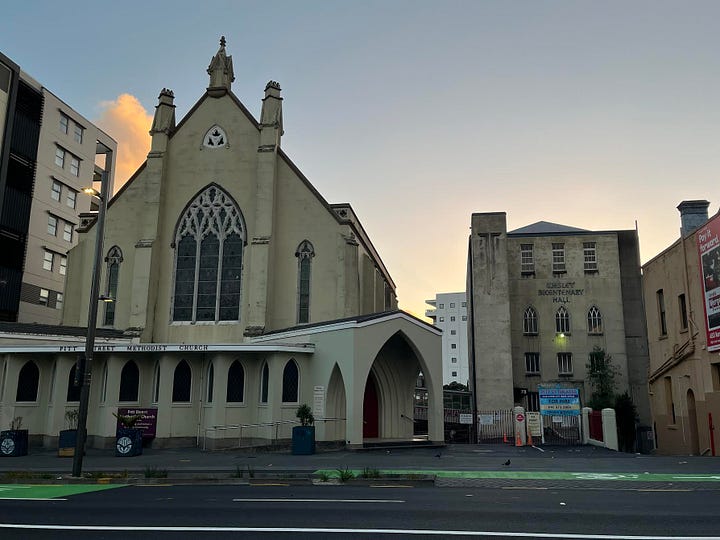
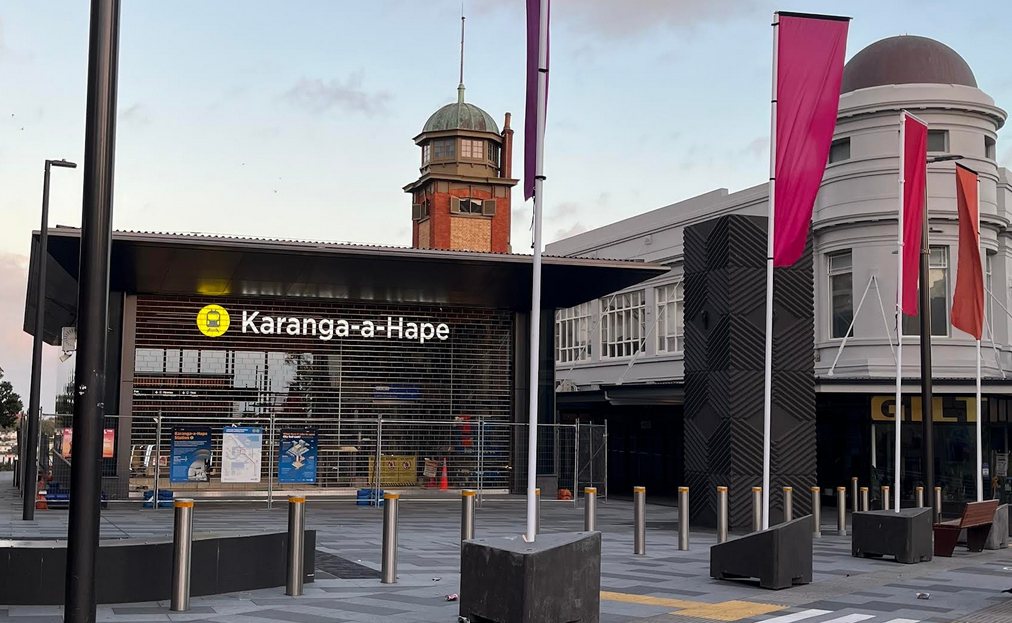
A church would be more fitting. Better still, a church where drinking is forbidden since they hold AA meetings on the premises. Churches have to be repurposed to maintain relevance these days. This one, being just off the fleshpots of K Rd, will never be short of sinners requiring salvation. Directly across the road is the new Karangahape Rd rail station so perhaps they’ll attract commuters when it opens.
Not many people had heard of the American songstress Jolie Holland, which is surprising. Years ago I thought she’d make it big but she’s remained niche and alternative. Nevertheless I managed to persuade a friend to join me. This friend is almost a Disagreeable Bigot, but she is still partially wedded to what I call Nice Lady Politics. She’s a Terf obv, but she’s all for forgiveness and the generous explanation. Me? Not so much.
The only unknown of the evening was Jolie Holland’s support act, advertised as Steve Abel of all people. Steve Abel the Green Party MP. The tall stringy chap with thinning hair scraped back in a knot (bun is too big a word for the result) who looks like a superannuated elf, banging on about fossil fuels and ending native forest logging. That Steve Abel. Weird. I had no idea he was a musician and imagined him producing something electronic and woozy. Stoner music. But I figured if Jolie Holland liked him, he couldn’t be terrible.
So on a muggy night in Auckland the two of us walked to the Pitt St Methodist Church and joined about 250 others for the concert. The audience was a surprise. Most of the time in Auckland I feel like I might as well be living in Singapore, there are that many Chinese, Indians and Filipinos in the city now, but at this gig, I was unusually in the majority. The church was filled with older, white folk.
Naturally we recognised a few of them and, worryingly for my friend, realised they were the sort who were opposed to most everything the Sisterhood of Disagreeable Bigots now think. Mainly my friend was worried about me. “I don’t want to lose all my mates,” she hissed, in between telling me to lower my voice, even when I was saying things that were not in the least inflammatory. But then I often forget what a Disagreeable Bigot I’ve become.
Steve Abel was up first and, whaddya know, the superannuated elf was actually pretty darn good. Not belting out stoner electronico as I’d feared. Instead this was a man with a guitar singing melancholic alt folk. Introspective and quietly tuneful. Joined by Jolie Holland harmonising for his last songs. It was clear she really rated him.
Like all of us, Jolie had changed in the intervening years. She’d filled out and the home-made hillbilly instruments were gone. Now she wields an electric violin and electric guitar but her distinctive lazy drawl and neo-traditional, swampy jazz style that I’d always loved was still there.
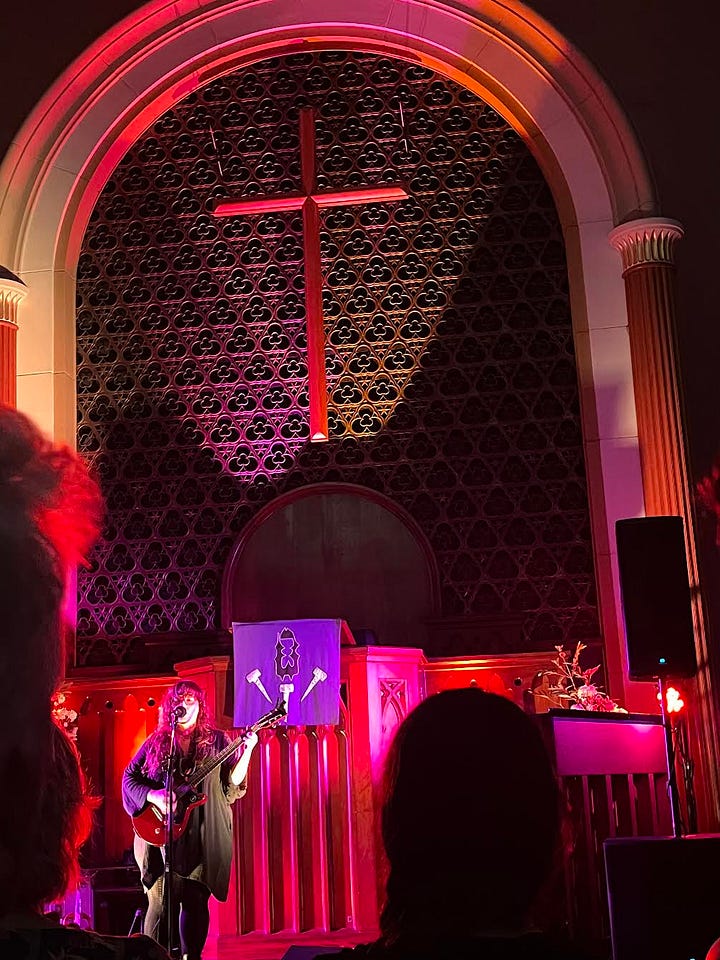
Abel also joined her for a few songs, one of which had a chorus line we were encouraged to join in, which went RELIGION something something, CAPITALISM something something, SETTLER COLONIALISM something something. The something something bits were lyrics critiquing systems of oppression. Inter-connected forms of harm and all that. Given that these politically charged words were all delivered in a minor key, it was obvious this song would never become a rousing political anthem. Also I thought the words were silly but I suppose they signalled what side she was on. The side that will burn the house down.
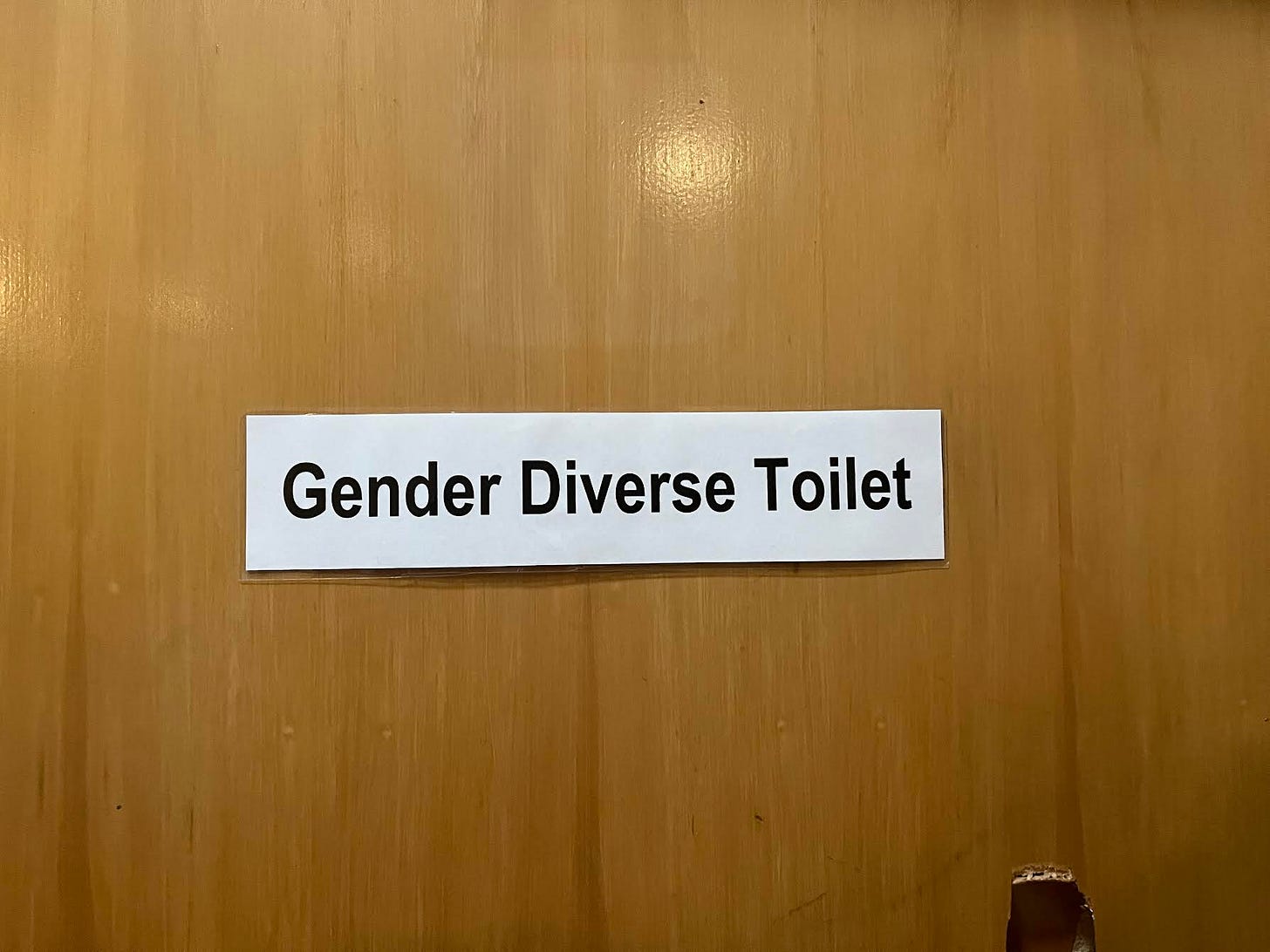
The Pitt St Methodist Church is nothing special. It’s not a grand building but it does have the basics of any decent Christian church – stained glass windows, a high ceiling, wooden lectern and cushioned pews. It caters to alcoholics, has services for all comers and the Fijian community and, if the sign on the toilet door is any indication, is straining to accommodate the rainbow mafia.
As the concert wound down, my friend looked around the hallowed space and said, out of nowhere: “I’ll be sorry when Christianity is gone.”
What a thought! It hit me like a stone, which is odd since I always say I’m an atheist but that isn’t exactly true. We are all civilisationally Christian in New Zealand, whether we acknowledge it or not. All our values, our mores, our culture and our history is founded on the Judeo-Christian heritage.
It’s like that story about the fish. One fish approaches two others and says “how’s the water today” and swims on by. When he’s gone, the fish turns to his mate and asks: “What’s water?”
Lately we’ve taken the water for granted. We’ve become unmoored from our roots and been encouraged to think of ourselves as bad people bringing ‘interconnected forms of harm’ to others. We’ve indulged in almost orgiastic bouts of suicidal empathy and elevation of minorities and some of us feel morally superior for doing so. It’s demented and destructive and has probably contributed to the quasi-religious embrace of climate activism, trans activism, and all the other -ism manias that have plagued the 21st century – BLM, MeToo, and in New Zealand, Māori ethno-nationalism. No doubt there will be more.
I don’t know what to do about all this. It will require more thinking than I can do at present. It will probably require strong gods and a kind of toughness we have forsaken.
These were big thoughts, inspired not by the music, which my friend wasn’t that keen on, but by the venue. Which goes to show, I guess, that churches haven’t completely lost their power.
This article was originally published on the author’s Substack.