Ani O’Brien
Like good faith disagreements and principled people. Dislike disingenuousness and Foucault. Care especially about women’s rights, justice, and democracy.
November the 7th is fast approaching and we are drowning in often bizarre and ill-thought out promises from almost every party. Te Pāti Māori seems to only put out press releases to call everyone else racist, but the other parties are dropping policies left, right, and centre. There are subsidies, taxes, schemes, and a lot of pledges to make things “free”. But stepping aside from the minutiae of quickly dreamt up policies, New Zealanders face the fundamental question of what kind of country we want to live in. Both sides seem to view this election as existential, as if we are standing on a precipice and one outcome spells disaster.
In this essay, I want to explore what I see as some of the core philosophical differences between the two futures we are to choose from. In particular, how much of our lives should depend on the decisions of people in Wellington and how much should be our own to determine? How much do we want the state to be involved in our lives? How much do we want our society to rely on our fallible government to prop us up and corral us through life? I will examine this primarily through social policy related to housing and welfare, and what I remember from my bachelor of arts degree.
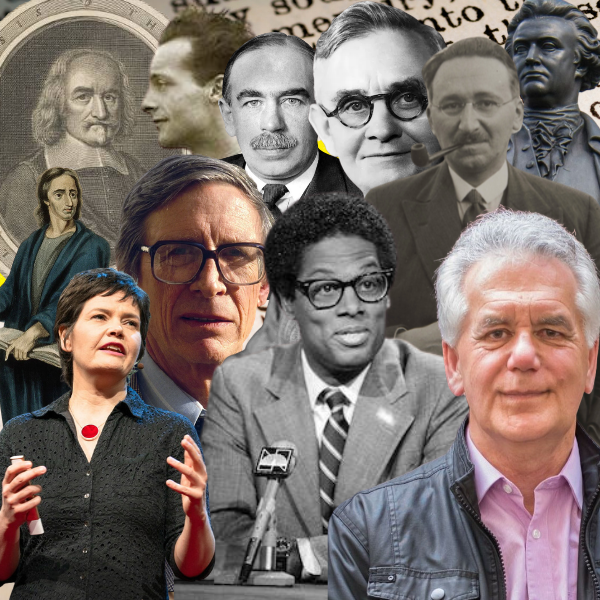
A key difference between the two political blocs that form our system, for this election at least, is that the left wants to pull government further into our lives and the right wants to push it back out. Of course, there are individual distinctions and parties whose policies traverse the ideas of left and right. National can be infuriatingly managerial, New Zealand First is perfectly comfortable with an active state, and even ACT gets a bout of enthusiasm for supervising decisions from time to time. Likewise, Labour can be pro-market and the Greens and Te Pāti Māori libertarian when it comes to government involvement in matters regarding Māori. I get it, but indulge my generalisations for the purpose of this pondering. Because, on the whole, when confronted with an economic problem, the right is more likely to ask what is preventing people from getting on with things and the left looks for a mechanism to get the state involved.
Speaking of generalisations, I don’t believe everyone who votes Labour, Green, or Te Pāti Māori wants New Zealand to be a population of obedient dependents. However, many do sincerely view government as the most effective instrument for protecting the vulnerable against circumstances they can’t control. Never mind the number of times the state has had to be the one issuing apologies for victimising those same people. The overwhelming trust in the efficacy of government is optimistic to say the least. There is, however, a respectable and understandable moral grounding for this perspective.
Nobody chooses the family they are born into or to have a disability or for their employer to go under. A society that ignores the suffering of those who are afflicted by circumstance is, in my view, cruel and not fit for purpose. But equally good intentions matter little when the reality of our collective situation is dire and hard decisions must be made. Neither do good intentions not prevent the state from misusing the powers they acquire via those good intentions.
While the philosophical differences are clear, our political system is actually comparatively narrow. We do not have a “far right”, no matter how desperately some conspiracists try to make it happen. The influences and traditions that ground our parties overlap and internally contradict at times. For example, the political theories and values that underpin our right-wing parties would find themselves at home in many of the left-wing parties elsewhere in the world. Classical liberalism is as embedded, if not more embedded, as conservatism.
National combines a respect for private enterprise with a conservative attachment to institutions and social stability. The philosophies of Edmund Burke, Thomas Hobbes, and John Locke, shine through. They are also insufferably woke at times, but this is likely less philosophical and more about a collective pathology that makes them want people who will never vote for them to like them.
ACT has affinities to Locke, but also Friedrich Hayek, Milton Friedman, and John Stuart Mill. They are small ‘l’ libertarians, but their failure to stand up for freedoms during the Covid pandemic demonstrated that when the chips were down, Hobbesian prioritisation of collective security outweighed a commitment to individual liberty. They would invoke John Stuart Mill’s harm principle no doubt. New Zealand First is more economically nationalist with an outlook more reminiscent of Friedrich List’s, who was likewise concerned with national productivity alongside a conservative approach to generational care and obligation. They share National’s (at least theoretical) Burkean tendencies by focusing on family values, social conservatism, and a nostalgic view of communities.
On the left, Labour belongs to the social-democrat tradition, with Michael Joseph Savage providing the most recognisable local influence. Keynesian philosophy supports their willingness to use public investment, while John Rawls can explain their concern for inequality. They have unfortunately become less practical about how these philosophies are enacted in recent years and fail to apply the discernment and judgement necessary to balance intent with action.
The Greens seem to look increasingly to modern anti-capitalist anti-growth proponents like Andre Gorz, Kate Raworth, and Naomi Klein. Gorz is most explicit in his disdain for society organised around employment and increasing productivity while Raworth is more agnostic about growth but concerned about the impact on ecological systems. Klein is more pop philosophy and her airport books centre on climate change and corporate power. It should be noted those disagree a fair bit amongst themselves. Moana Jackson no doubt is an influence on their race-based philosophies as he likewise inspires Te Pāti Māori, who beyond that do not have much of a coherent philosophical base. They have expressed admiration for Malcolm X, MLK Junior, Mandela, and, more concerning, Ibrahim Traore.
Political philosopher John Rawls was one of the most influential liberal thinkers and his work could provide the left with more serious arguments for their positions than the visceral hatred for the wealthy that our Green Party in particular expresses. His work elucidates where their good intentions have gone awry. Ultimately, his principles of egalitarian liberalism ask whether economic inequalities work to the greatest benefit of the least advantaged within a society committed to protecting basic liberties and fair opportunity.
It is a strenuous test that is useful for both left and right policy. It requires institutions to evaluate the justice of institutional action. Practically fascist, right! And under this principle an intervention should not be taken purely out of the desire to do good, but must be able to demonstrate that it actually improves the prospects of those struggling, including the prospect of them becoming less dependent on the state.
Economist and political philosopher Friedrich Hayek is of the classical liberal tradition and objects to the kind of central planning that all of our parties have a penchant for dabbling in, but the left in particular opens its arms and drags decision making and responsibility into Wellington. Hayek’s opposition to this is more practical than pure ideology. He argues that even those who see themselves as compassionate are susceptible to the universal problem of not knowing everything.
Humans have always collaborated and will continue to do so if we are to carry on evolving and succeeding. The information to develop technology and organise economies is not collectively held, says Hayek, but rather is dispersed among individuals. There are those who understand their local market intimately, who see the opportunities that those removed simply cannot. Those operating businesses know why they have success and what sees them fail. They know if they need to hire more staff or invest in better equipment. The state can’t know these things about every business, every market, every region or township. A consolidated power bloc that determines how business can be done to the most infinitesimal detail is applying insufficient knowledge and a very blunt instrument.
You can see how National, ACT, and to a lesser degree, New Zealand First and Labour, apply this thinking to their policy. To a limited and certain extent Te Pāti Māori is similarly into devolution where it applies to power and resources distributed on a racial basis. The Greens are far too keen on central planning to feel fondly for Hayek and Labour can be swayed in that direction too.
The problem for the Greens, the hard left of Labour, and Te Pāti Māori is that this way of looking at the economy and markets does not sit comfortably with the way they see their heartfelt concern about things as justification enough for them to gather more power to direct people’s lives. They point to policy which looks fantastic on paper. It may be well-researched by experts and selectively consulted on. And yet, policy espoused from the ivory tower in the capital, will still lack the knowledge required to ensure the best outcome for all. There is always collateral damage and those left behind in the blindspots.
It is in effect picking winners by creating policy that dictates the success of some while disadvantaging others. It distributes opportunities through favoured categories and results in people discovering that getting ahead depends on “playing the game” and persuading the state that they are either deserving enough or vulnerable enough. The opposite of equality of opportunity.
Labour’s just-announced rent-to-buy housing policy is a clear example of this. Rawls could argue that this assistance improves the prospects of the least advantaged, but it clashes with his concepts of fairness and egalitarianism. Eligible working tenants in Kāinga Ora state homes and participating in community housing would, under this policy, receive $100 every week from the state towards a deposit for a house (held in trust). They would buy their home at an independently assessed value at point of purchase. Labour is also promising to replace any sold state houses with three new ones. Excuse me for recalling the promises of KiwiBuild.
There are good intentions at play here, but we must apply Rawls’ test. Yes, home ownership brings with it security and a stake in the local community, assuming you can service the mortgage. And if we take Labour at their word, three extra state houses per sale would ensure that more families could be assisted into homes. But despite the solid motivations behind the policy, it doesn’t pass the test because it fails to protect basic liberties and fair opportunity.
Imagine two households living in the same suburb and earning comparable family incomes. Both are living frugally, paying bills, raising kids, and trying to save what they can. However, one family rents privately and the other is a social housing tenant. Under Labour’s plan one could receive $5,200 a year and the other nothing at all. The one who receives nothing is nevertheless contributing to paying for their peers to receive this handout via their taxes. They will have spent years doing exactly what society says they should, working their butts off on the hamster wheel, only to discover that their neighbour’s dependence on the state is enabling them to leapfrog onto the property ladder.
Picking winners. Picking losers. This kind of policy is classic Labour and many such initiatives can be found in their counterparts around the world. Successful examples would likely be harder to find. Compassion and good intentions without the harder parts of Rawls’ test result in discontent, inequality, and poor incentives.
Philosophical objection to this kind of policy is nothing to do with how deserving or needy the family in state housing are. It is about concern for a lack of workability, plainly unfair selection, and how resentment grows around an interventionist state. The right might more likely envisage that improving market conditions, growing the economy, and applying targeted interventions would allow for social housing tenants to improve their own circumstances by advancing to a more manageable next step… the private rental market.
In general, New Zealanders accept when their neighbour needs more help because their circumstances are worse. We are country heavily influenced by the thinking and leadership of our first Labour prime minister, Mickey Savage. But it becomes a lot harder for Kiwis to accept funding state assistance that is less of a safety net and instead develops a preferential route towards asset ownership that many independent people cannot attain. A family’s inability to afford shelter means the state should step in to provide basic housing assistance, but it is a leap further to argue it entitles them to a special publicly funded deposit.
Every new intervention and its inclusions creates a new set of exclusions. And then, of course, politicians are outraged and horrified when those left out become angry. But public willingness to fund assistance is part of a social contract that assumes reciprocal obligations and fairness.
In New Zealand there appears to be a better appreciation of the social contract in the right bloc. Conservative Burkean thinking says that we inherit a society that we have a duty to maintain and this requires collective, mutual, and reciprocal responsibilities. Thomas Hobbes, then John Locke and Jean-Jacques Rousseau established the ideas that constructed our concepts of the social contract, though they disagree on the role it plays in legitimising the government. And it is their philosophies in this area that in my view every political party has a duty to understand. It is what enables us to live cohesively accepting the laws of the land and the power of those we elect and looking upon our fellow citizen with benevolence and reciprocity. The Hobbesian concern that a government that fails to uphold the social contract by failing to protect its citizens will eventually see its authority collapse is increasingly playing out in France, the UK, and other parts of Europe these days.
But I digress! Ironically, Savage’s own caveats to welfare provision would cause Chlöe Swarbrick to spontaneously combust and Labour to tut tut tut. The godfather of our safety net was adamantly opposed to people gaming it. His government’s Social Security Act 1938 required benefit applicants to be capable of and willing to undertake suitable work and have taken reasonable steps to find it. Shock horror, it also disqualified people from benefits if they voluntarily left employment without a good reason.
The state of our welfare system should be assessed with an honesty that unfortunately our political class shy away from. Varying political approaches to it doesn’t necessarily mean anyone is keen to get into the nitty gritty. But the largest portion of our government spending by far goes toward paying for superannuation and welfare. Budget 2026 forecasts $27 billion in core Crown spending on social security and welfare, excluding New Zealand superannuation in 2026/27. Super is another $26.5 billion on top. So $53.5 billion for one year of social spending. Ooosh.
The left and right blocs certainly do disagree on the extent of the support and how to measure its necessity. But it is not a lack of compassion motivating the right to seek to contract rather than expand state support. Someone should tell the National candidate for Tāmaki that. It is with the harsh reality in mind that every one of those 27 billion dollars are a dollar that cannot be spent elsewhere like on our health system, education, law and order, or any of the services that people regularly bemoan are underfunded. Is it cruel or compassionate to keep bumping up benefits at the expense of our ability to invest in our hospitals or medicine?
Even Rawls, with his concern for the least advantaged, cannot justify endless expansion of benefits and entitlements ahead of competing needs and interests. The right bloc understand that the people receiving benefits also need operations and for their kids to have a decent education. They ask where is the available resource better spent?
Some parties on the left say that the solution for all this is simply to borrow more. The Greens and Te Pāti Māori have expressed a willingness, or more accurately a desire, to vastly increase our tolerance for national debt. The Greens shot their credibility in arguing for this in the foot recently, however, when co-leader Marama Davidson did not know the interest rate we are paying on our national debt. She guessed one to two per cent and Swarbrick nodded along, but the 10-year government bond yield is at around 4.9 per cent. That difference is a matter of hundreds of millions of dollars and throws into question the capabilities of the Greens leadership and what they based their policy costings on. It shows that their economic policies are likely based more on vibes than solid political philosophy, economics, and logic.
Opportunity at least tie their approach to increasing debt to building long-term infrastructure, but they still have far more comfort with increased debt than Labour and the right bloc have. They adopt a Keynesian argument for government investment when private demand is weak, but the quality of the justification relies on the quality of the project and its ability to return value to future generations. Burkean thinkers would retort that there is a question of whether saddling future generations with interest bills they cannot pay, failing public services, and a collapsing economy is compassionate at all.
The divergence in views as to what is reasonable in terms of a safety net is often inaccurately portrayed by the left as the continuance of a welfare state versus its total abolition. Kindness versus cruelty. In actual fact, even ACT’s current welfare policy explicitly retains support for people who genuinely cannot work, reflecting Hayek once again. Our most libertarian party advocates for substantial state support for those who come upon hard times. They do however have policies that seek to restrict the ability to ‘take the piss’. They do not want to disincentivise returning to the workforce and do not believe the role of the state is to remove all discomfort.
On the other end of the spectrum, the Greens propose increasing benefits to what they call “liveable rates” and abolishing all sanctions on those who fail or refuse to attempt to find work. They believe benefits should erase all discomfort and struggle no matter that those in work have struggles of their own. This is a more socialist approach that isn’t so far from Andre Gorz’ conception of a universal basic income. Andrew Yang in the United States is also a proponent of the UBI, but his other capitalist politics would not resonate with the Greens in theory. Bernie Sanders and Alexandria Ocasio-Cortez also pay lip service to this. Obviously, our own Opportunity Party are also fans.
Fundamentally, these positions are oppositional understandings of the relationship between assistance and obligation, rights and responsibility, not a disagreement over whether vulnerable people exist and should be assisted. One side wants welfare to be a temporary government intervention that helps people recover independence and the other seems to think it is fine for welfare to become a lifelong arrangement.
What the left fails to understand is that ensuring there are strong incentives to get off the benefit and get into work actually protects the legitimacy of the safety net. I refer you back to my previous paragraph on the social contract. The rest of the population is funding the massive social spend and they need to have confidence that contributing to society is managed fairly and reasonably.
The right also view the role of social support as not being one that should reside solely with the state. Irish political thinker Edmund Burke is regarded as the founder of modern conservatism and his politics around families, communities, and generational obligations can be seen in the right bloc. Unfortunately, many of the traditional safety nets Burke describes have eroded or weakened, putting more pressure on the state, but the right has an expectation that we have obligations to each other based on loyalty and responsibility. A conservative society values extended family, the church, community groups, and charities as sources of care and even at times authority. That does not mean they don’t realise that there are families who can’t or won’t assist or communities who are overwhelmed. They see the state as having a duty of care when those relationships fail.
The funny thing is, in this regard, the right has a lot in common with what we are told is important in Te Ao Māori. The role of whānau, hapū, and iwi, are seen traditionally as concentric rings of support and are similar in some ways to Burke. The concept of rangatiratanga is relevant too. The concept of self-determination is one of utmost importance to Māori, no doubt influenced by the late Moana Jackson, and the right also places immense value in it as it manifests in independence and the ability to chart your own course in life. Individual liberties are dependent on a similar self-sovereignty as rangatiratanga.
The sentiment that the Crown or the government should butt out is another shared value. If any community are suspicious about excessive state power, and take a view Hayek would be proud of, it is Māori, who have distinct historical reference points to reflect on.
Likewise, the right’s advocacy for property rights, in part as a means of independence (and an expression of it, I guess), is understood intimately by Māoridom. Locke’s philosophy intimately understands the connection between these things. The extensive Treaty settlement process demonstrates that Māori get the practical and symbolic meaningfulness of ownership, place, and independence. And while I am deliberately framing this as Māori in general, rather than Te Pāti Māori, co-leader Rawiri Waititi once said that “participation is not sovereignty; ownership is” and if that doesn’t capture the point, I don’t know what does. Ownership, being the king or queen of your own little castle, gives people independence from the state more than almost anything else.
That is why the right takes the approach that they would rather invest in Māori enterprises and opportunities than endlessly hand out benefits and fund programmes. That is not to say, again I emphasise, that they want to take away benefits and programmes. They just see far more value in investing in independence, in sovereignty, in rangatiratanga.
The economic contrast between left and right is sharpest when we contrast the beliefs in redistributing the pie versus growing the pie. Gorz/Raworth versus Adam Smith/Hayek. Here previous political frameworks are inverted and the left can be described as the side that always says ‘no’. The side that halts progress in the name of the environment or historical indigenous rights or some other morality play. For example, Labour has committed to reinstating the oil and gas exploration ban and the Greens say they will revoke fast track consents for anything extractive or related to natural resources. They will happily use iPhones and drive EVs made from minerals mined elsewhere in the world, but will not allow New Zealand to generate wealth from our own. They would rather shut down industry for microscopic (if that) climate change gains than support the jobs they make possible in the regions. They are happy to import coal, but not to use our own. Make it make sense.
The negativity of the left bloc and their tendency to say ‘no’ or just straight up shut down sectors, doesn’t just mess things up for businesses, employers, workers, and communities in the immediate term, in the eyes of the right. It also tells overseas investors that New Zealand is not a good place to invest. It is too volatile and our government has the potential to be far too interventionist. Even if the right are pro-business and growth, we are only ever potentially three years away from the parties who say ‘no’ too often being in charge.
The right in 2026 is much more keen to progress opportunities and approach environmentalism from a perspective of stewardship and pragmatism in the Burkean tradition. Some developments impose costs that cannot be offset by royalties or quid pro quos and good conservatives should retain the ability to conserve. This case by case approach grinds on the left as they prefer to take moral stands. We saw this repeatedly in Jacinda Ardern’s approach to climate change. She pronounced it was our “nuclear-free moment” which made for excellent headlines, but was just three words performed in parliament. She also banned oil and gas exploration in New Zealand practically on a whim to impress the environmentalists who were lobbying her.
One of my favourite living thinkers, Thomas Sowell, makes the distinction between these competing political visions to explain the disagreement. He says that one begins with the limitations of human knowledge and the inevitability of trade offs. The other places greater confidence in remaking society around a moral purpose. Our left and right blocs sit comfortably on that binary.
Perhaps prioritisation of freedom and responsibility is seen as less compassionate because it makes demands of us that a promise of government management and paternalism can obscure. Taking your destiny into your own hands is uncomfortable. It involves uncertainty and, sometimes, failure. But it also offers the possibility of creating something that belongs to you, supporting the people you love, and making decisions without having to seek approval from a busybody with a clipboard.
Thankfully, all of our political parties understand that a decent safety net makes this freedom more accessible because it can prevent a setback becoming lifelong ruin. But the left’s drive for more welfare and entitlements leads to a badly run state that makes assistance so all encompassing, and independent progress so challenging, that people become more and more reliant on government permission and provision. And our social spend gets astronomic.
The choice we have on November 7th (or whenever you choose to vote) is not merely based on policy platforms. It is about worldviews, political philosophies, and what we want the role of government to be in our lives. Labour, the Greens, and Te Pāti Māori share a considerable confidence that the government should direct economic activity and redistribute its rewards. The right bloc are more inclined to trust individual New Zealanders to identify their own opportunities and improve their own circumstances while accepting that freedom comes with unequal outcomes and responsibilities. As I say, neither bloc follows their own political philosophies to a tee, but in general it comes down to a split along these lines.
There are many advocates for a larger state and a more paternalistic government. Covid-19 scared us all into compliance and some do not want to reemerge from behind mummy. The right-wing objection is that continuing to give government the permission to baby us and be involved in everything often produces poor results. Every additional power can be wielded eventually by whatever bozo gets voted into power. People are flawed and governments are made of people.
If the right bloc I am voting for is victorious, there is no doubt that National, ACT, and New Zealand First will disappoint me. I fully expect to spend a good chunk of the next three years being an absolute pest as I attempt to hold them to account. But philosophically they represent what I want. I am a freedom kinda gal. I take responsibilities and obligations seriously and I love the social contract as a framework for social cohesion. I value my independence too, my right to self-determination, my rangatiratanga, if you will.
On November 7th, we choose who governs us, but we also choose how much of our future we put in that government’s hands. I would rather leave more of it in our own.
This article was originally published by Thought Crimes.