
This is edition 2026/219 of the Ten@10 newsletter.
Hi all,
This is the Ten@10, where I collate and summarise ten news items you generally won't see in the mainstream media.
Enjoy!
1. Democracy Briefing: How property interests keep their grip on housing policy
Bryce Edwards - The Democracy Project
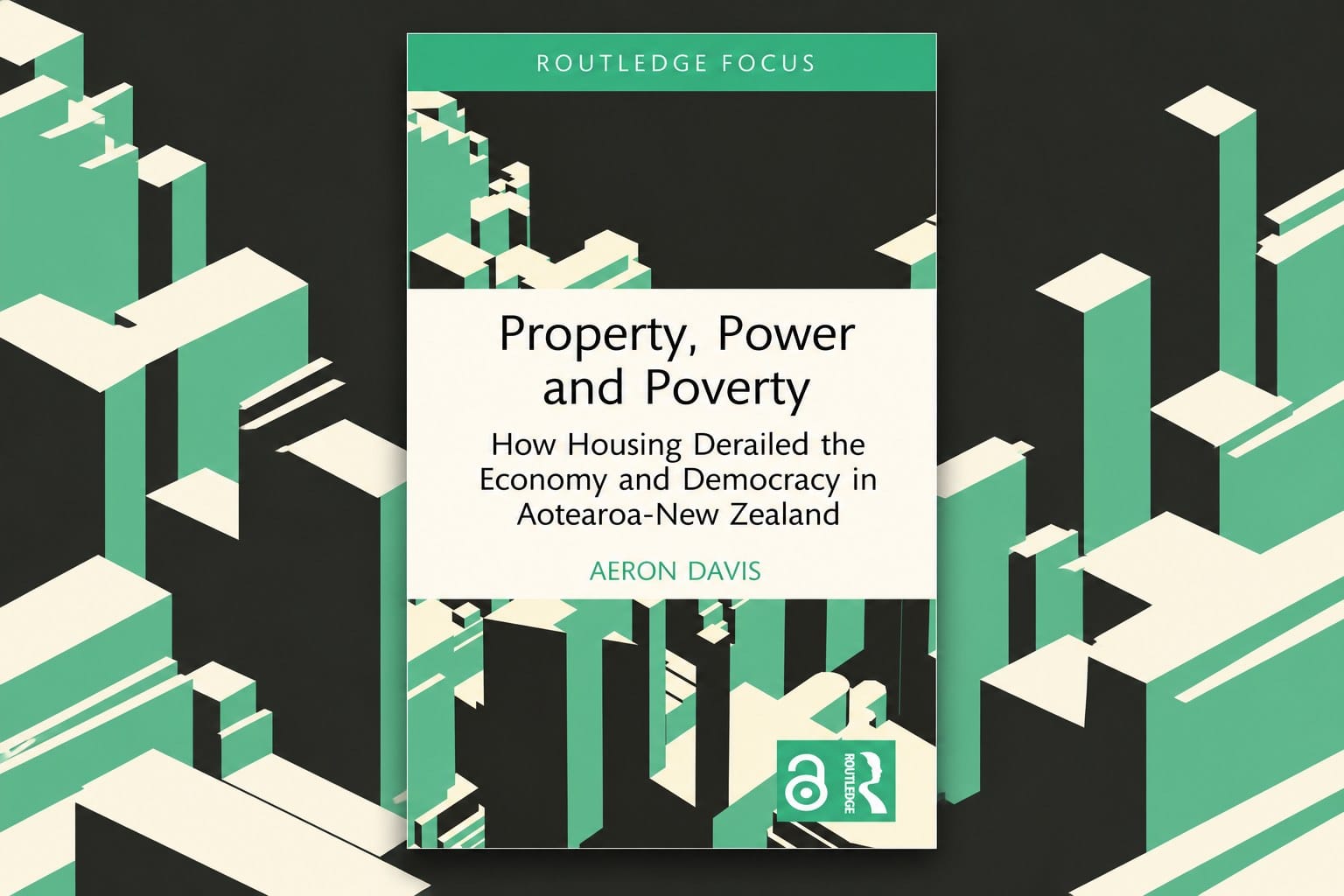
- 📚 Bryce Edwards reviews a new book, released today, by Aeron Davis, a professor of political communication at Victoria University of Wellington: Property, Power and Poverty. It is free to download or read online. Davis spent three years on New Zealand's housing system, conducting 80 interviews with 75 people. Bill English, David Parker, Phil Twyford, Megan Woods and former Reserve Bank governor Adrian Orr are quoted on the record, alongside lobbyists, developers and bankers.
- 🏠 He found almost nobody willing to defend what the housing market produces. Throughout his interviews, the tax issue apart, Davis says he has never talked to anyone who is in favour of these outcomes. Why the status quo endures, Edwards writes, is bluntly put in the book: the crisis continues because the people who profit from high property values have a hand in making housing policy. The book should be required reading for the next housing minister.
- 🏦 Adrian Orr told Davis: "Housing policy has been about housing as an investment or asset class, as opposed to a basic need." Davis argues New Zealand rebuilt its economy around property after the reforms of the 1980s and 1990s. Stamp duty was largely abolished in 1988 and the rest in 1999, death duties went in the early 1990s and gift duty in 2011, while the capital gains tax Labour planned in 1989 never arrived. By the end of 2025, according to Reserve Bank data cited by Davis, mortgages made up 65.5% of all bank lending. For many, the family home became a retirement plan and a rental the obvious investment. Renters, and anyone trying to save a deposit from wages, have paid the price.
- 💰 Davis's audit of the 2024 NBR Rich List found that 91 of its 108 entries, or 84%, hold large interests in property and land. Checking those 108 names against Electoral Commission returns for 2021 to 2025, he found 38 political donors, all but two giving to parties of the right. Adding RNZ's analysis, he puts the total at $7.24 million, of which just 3.9% went to Labour and the Greens. Parliament is a property-owning club too: the Herald's Chris Knox calculated last November that MPs hold interests in $379 million of property. The system survives, Davis argues, because it has the middle on side: multi-property investors, together with the roughly two-fifths who own a single home, form an electoral majority with a stake in high prices, and people who own their homes outright are far more likely to vote than renters.
- 📣 An unnamed senior Labour minister, describing Labour's attempts to take on property investors and landlords, calls it "a classic case of elite capture of the political process". Geordie Rogers, who ran Renters United, estimates that the two main property investor associations spend over half a million dollars a year on communications. In the year he describes, Renters United spent "about $43", not counting volunteer time. Across eight years of ministerial diaries, 13 lobbying firms appear with housing ministers just six times, while 16 industry associations appear 83 times. Their recorded meetings rose from about 56 a year under Labour-led governments to about 121 a year under the National-led coalition.
- 🚪 Of 38 senior staff Davis identified at 13 Wellington lobbying firms, 26 had worked in government as an MP, adviser or minister, and 23 had been civil servants. Lobbyists estimated that 75 to 85% of their clients were on retainers. Jen Baird, who led REINZ until 2025, is open about it: "We fall over ourselves to be available." A seasoned operative describes New Zealand First as "the sort of self-described handbrake on crazy ideas and stuff", with the advice: go to them, point out the adverse consequences, and they would kill it or slow it down. Bill Rosenberg, then a CTU economist on the 2017-19 Tax Working Group, said colleagues "were just surrounded by intensive lobbying", and New Zealand First, he said, basically said "no go", and that put an end to it.
- ⚖️ Other democracies have lobbying registers, stand-down periods or codes of conduct. In New Zealand, as Davis puts it, there is "nada". Almost nothing he describes breaks any rule. Davis warns that without deeper change the country will be "run like a business for wealthy shareholders, rather than a publicly accountable political system". Opportunity's "Clean Up Politics" package, which includes a lobbying register, could feature in coalition talks.
- 💡 Takeaway: until renters and first-home buyers have as much say over housing policy as those who profit from it, Edwards writes, expect more reform of consents and zoning, and very little else. A register limited to the lobbying firms that barely appear in housing ministers' diaries would change very little. One that also covers the Property Council, REINZ and the rest, with fuller ministerial diaries, would show whether ministers really want to know who is shaping their housing policy.