
Here is yet another example of a taxpayer-funded health professional teaching that self-destructive behaviour by Māori is the fault of colonisation: land dispossession, loss of language, attack on family structures, attack on belief systems etc.
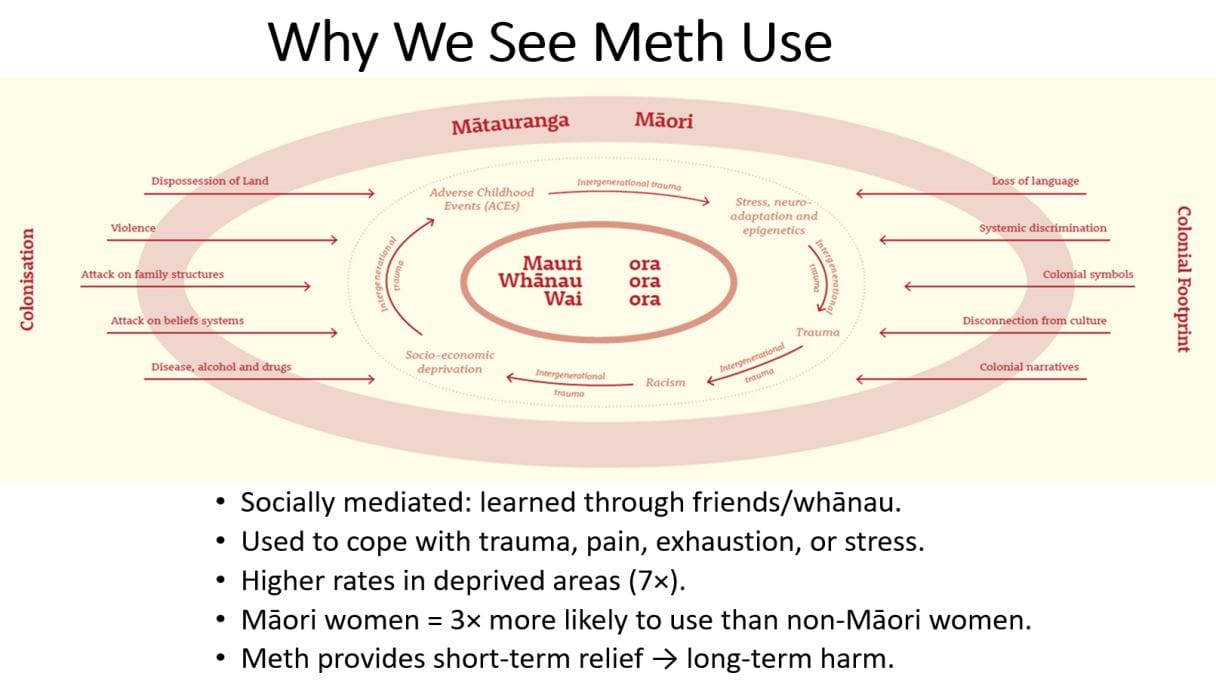
The above slide is part of a presentation from Oranga Tamariki Team leader Psychology, Health and Clinical Services. It was published in April this year.
Given it’s Māori gangs – Mongrel Mob and Black Power – predominantly selling the drug, it’s to be assumed they too are doing so due to the ravages of colonisation.
There is no end to what can be explained and excused under this lazy, pathetic and repetitive ‘modelling’.
But what about the vast majority of Māori who do not use meth? Wouldn’t it be far more useful to examine what creates resilience and success, and strive to emulate the values and upbringings that contribute to the positive outcomes most Māori experience?
The past cannot be undone. We only have the future.
This pervasive apologism practised by supposedly ‘educated experts’ serves society very poorly. It’s the thrust of a Western movement that pimps indigeneity for all its worth.
If people are told that it isn’t their fault they are using methamphetamine, how do they take the ownership needed to stop?
This article was originally published on the author’s blog.
[Editor’s note: This is also a good summary, below.]
If this is what Oranga Tamariki thinks drives meth use by Maori, then no wonder they are so bad at their job. Quick fact: meth use is not to 'cope with trauma, pain, exhaustion, or stress'. And 3x Maori women use it because of higher Maori involvement in gangs, who distribute it.… pic.twitter.com/ksmmnIREAW
— Douglas Brown (@darkwaterjack) June 6, 2026